
The Focusrite Scarlett Solo is a top-tier audio interface that balances high-quality pre-amps with a user-friendly design for home recording tasks. This guide helps you navigate the options, whether you’re a musician, podcaster, or just want to digitize old tapes. The one thing that truly separates these picks is how they handle input flexibility versus portability.
QUICK PICKS
- Best Overall: Focusrite Scarlett Solo — High-performing pre-amps and a simple, reliable feature set.
- Most Inputs: Behringer U-PHORIA UMC404HD — Offers four inputs for multi-mic setups or bands.
- Best for Podcasting: M-AUDIO M-Track Duo — Simple, transparent pre-amps for clear vocal recordings.
- Best Hybrid Connectivity: MAONO P2 Hybrid — Connects to mobile devices and computers at once.
- Best for Portability: PreSonus AudioBox 96 — Compact, bus-powered, and includes a large software suite.
- Best for Mobile Recording: CAD Audio CX2 — Simple, value-focused design for home or travel.
- Best High-Resolution: Tiimge 2×2 Interface — Supports high-resolution audio for detailed studio work.
- Simplest for Guitarists: JOYO MOMIX CAB — Pocket-sized and made specifically for direct guitar monitoring.
- Best Monitoring Options: Synido 2×2 Interface — Features three distinct monitoring modes for different tasks.
- Best for Vinyl Archiving: Behringer UFO202 — Dedicated phono input for restoring records and tapes.

- Switchable Air mode adds clarity to acoustic instruments
- Two high-headroom instrument inputs with Gain Halos
- Records and mixes at up to 24-bit/192kHz
- 2 low-noise balanced outputs for clean audio playback

- 4×4 USB 2.0 Audio/MIDI interface
- 24-Bit/192 kHz resolution
- Compatible with Avid Pro Tools, Ableton Live, Steinberg Cubase
- Streams 4 inputs / 4 outputs plus 1x MIDI I/O

- USB sound card delivers 48kHz audio resolution
- Two combo XLR / Line / Instrument Inputs with phantom power
- 1/4" headphone output and stereo 1/4" outputs
- Crystal Preamps support all microphones including condenser mics

- Dual USB ports connect computer and phone simultaneously
- 56dB Dual XLR Audio Interface records at 24-bit/192kHz
- 130dB EIN for silent recording
- Independent mute and headphone controls for streaming
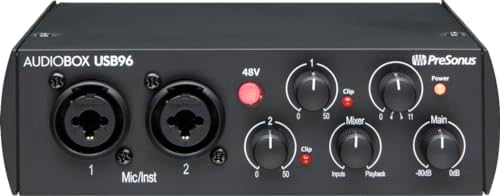
- Value-packed 2-channel USB 2.0 interface for personal and portable recording.
- 2 high-quality Class-A mic preamps make it easy to get a great sound.
- 2 high-headroom instrument inputs to record guitar, bass, and your favorite line-level devices, plus MIDI I/O.
- Studio-grade converters allow for up to 24-bit/96 kHz recording and playback.

- Value-packed 2-channel USB audio interface for home or mobile recording
- Record at professional-level 24-bit/96kHz resolution
- Includes +48V phantom power for use with studio condenser microphones
- Two preamps with combo inputs for recording either microphone or instrument-level audio

- 1. STUDIO-QUALITY RECORDING FOR YOUR HOME SETUP — Capture vocals, guitars, podcasts, and instruments with 24Bit/192kHz high-resolution audio.…
- 2. 48V PHANTOM POWER FOR CONDENSER MICROPHONES — Power your condenser microphones with reliable 48V phantom power for clear vocal recording,…
- 3. EASY PLUG & PLAY CONNECTION — Works with Windows and Mac OS without additional drivers. Compatible with popular recording software including Pro…
- 4. BUILT FOR MUSIC, PODCASTS & CONTENT CREATION — Record vocals, guitars, instruments, livestreams, and podcasts with one compact audio interface.…
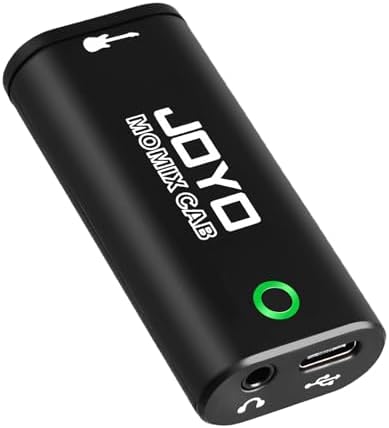
- DIRECT MONITORING AUDIO INTERFACE — LOW-LATENCY GUITAR RECORDING: The MOMIX CAB is a direct monitoring audio interface—your guitar's clean signal is…
- PLUG & PLAY — NO CHARGING, NO DRIVERS, NO SOFTWARE: Just connect the MOMIX CAB to your phone's USB-C or Lightning port, plug in your guitar (6.35mm…
- POCKET-SIZED PORTABILITY — BACK CLIP DESIGN: Smaller than a key, the MOMIX CAB clips securely to your pocket, belt, or guitar strap for truly mobile…
- IMPORTANT USAGE NOTES — PLEASE READ BEFORE BUYING: (1) Use only the included USB-C cable—third-party cables may not work. (2) On Android, enable OTG…

- ✔️[High-fidelity sound quality, accurate sampling] The Synido 2×2 audio interface uses a high-quality independent audio chip to reduce recording…
- ✔️[Three monitoring modes, easy to switch] The audio interface provides three monitoring modes to meet different needs. In Stereo mode, independent…
- ✔️[User-friendly design] The audio interface is intuitively designed, and equipped with three independent control areas, and the XLR interface…
- ✔️[Professional 48V phantom power] Synido audio interface is equipped with 48V phantom power switch and supports 48V dynamic microphone with…

- High-quality USB audio interface connects your turntable, cassette
- Transfer and restore your valuable vinyl records and tapes to your computer via a simple USB connection
- Massive software bundle includes Audacity vinyl restoration, noise-reduction, editing and recording software, comprehensive podcasting software and…
- Revolutionary energyXT2.5 Compact music production software included with feature-rich audio/MIDI sequencer that loads almost instantaneously on all…
1. Focusrite Scarlett Solo 3rd Gen USB-C Audio Interface
Best for: Musicians and podcasters needing professional sound in a compact frame.
This interface is the standard for home studios because it packs high-performance converters and pre-amps into a small footprint. The “Air” mode is a standout feature for acoustic instruments, adding a sense of clarity that’s often missing in entry-level gear. You’ll find it handles gain management well with the halo lights, which turn colors to help you avoid clipping your signal before it hits your software.
It includes a generous software bundle, giving you a head start with tools like Pro Tools Intro and Ableton Live Lite. Compared to the M-AUDIO M-Track Duo, it provides a more refined gain-staging experience through its lighted indicators. It’s a solid choice if you want a set-and-forget interface for your desk.
Anyone who needs to record more than one microphone at a time should look elsewhere, as this model has a single mic input limit.
Pros
- High-performance 24-bit/192kHz converters
- Switchable Air mode for instrument clarity
- Gain Halo lights for easy monitoring
- Includes software suite and three-year warranty
Cons
- Single microphone input limits multi-mic setups
2. Behringer U-PHORIA UMC404HD Audiophile 4×4
Best for: Bands or creators who need to record multiple sources simultaneously.
This unit is built to handle more than just a solo voice or guitar. With four Midas-designed pre-amps, you can track multiple instruments or microphones at once, making it the most versatile option for small ensembles. The metal chassis feels sturdy enough for frequent use, and it includes MIDI I/O for connecting keyboards or other controllers.
The interface supports 24-bit/192kHz resolution, ensuring that your audio quality remains high even when you’re recording multiple tracks. It offers significantly more inputs than the Focusrite Scarlett Solo, which is limited to one microphone and one instrument input. It’s the right pick if you have a growing studio setup.
This model isn’t meant for someone with limited desk space, as the 4×4 input layout makes it larger than the more compact 2×2 options.
Pros
- Four Midas-designed mic pre-amps
- Supports 4×4 audio and MIDI I/O
- Durable metal construction
- High-resolution 24-bit/192kHz recording
Cons
- Larger footprint than 2×2 alternatives
3. M-AUDIO M-Track Duo USB Audio Interface
Best for: Podcasters who need a straightforward, portable recording solution.
This interface focuses on simplicity, offering two combo inputs that handle microphones, guitars, or line-level signals with ease. The Crystal Preamps are transparent, meaning they don’t color your sound, which is ideal for vocal recordings where you want a natural tone. The zero-latency monitoring switch is a helpful touch, letting you hear yourself without the delay that usually comes with digital processing.
It’s a very portable unit that fits easily into a gear bag. When compared to the MAONO P2 Hybrid, it lacks the mobile-device connectivity options, but it makes up for this with its extreme ease of use for PC or Mac users.
Anyone who requires mobile-device streaming or recording will find this model limited, as it lacks the hybrid connectivity found in other picks.
Pros
- Transparent Crystal Preamps
- Two combo XLR/line inputs
- Zero-latency monitoring switch
- Includes MPC Beats production software
Cons
- Lacks the mobile-device connectivity of other interfaces
4. MAONO P2 Hybrid USB Audio Interface Dual XLR
Best for: Streamers who want to record on both computers and mobile devices.
The hybrid connectivity here is unique, allowing you to connect a computer and a phone or iPad simultaneously. This is a massive advantage for creators who want to record a guitar cover on a laptop while streaming it to a mobile app at the same time. The 15-degree tilt makes it easy to see your levels and reach the knobs while you’re sitting at your desk.
The interface also features dedicated mute buttons for headphones and monitors, which is a rare and useful feature for live streaming. It’s much more versatile for mobile creators than the PreSonus AudioBox 96, which requires a more traditional setup. If you split your time between desktop production and mobile content creation, this is the one to choose.
This unit isn’t built for users who only need a simple, single-device connection, as the dual-port setup adds complexity that you may not need.
Pros
- Dual USB ports for simultaneous device connections
- Independent mute controls for streaming
- Ergonomic 15-degree tilt design
- Low-noise -130dB EIN performance
Cons
- Dual-port setup is overkill for basic recording
5. PreSonus AudioBox 96 25th Anniversary USB Audio Interface
Best for: Mobile producers who need a rugged interface for travel.
This is a classic, durable interface that’s built to be moved. It’s bus-powered, which means you don’t need to carry an extra power supply, making it perfect for recording on the go. The two Class-A pre-amps provide a warm sound, and the included software suite is quite large, offering plenty of room to grow.
It features MIDI I/O, which is handy if you use external synthesizers or hardware controllers. When you compare it to the CAD Audio CX2, it offers a more robust software package that helps you get started with music production immediately.
Anyone who needs higher than 96kHz recording resolution will find this model limited, as it caps out where many others reach 192kHz.
Pros
- Rugged, mobile-friendly design
- Two high-quality Class-A pre-amps
- Bus-powered for portability
- Includes extensive software suite
Cons
- Recording resolution maxes out at 96kHz
6. CAD Audio CX2 2×2 USB Audio Interface
Best for: Home users who want a simple, reliable 2×2 interface.
The CAD Audio CX2 is all about the essentials. It provides two combo inputs, phantom power for condenser mics, and a straightforward interface that works with almost any recording software. It’s a no-frills choice that gets the job done without requiring you to learn a complex software mixer or control panel.
The 24-bit/96kHz resolution is perfectly adequate for most home studio projects, from voiceovers to acoustic guitar tracking. Compared to the Tiimge 2×2 Interface, it lacks the higher 192kHz sampling rate, but it offers a more focused, simple user experience.
Anyone who requires high-fidelity 192kHz resolution will find this model restricted to a lower 96kHz sample rate.
Pros
- Simple 2×2 layout
- Phantom power for condenser mics
- Compatible with most recording software
- Compact and portable design
Cons
- Maximum resolution is 96kHz
7. Tiimge USB Audio Interface
Best for: Beginners who want professional high-resolution audio.
This interface stands out for its high-resolution 24-bit/192kHz recording capability. It’s designed to be plug-and-play, meaning you can connect it to your computer and start recording without messing with complicated drivers. The inputs accept both microphones and instruments, making them flexible enough for most standard home recording needs.
It’s a great option if you want to ensure your recordings are as detailed as possible from the start. When placed against the CAD Audio CX2, it offers a higher sampling rate, which might appeal to those who do a lot of post-production editing.
At 192kHz, it’s a high-resolution tool, but it isn’t built for those who need to record several sources at once during larger sessions.
Pros
- High-resolution audio capable of capturing fine detail
- Plug-and-play driverless setup
- Flexible combo XLR/TRS inputs
- Clear and simple design
Cons
- Limited to recording a pair of sources at a time
8. JOYO Guitar Audio Interface
Best for: Guitarists who need a pocket-sized interface for practice.
This is the most specialized tool on the list. It’s designed specifically for guitarists who want to practice or record using their phone. Because it provides direct monitoring, you hear your dry guitar signal instantly in your headphones, which is vital for timing. The back-clip design is a clever touch, allowing you to attach it to a strap or belt.
It’s incredibly small and doesn’t require batteries or charging, making it the ultimate tool for capturing song ideas on the fly. Compared to the Focusrite Scarlett Solo, it’s much more portable but lacks the broad microphone compatibility and studio-grade pre-amps.
This interface isn’t designed for real-time software amp simulations, as the dry signal can’t be muted for monitoring.
Pros
- Pocket-sized and portable
- Zero-latency direct monitoring
- No batteries or charging required
- Includes mobile device adapters
Cons
- Can’t mute dry signal for software effects
9. Synido 2×2 Interface
Best for: Creators who need flexible monitoring options.
The three monitoring modes on this interface make it very versatile. You can choose between stereo mode for accurate recording, mix mode for broadcasting, or USB mode for editing. This level of control is helpful if you switch between tasks like recording a podcast and then editing the final file.
The LED volume indicators are a thoughtful feature, helping you keep your levels in the green and avoid distortion. When compared to the M-AUDIO M-Track Duo, it offers more sophisticated monitoring settings, which can save you time during your workflow.
Anyone who needs to record several sources simultaneously will find this unit limited by its channel count.
Pros
- Three distinct monitoring modes
- LED volume level indicators
- 48V phantom power
- Compact, lightweight design
Cons
- 2×2 input limit for larger sessions
10. Behringer UFO202-BK USB Audio Interface Vinyl Recording Bundle
Best for: Audiophiles who want to digitize their record collections.
This is a unique interface built for a specific job: connecting turntables and cassette decks to a computer. It includes a phono input that can be switched to line level, making it the right tool for transferring old media to digital formats. It comes with a massive software bundle, including programs for noise reduction and restoration.
It isn’t a traditional studio interface for microphones, but it excels at its intended purpose. Compared to the Tiimge 2×2 Interface, it lacks the high-end microphone pre-amps, but it provides the specific phono connections you need for vinyl.
This model isn’t meant for professional microphone recording, as it lacks the XLR inputs found on the other interfaces.
Pros
- Dedicated phono/line input
- Includes vinyl restoration software
- Simple USB connection
- Massive software bundle
Cons
- Lacks microphone-ready XLR inputs
Also Worth Considering
The Piyone Audio Interface is a dual-channel, high-resolution interface that offers loopback functions, making it a competitor to the Synido 2×2 Interface, which also provides advanced monitoring modes. You might prefer the Piyone if you want a simple red alloy finish. The JOLGOO 2×2 USB Audio Interface focuses on providing standard high-resolution recording quality. It’s a basic alternative to the Tiimge 2×2 Interface, which offers a similar high-resolution setup but with a more established plug-and-play reputation. The BOMGE Channel USB Audio Interface is a mini dual-channel unit designed for podcasters and vocalists. It competes with the M-AUDIO M-Track Duo for space on a podcaster’s desk, though the M-Audio provides a more widely known pre-amp technology.
How We Chose
To earn a place, an interface had to state clear connectivity options and provide enough detail for a buyer to understand its primary use case. Products that lacked clear specifications for their input types or that were missing essential details about their intended operating systems were excluded. The final selection focuses on products that clearly define their strengths, whether that’s high-resolution audio, mobile-device compatibility, or specialized tasks like vinyl restoration.
How to Choose the Right Audio Interface
Input requirements and what you need to record
Decide if you’re recording just yourself or a group. A 2×2 interface like the Focusrite Scarlett Solo is enough for one person. If you’re recording a band or a drum kit, you need more inputs, like the four found on the Behringer U-PHORIA UMC404HD. Always check the combo jack types to ensure your microphones fit.
Resolution and sound quality
High-resolution audio is measured in bit depth and sampling rates. Most of these picks offer 24-bit/96kHz or 24-bit/192kHz. While higher numbers offer more detail, they also create larger files. If you’re doing simple voiceovers, the lower resolution is fine. For professional music production, the higher 192kHz rate found on the Tiimge 2×2 Interface is better.
Compatibility with your devices
Consider where you’ll record. If you use a laptop, any USB-connected interface works. If you want to record on a phone or tablet, you need a unit with mobile support, such as the MAONO P2 Hybrid or the JOYO MOMIX CAB. Check if your device requires a specific cable or adapter, which is often included in the box.
Frequently Asked Questions
Do I need to buy extra software to use these interfaces?
No, all the interfaces listed here include software or are compatible with standard recording apps. Many, like the Focusrite Scarlett Solo and the PreSonus AudioBox 96, come with a suite of programs that help you start recording immediately. You can find more information on digital audio workstation standards through professional audio organizations.
Can I plug my guitar directly into these interfaces?
Yes, most of these interfaces feature combo inputs that accept 1/4-inch instrument cables. The Focusrite Scarlett Solo and the M-AUDIO M-Track Duo are specifically designed to handle high-headroom instrument signals, ensuring your guitar sounds clear without distortion. Always check that your specific model has a switch for instrument-level input to get the best signal.
What is phantom power and do I need it?
Phantom power, often marked as +48V, is a small electrical current sent through an XLR cable to power condenser microphones. If you use a professional-grade condenser microphone for podcasting or singing, you need an interface with this feature. The Synido 2×2 Interface and the Tiimge 2×2 Interface both include this to support sensitive studio mics.
Are these interfaces compatible with all computers?

Most interfaces here are “class-compliant,” meaning they work with Windows and Mac without needing special drivers. However, some, like the Synido 2×2 Interface, recommend downloading a third-party ASIO driver to get the best performance. Always check the manufacturer’s notes to see if your specific operating system version is supported before you connect.
How do I stop my recordings from clipping?
Clipping happens when the input signal is too loud for the interface to handle. Many of these models, including the Focusrite Scarlett Solo and the Synido 2×2 Interface, feature LED indicators that show you when your signal is getting too hot. If the light turns red, turn down your gain knob until the signal stays in the safe zone.
Conclusion
The Focusrite Scarlett Solo remains the top recommendation for most people because of its reliable pre-amps and helpful gain indicators. If you need something even simpler for quick guitar practice, the JOYO MOMIX CAB is an excellent, portable alternative. Pick the one that matches your input needs and start your first recording today.
As an Amazon Associate, Cleanestor earns from qualifying purchases at no additional cost to you.