
The D’Addario XTJ1023 features treated wire that lasts at least four times longer than traditional uncoated sets. Finding the best banjo strings comes down to matching your instrument build and playing technique to the right gauge, winding alloy, and tension. This guide helps open-back and resonator players cut through confusing wire specs to pick the set that fits their specific tone and setup needs.
The main difference across these sets is string composition. Steel and bronze combinations deliver crisp, fast projection for bluegrass picking, while synthetic gut builds offer gentle tension and warm resonance for traditional clawhammer.
- Best Overall: D’Addario XTJ1023 — Treated wire rated to last four times longer than uncoated sets.
- Best for Bluegrass: Martin Vega Light — Nickel-steel alloy built for bright tone and fast picking.
- Best for Clawhammer: Aquila Red Series — Low finger tension designed specifically for open-back banjos.
- Best Synthetic Gut: Aquila New Nylgut — Moisture-resistant composite mimicking traditional gut tone.
- Most Durable Packaging: GHS PF150 — Sealed anti-corrosion pack featuring reinforced lock-twist loop ends.
- Best Phosphor Bronze: D’Addario EJ69 — Warm fourth-string wrap balanced with plain steel trebles.
- Best 80/20 Bronze: Ernie Ball Earthwood — Classic acoustic bronze alloy engineered for crisp overtones.
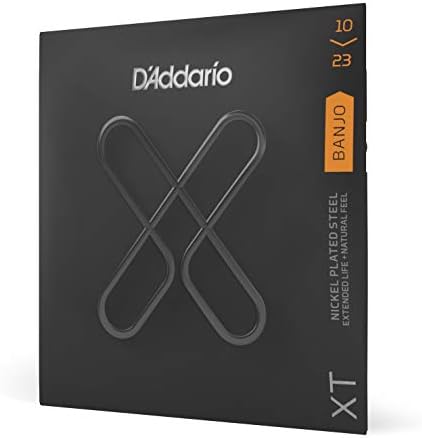
- Extended lifespan treatment on every string
- 131% better tuning stability
- Last 4 times longer than uncoated strings
- Re-sealable zip closure packaging

- Nickel/steel alloy for clear tone
- Gauges .009, .010, .013, .020, .009
- Smooth wrap wires for fast playing
- Corrosion resistant materials
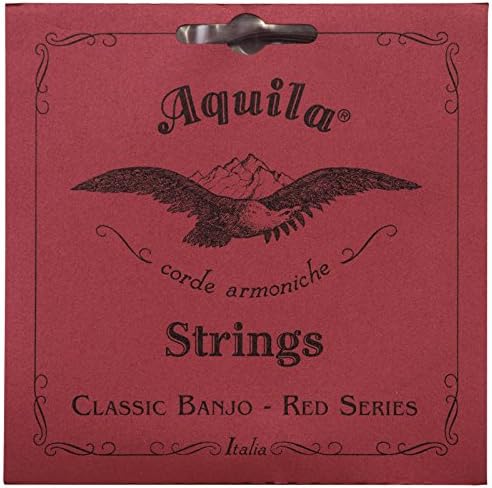
- Designed for 5-string open-back banjos
- Produces warm, acoustic tone
- Lower tension reduces finger fatigue

- Nylgut material for resonant tone
- Smooth feel mimics genuine gut strings
- Moisture-resistant composite for tuning stability
- Accurately gauged for precise intonation
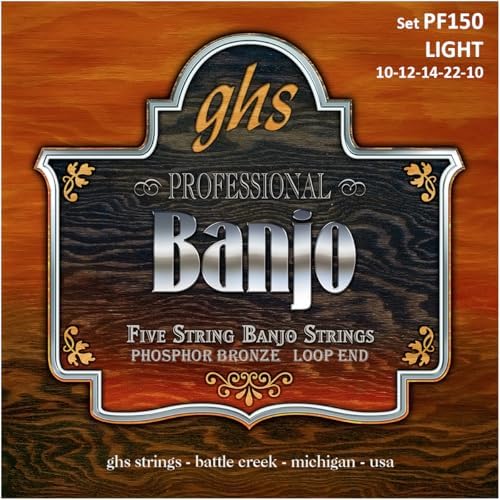
- Nitro-Pack anti-corrosion packaging
- High UTS for durability
- Lock twist technology at ball-end
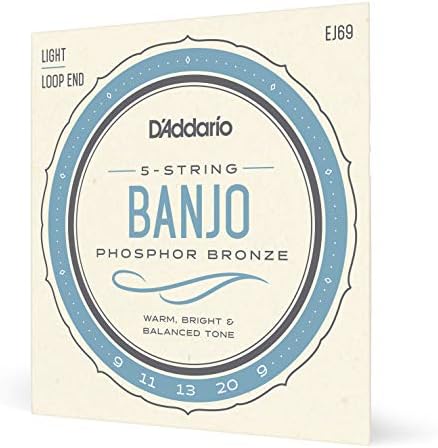
- Warm, bright, balanced tone
- Phosphor bronze wound 4th string
- Ball end construction

- Loop end strings
- 80/20 alloy construction
- Crisp sound with pleasing overtones
- Element Shield packaging

- Phosphor bronze wound 4th string
- Warm, bright, balanced tone
- Gauges .010, .013, .016, .023, .010
- Loop end construction
1. D’Addario Banjo Strings (XTJ1023)
Best for: Players wanting long string life without coated feel
D’Addario builds the XTJ1023 set with an extended lifespan treatment applied to every single wire. The coating is engineered to preserve the natural sound and physical grip of raw metal, avoiding the slippery texture some treated lines create. If you dislike changing wire frequently, the maker claims these strings survive at least four times longer than traditional uncoated options.
The structural core relies on high-carbon steel combined with proprietary Fusion Twist technology at the attachment points. According to the listing, this construction keeps the instrument in tune 131% better than standard strings. It holds pitch through heavy picking hand pressure, which suits touring players who travel across different humidity levels.
Inside the box, you get a re-sealable zip bag to store partial sets, plus an authentication code for the brand’s reward program.
Pros
- Lifespan treatment applied to every wire in the set
- High-carbon steel core with Fusion Twist anchoring
- Resealable zip-closure inner bag for storage
- Includes Players Circle code for gear registration
Cons
- Stiff, resistant strings require careful installation on delicate vintage tailpieces.
2. Martin Vega Light
Best for: Fast Scruggs-style bluegrass pickers wanting light action
Martin crafts the Vega Light set using a specialized nickel and steel alloy wrap wire. This metal blend emphasizes top-end clarity, bright acoustic projection, and fast note separation across the headstock. If you play traditional Scruggs rolls or rapid plectrum lines, the smooth outer surface lets fingers glide without snagging.
The gauges run.009, .010, .013, .020, and.009, creating a soft setup that minimizes hand fatigue. Beginners and light-touch players can press frets cleanly without fighting against stiff, resistant strings. Vega strings have been produced since 1889, retaining a distinct tone profile tailored specifically for Americana, folk, and bluegrass picking styles.
Clawhammer specialists seeking deep, rounded old-time thump may prefer other options, as the Martin Vega Light is designed for bright tone and clarity. When compared against the GHS PF150 set’s.022 wound string, the Vega’s.020 fourth string gives up some bottom-end fullness to gain playing speed. The corrosion-resistant outer alloy protects against hand sweat, keeping tone lively through multiple performances.
Pros
- Light.009 to.020 gauge setup reduces finger fatigue
- Nickel and steel blend emphasizes bright acoustic snap
- Smooth wrap wire supports rapid picking techniques
- Built with corrosion-resistant materials for lasting tone
Cons
- The.020 low string lacks deep bass weight for players who prefer thick tone
3. Aquila Red Series AQ-11B Banjo Strings
Best for: Traditional open-back clawhammer and frailing players
Aquila Red Series AQ-11B strings bring a completely different character to the banjo, utilizing a dense synthetic formulation instead of metal. These strings generate a warm, woody acoustic voice without the metallic ping associated with standard wire. Clawhammer players who desire an authentic round tone will appreciate how gently these respond to down-picking.
The relaxed feel substantially eases left-hand effort, letting you practice long old-time fiddle tunes without finger soreness. The set is tuned to standard medium-tension DBGDG intervals, matching the physical needs of lightweight 5-string open-back rims. They offer a comfortable, smooth tactile feel across the entire length of the neck.
Bluegrass players using heavy metal fingerpicks on modern resonator setups will ruin these strings quickly, as the seller explicitly warns against Scruggs-style playing. The Aquila Red Series requires smooth, deburred edges on both the nut slots and tailpiece to prevent cutting the synthetic material.
Pros
- A relaxed, supple feel reduces physical hand strain.
- Warm, non-metallic voice suited for old-time styles
- Designed specifically for open-back rim construction
- Provides comfortable tactile feel under bare fingers
Cons
- Requires smooth nut and tailpiece edges to prevent premature string breakage
4. Aquila AQ-5B Banjo Strings
Best for: Players seeking historic gut tone without tuning instability
Aquila New Nylgut AQ-5B strings mimic the natural tonal qualities of antique animal gut without the terrible tuning issues of organic tissue. Traditional gut absorbs atmospheric moisture rapidly, which throws off pitch whenever room temperatures change. Aquila uses a proprietary synthetic composite that resists ambient humidity, maintaining stable intonation through damp outdoor jams.
The sound is notably sweet, full, and round, providing distinct separation without harsh overtones. Each string in this five-string DBGDG set is gauged to specific densities, which helps balance string volume evenly across the fingerboard. It transforms stiff instruments into mellow, historically resonant instruments suitable for parlor music, minstrel pieces, and early American folk.
Anyone needing the aggressive percussive bite of steel to cut through an acoustic ensemble should avoid this set, as the Nylgut material can’t project like metal wire.
Pros
- Synthetic material mimics genuine historic gut tone
- Moisture-resistant composite holds pitch in humid weather
- Balanced string densities provide accurate fretboard intonation
- Sweet, mellow attack without harsh treble bite
Cons
- Tie-end installation requires knotting that takes longer than standard loop-end setups
5. GHS PF150
Best for: Players struggling with string breakage at the tailpiece
The GHS PF150 set features anti-corrosion packaging. Each string uses GHS Lock Twist technology at the loop attachment, reinforcing the physical weak point where banjo strings typically unravel or snap under stress.
GHS packages these strings in sealed Nitro-Pack envelopes, which block external oxygen and moisture until you open the pack. This ensures the phosphor bronze wrap wire stays fresh in your instrument case for months before installation. Gauged at.010 to.022, this light set provides standard acoustic resistance that works reliably across modern banjos.
Players who prefer ultra-light wire will notice the.010 first string feels stiffer than the.009 top string found on the Martin Vega Light set. Traditionalists wanting soft, gut-style frailing action may prefer other options, as the GHS PF150 is phosphor bronze.
Pros
- Lock Twist loop ends resist breakage at the tailpiece hooks
- Sealed Nitro-Pack packaging preserves wire freshness
- Phosphor bronze wrap balances brightness with low-end warmth
- Robust, high-resistance steel handles aggressive right-hand picking.
Cons
- The.010 gauge top wire creates firmer fretting resistance than.009 light sets
6. D’Addario Banjo Banjo Strings Phosphor Bronze EJ69
Best for: All-around 5-string players wanting balanced acoustic projection
D’Addario EJ69 is one of the most widely used phosphor bronze banjo sets for good reason: it delivers consistent acoustic balance. The set pairs plain steel treble strings (.009, .011, .013) with a warm phosphor bronze wound fourth string (.020) and a.009 fifth string. This combination yields clear treble snap while retaining smooth body behind the bass register.
Manufactured in New York, these strings follow exacting specifications. The loop-end construction is designed for a universal fit. It gives players a predictable feel that handles clawhammer frailing, basic folk strumming, or bluegrass finger rolls equally well.
Musicians looking for an ultra-thick low register will find the.020 wound string somewhat lean, especially next to the.023 wound fourth string on D’Addario’s EJ55 set. Overall, this set provides an approachable, comfortable feel suitable for beginner and professional setups alike.
Pros
- Balanced gauges (.009, .011, .013, .020, .009) suit multiple styles
- Phosphor bronze fourth string warms up the bass register
- Universal loop ends fit all standard commercial tailpieces
- Manufactured in New York to strict production standards
Cons
- Uncoated wire oxidizes faster than treated sets if not wiped down regularly
7. Ernie Ball Earthwood 5-String Bluegrass 80/20 Bronze Banjo Strings
Best for: Players wanting crisp acoustic bite and chime
Ernie Ball Earthwood strings bring the punch of 80/20 bronze to the standard banjo. The wound string uses an alloy of 80% copper and 20% zinc wrapped around a durable steel core. This specific composition creates an articulate, ringing sound with prominent overtones, giving your banjo distinct projection that cuts through vocal tracks and other acoustic instruments.
The gauges run.009, .011, .013, .020, and.009, matching standard light profiles for comfortable fingering. All strings feature loop ends engineered to lock securely onto standard tailpiece pins. Ernie Ball packages the Earthwood line in proprietary Element Shield packaging, creating an airtight barrier that keeps the metal fresh from California factory to your front door.
Performers seeking a mellow, dark clawhammer tone will find the brassy 80/20 treble output excessively bright for old-time music. When measured against the treated wire on the D’Addario XTJ1023 set, these uncoated bronze wraps will wear through their initial acoustic brilliance noticeably faster under daily playing. For bright picking work, however, they respond instantly to fingerpick attacks.
Pros
- 80/20 bronze wrap produces crisp acoustic chime and overtones
- Loop ends offer dependable fitment across modern banjos
- Element Shield packaging preserves metal freshness before opening
- A supple, easy-to-press feel allows fast picking with minimal finger fatigue.
Cons
- Pronounced acoustic chime is too bright for players wanting dark clawhammer tone
8. D’Addario Tenor Banjo Strings
Best for: Heavy pickers needing firm string resistance and bold bass
The D’Addario EJ55 set steps up string thickness, running gauges of.010, .013, .016, a.023 phosphor bronze wound string, and a matching.010 fifth string. This medium profile increases physical resistance across the fingerboard, allowing aggressive players to strike the strings hard without causing fret buzz. The thick wire pushes the banjo head more dynamically, generating robust acoustic volume.
The thick.023 fourth string lays down a noticeably fuller bottom end. Crafted with loop-end construction, these strings slip easily over standard tailpiece anchors. Like other D’Addario lines, the inner pack features a recyclable VCI envelope designed to prevent metal tarnishing while stored in your accessory pocket.
Beginners with tender fingers will struggle with the higher fretting pressure required to press these medium wires cleanly to the fretboard. When put against the D’Addario EJ69 set with its slender.009 top string, this set’s.010 plain steel wire requires substantially more hand strength to bend notes. For heavy strummers and loud picking setups, the extra resistance keeps the instrument under complete control.
Pros
- Thick.023 phosphor bronze string delivers deep, full bass resonance
- Loop-end construction ensures broad tailpiece compatibility
- Includes registration code for the manufacturer’s reward system
Cons
- High tension demands significant hand strength compared to.009 gauge light sets
Also Worth Considering
The MARTIN Vega Banjo set (V740) is a medium-gauge collection built for players who want the punch of Martin’s nickel-steel wrap wire at a resistant profile. The Martin Vega Light set beats it for most beginners because the lighter.009 string gauge requires far less finger strength to play. Heavy bluegrass pickers wanting added resistance against the fretboard will still find this medium set worth exploring.
The Ernie Ball Banjo Strings frailing set (P02061) features an 80/20 bronze alloy with a 10-24 gauge spread.
The MUSCELL Banjo Strings pack provides three sets of handmade phosphor bronze strings in a medium 10-23 configuration using ball-end terminals. However, owners of hybrid banjos or guitars converted to banjo tailpieces requiring ball ends will find this three-pack useful.
How We Chose
Listings had to state exact gauges and construction types to qualify for consideration. Products with vague descriptions regarding ball-end or loop-end fit were dropped immediately. Synthetic lines were balanced against metal formulations to serve both clawhammer and bluegrass playing styles. Packaging quality, such as sealed anti-corrosion barriers, was factored into the selection because banjo strings often sit in instrument cases for months before use.
How to Choose the Right Banjo Strings
Instrument Setup and Rim Style
Open-back banjos paired with bare fingers or light frailing require gentle tension, making synthetic lines like Aquila New Nylgut ideal. Resonator banjos built for loud stage bluegrass need stiff steel or bronze wire to project sound through the chamber.
Metal Alloys and Acoustic Voice
Nickel-plated steel, found on Martin Vega Light, offers snappy treble clarity and fast playing surfaces. Phosphor bronze, featured on D’Addario EJ69, introduces lower mid-range warmth through its wound fourth string. Ernie Ball’s 80/20 bronze brings a brassy ring, while synthetic gut alternatives remove all metallic bite for warm, historical folk music.
String Gauge and Action Height
Light sets gauged at.009 allow easy fretting and fast note runs, making them great for beginners building finger strength. Medium sets running up to.023, like D’Addario EJ55, produce louder volume and resist buzzing under hard pick strikes. Beginners should start with light wire to avoid unnecessary hand fatigue during practice.
Tailpiece Connection Type
Most banjos use loop-end strings that hook over small metal tailpiece posts, which all standard metal sets here provide. Synthetic sets like Aquila Red Series require hand-tying knots, demanding smooth hardware edges to avoid snapping. Players can review proper setup specifications on the Frets.com banjo tailpiece guide to prevent mechanical failures.
Frequently Asked Questions
How often should banjo strings be changed?
Strings should generally be replaced every three to four months, or whenever the metal loses its acoustic brightness and feels gritty. Sets with protective treatments, like D’Addario XTJ1023, last at least four times longer than untreated wire. If a single string unravels, replace the entire set.
What is the difference between loop end and ball end?
Loop-end strings feature a twisted wire loop that slips over posts found on traditional banjo tailpieces, as seen on Ernie Ball Earthwood sets. Ball-end strings have a small metal brass barrel held by the loop, designed for guitar-style tailpieces. Most standard banjos require loop ends for a correct mechanical fit.
Can steel fingerpicks be used on synthetic strings?
Metal fingerpicks should never be used on synthetic strings like Aquila New Nylgut, because the sharp edges cut the composite material. Aquila specifically warns against heavy bluegrass picking for this reason. Synthetic sets are built solely for bare fingers, fingernails, or soft leather and plastic thumb picks during frailing.
Why do fourth strings feature wound wire?
The fourth string is tuned to a lower pitch and requires greater physical mass to produce low notes without becoming loose and unplayable. Wrapping phosphor bronze around a steel core, as D’Addario EJ69 does, adds necessary weight while keeping the string flexible. Plain unwound steel at that pitch would feel stiff and sound dull.
Do open-back banjos need different strings than resonator models?
Open-back instruments don’t strictly require special strings, but they sound best with warm, lower-tension sets like Aquila Red Series. Resonator banjos are naturally louder and brighter, benefiting from the cutting power of nickel or bronze wire. Your chosen musical genre ultimately dictates the proper string alloy more than the rim design alone.
Final Thoughts

For most players, the D’Addario XTJ1023 offers the best combination of longevity, stable tuning, and natural playing feel. If you prefer low finger tension and an authentic clawhammer sound, grab the Aquila New Nylgut set instead. Check your banjo’s tailpiece style today, select your ideal gauge, and string up your instrument for cleaner picking.
As an Amazon Associate, Cleanestor earns from qualifying purchases at no additional cost to you.