
The Rode RØDE NT1 Signature is the best studio microphone here because its box lists a shock mount, pop filter and XLR cable together. That means you only need to add an audio interface before you start recording vocals or streams. Some list a full accessory suite ready for a desk, while others ship as a bare microphone that needs extra gear to function.
- Best Overall: Rode RØDE NT1 Signature — includes a shock mount, pop filter and XLR cable right out of the box.
- Best Dynamic Vocal: Shure SM7B — dynamic cartridge with built-in pop filtering and all-metal construction.
- Best High-End Condenser: Shure KSM32C — ¾” capsule with up to 37dB off-axis rejection at 180 degrees.
- Best Dual Output: Rode RØDE NT1 5th Gen — connects via both XLR and USB-C with 192kHz conversion.
- Best Project Studio: Audio-Technica AT2020 — low mass diaphragm and wide dynamic range for home recording.
- Best USB Studio: Logitech Blue Yeti — three-capsule array with four pickup patterns and onboard controls.
- Best Mid-Range XLR: Shure SM4 — brass 1-inch dual-diaphragm capsule handling sounds up to 140dB.
- Best for Isolation: Audio-Technica AT2035 — custom shock mount plus switchable 80 Hz high pass filter.
- Simplest USB Setup: FIFINE T669 — scissor arm stand, double pop filter and 8.2ft USB cable included.
- Best Simple Large-Diaphragm Condenser: Mackie EM-91C — large-diaphragm condenser shipping with a shock mount and XLR cable.

- Includes shock mount, pop filter and XLR cable
- Large-diaphragm condenser NT1 voicing
- Among the lowest self-noise microphones made
- Tight cardioid pattern focuses on voice
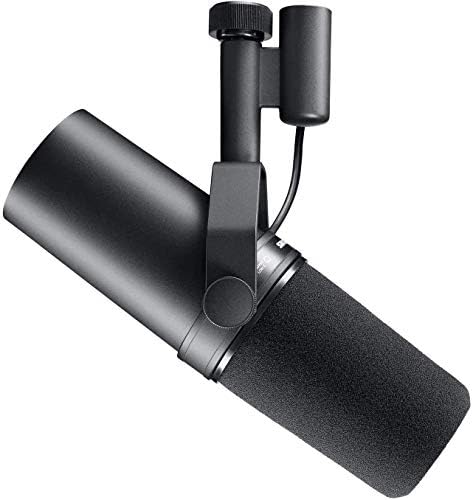
- Dynamic cartridge with wide-range frequency response
- Cardioid pattern with air suspension shock isolation
- Built-in pop filtering and detachable windscreen
- Professional XLR output for interfaces and mixers

- ¾” capsule with embossed Mylar diaphragm
- Cardioid pattern rejects up to 37db at 180 degrees
- Neutral even response in the KSM line
- Shock mount and detachable magnetic pop filter included

- Connects via XLR or USB to computer
- High SPL handling capability
- Revolution Preamp with high-gain design
- Analog-to-digital conversion up to 192kHz

- The price/performance standard in side address studio condenser microphone technology
- Ideal for project/home studio applications
- High SPL handling and wide dynamic range provide unmatched versatility
- Custom engineered low mass diaphragm provides extended frequency response and superior transient response
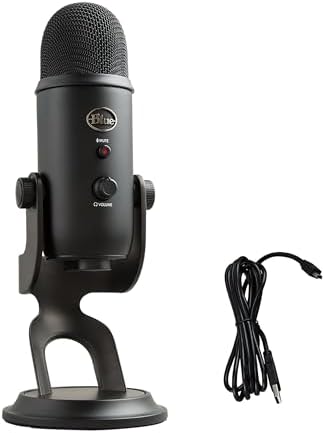
- Custom three-capsule array: This professional USB mic produces clear, powerful, broadcast-quality sound for YouTube videos, Twitch game streaming,…
- Blue VO!CE software: Elevate your streamings and recordings with clear broadcast vocal sound and entertain your audience with enhanced effects,…
- Four pickup patterns: Flexible cardioid, omni, bidirectional, and stereo pickup patterns allow you to record in ways that would normally require…
- Onboard audio controls: Headphone volume, pattern selection, instant mute, and mic gain put you in charge of every level of the audio recording and…

- SMOOTH AUDIO REPRODUCTION – The SM4 microphone features a brass 1-inch dual-diaphragm capsule, providing clean, controlled low-end frequencies and…
- SUPERIOR NOISE REJECTION – The SM4's uniform cardioid polar pattern ensures superior off-axis rejection of unwanted noise, capturing your sound…
- REDUCES PROXIMITY EFFECT – Designed with a large “sweet spot,” the SM4 reduces the proximity effect, offering more consistent audio quality, making…
- INTERFERENCE SHIELDING – The SM4 microphone employs patent-pending interference shielding technology, effectively blocking RF noise from cell phones,…

- Designed for critical home/project/professional studio applications and live performance
- Cardioid polar pattern reduces pickup of sounds from the sides and rear, improving isolation of desired sound source
- Large diaphragm for smooth, natural sound and low noise
- High SPL handling and wide dynamic range provide excellent versatility
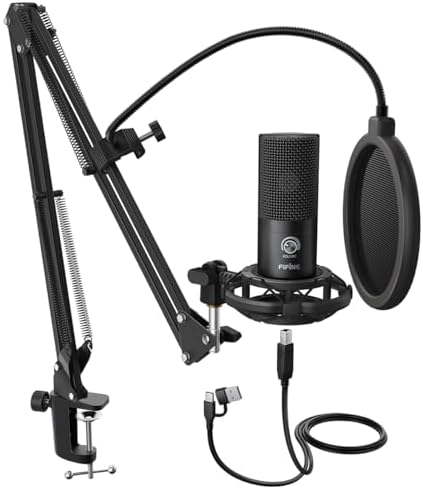
- [USB Output] Enables simple setup. USB studio recording microphone kit provides a direct convenient plug-and-play connection to pc and laptop without…
- [Excellent Sound Quality] With rugged construction for durable performance, the vocal recording microphone, USB condenser mic for PC,offers a wide…
- [Durable Arm Set] The podcast microphone bundle with versatile and sturdy broadcast suspension boom scissor arm with 180° up and down rotation, 135°…
- [Easy to Attach] The streaming microphone for PC includes adjustable boom studio scissor arm stand that features a heavy-duty combo mount consisting…

- Affordable professional-quality condenser microphone
- Perfect for both large and home-based studios
- Rugged, reliable construction
- Cardioid polar pattern
1. RØDE NT1 Signature Series Studio Condenser Microphone
Best for: singers needing a complete vocal setup immediately.
This condenser microphone ships with everything required to start tracking vocals right away. The box lists the NT1 Signature, an SM6 shock mount with a built-in pop filter, an XLR cable and a dust cover. You’ll just connect it to your own interface and record without hunting for missing parts. The tight cardioid pattern focuses on the voice while rejecting the rest of the room.
Rode describes it as having among the lowest self-noise microphones ever made, which means quiet passages stay clean. It’s built around the voicing trusted in studios for two decades, giving recordings a familiar character. If you’re streaming or singing, the included accessories handle plosives and vibrations from the first take.
Anyone who already owns a premium shock mount and cable won’t benefit from the bundled accessories filling up their drawer. Comparing its box contents to the Audio-Technica AT2020, this one lists a shock mount, pop filter and XLR cable against just the microphone alone.
Pros
- Shock mount, pop filter and XLR cable included in the box
- Tight cardioid pattern rejects room noise
- Dust cover provided for storage
- Legendary NT1 large-diaphragm condenser voicing
Cons
- Box lists the NT1, SM6 shock mount, XLR cable and dust cover but no audio interface, so that remains a separate purchase
2. Shure SM7B Dynamic Vocal Microphone
Best for: podcasters wanting broadcast-ready clarity without extras.
A dynamic cartridge sets this microphone apart from the condensers on this list. It captures warm, balanced vocals with exceptional clarity, making it a standard choice for voiceover and professional studio recording. Built-in pop filtering and a detachable windscreen reduce plosives and breath noise without adding external screens.
The precise cardioid pickup pattern works with air suspension shock isolation to minimize background noise and handling vibrations. Rugged all-metal construction with advanced electromagnetic shielding helps prevent unwanted hum from nearby electronics. A professional XLR output connects to interfaces and mixers for full control over gain and tone shaping.
Its listed dynamic cartridge contrasts directly with the brass 1-inch dual-diaphragm capsule found on the Shure SM4.
Pros
- Dynamic cartridge with wide-range frequency response
- Built-in pop filtering and detachable windscreen
- Air suspension shock isolation minimizes handling noise
- All-metal construction with electromagnetic shielding
- Professional XLR output for mixer connection
Cons
- Professional XLR output connects to audio interfaces and mixers, ruling out direct USB computer users.
3. Shure KSM32C Studio Kit Cardioid Condenser Microphone
Best for: engineers needing flat response and extreme off-axis rejection.
This studio kit centers on a precision engineered ¾” capsule with an embossed Mylar diaphragm. Shure states it delivers smooth response and exceptional low-frequency performance typically found in larger 1” capsules. The remarkably even response lets you shape tones intentionally without fighting exaggerated peaks in the top end.
The precisely-tuned cardioid pattern delivers exceptional off-axis rejection, rated up to 37dB down at 180 degrees. Surrounding instruments and room reflections stay out of your mix for cleaner recordings. The included shock mount isolates the microphone from rumbles, while a detachable magnetic pop filter snaps into place to reduce plosive sounds.
Singers looking for a colored, hyped sound will find this neutral voicing too transparent for their taste. The stated ¾” capsule measures smaller than the large brass dual-diaphragm capsule listed on the Shure SM4.
Pros
- Precision engineered ¾” capsule with embossed Mylar diaphragm
- Up to 37dB off-axis rejection at 180 degrees
- Flattest voicing in the KSM line
- Detachable, magnetic pop filter included
- Premium case and threaded adapter provided
Cons
- The box lists shock mount, pop filter, case, and adapter, not an interface, so that is a second purchase.
4. RØDE NT1 5th Gen Studio Condenser Microphone
Best for: creators switching between interfaces and direct computer recording.
Fusing the classic NT1 sound signature with next-generation technology, this condenser offers two ways to connect. You can route it through an audio interface via XLR or plug directly into a computer via USB for studio-grade sound. It’s an all-in-one digital recording solution for the home or a professional booth.
The body is machined from high-grade aluminium with nickel plating and military-grade ceramic coating. Rode’s ultra-low-noise, high-gain Revolution Preamp sits inside alongside high-resolution analog-to-digital conversion up to 192kHz. It handles extremely low self-noise and high SPLs across voiceovers, guitars, drums and piano.
Users relying solely on basic USB connections without needing XLR routing carry extra hardware they might never use. Its listed 192kHz analog-to-digital conversion matches the resolution stated on the MAONO A04 USB Microphone in the alternatives below.
Pros
- Connects via XLR or USB-C
- High-resolution analog-to-digital conversion up to 192kHz
- Ultra-low-noise Revolution Preamp built in
- Machined aluminium body with military-grade ceramic coating
- Classic warm, silky character with high SPL handling
Cons
- Offers XLR and USB-C outputs where a purely analog setup only requires one, adding circuitry some traditionalists skip
5. Audio-Technica AT2020 Cardioid Condenser Studio XLR Microphone
Best for: home producers starting a project studio setup.
Designed for project and home studio applications, this side address condenser uses a custom engineered low mass diaphragm. It provides extended frequency response and superior transient response for capturing fast musical details. High SPL handling and wide dynamic range give it versatility across different sources.
The cardioid polar pattern reduces pickup of sounds from the sides and rear, improving isolation of the desired source. An integral 3 pin XLRM type output connector ensures compatibility with standard studio cables. It serves as a straightforward entry point for tracking vocals or acoustic instruments.
Streaming setups requiring direct USB connection can’t use this microphone without buying a separate audio interface first. The listing names it ideal for project/home studio applications, whereas the Shure SM7B targets professional studio recording explicitly.
Pros
- Custom engineered low mass diaphragm
- Extended frequency response and superior transient response
- High SPL handling and wide dynamic range
- Cardioid polar pattern improves source isolation
- Integral 3 pin XLRM type output connector
Cons
- Lists an integral 3 pin XLRM output only, meaning direct computer recording requires a separate interface purchase
6. Logitech Creators Blue Yeti USB Microphone
Best for: streamers needing multiple pickup patterns instantly.
A custom three-capsule array produces clear, broadcast-quality sound for YouTube videos, Twitch game streaming and podcasting. Four pickup patterns—cardioid, omni, bidirectional and stereo—allow you to record in ways that normally require multiple microphones. You can switch between solo vocals, group interviews and instrument tracking on the fly.
Onboard audio controls put headphone volume, pattern selection, instant mute and mic gain right at your fingertips. The adjustable desktop stand lets you pivot the mic in relation to the sound source to optimize quality. Plug ‘n Play setup works in seconds on Mac or PC, and Blue VO!CE software adds broadcast effects.
Engineers tracking in treated rooms with dedicated XLR interfaces won’t use the built-in USB conversion or desktop stand. The four pickup patterns contrast sharply with the single tight cardioid pattern listed on the Rode RØDE NT1 Signature.
Pros
- Custom three-capsule array
- Four pickup patterns: cardioid, omni, bidirectional, stereo
- Onboard controls for volume, pattern, mute and gain
- Adjustable desktop stand included
- Blue VO!CE software with enhanced effects
Cons
- Listed for Mac or PC, which rules out anyone recording on other platforms.
7. Shure SM4 XLR Studio Condenser Microphone Kit
Best for: close-miking loud instruments without distortion.
A brass 1-inch dual-diaphragm capsule provides clean, controlled low-end frequencies and smooth, detailed highs. Designed with a large sweet spot, it reduces the proximity effect for consistent audio when working close to the grille. It’s capable of capturing sounds up to 140dB, ensuring loud instruments come through clearly without distortion.
Patent-pending interference shielding technology blocks RF noise from cell phones, laptops and Wi-Fi routers. An integrated pop-filter and woven mesh Faraday cage minimize plosive sounds right at the capsule. Rugged, all-metal construction offers legendary durability for both stage and studio use, keeping recordings mix-ready from the start.
Its 140dB SPL handling exceeds the high SPL handling listed without a figure on the Audio-Technica AT2020.
Pros
- Brass 1-inch dual-diaphragm capsule
- Captures sounds up to 140dB without distortion
- Patent-pending interference shielding blocks RF noise
- Integrated pop-filter and woven mesh Faraday cage
- Rugged, all-metal construction
Cons
- Capable of capturing sounds up to 140dB, so anything louder means distortion.
8. Audio-Technica AT2035 Cardioid Condenser Microphone
Best for: vocalists needing switchable filters and pad control.
Built for critical home, project and professional studio applications, this large diaphragm condenser delivers smooth, natural sound. The cardioid polar pattern reduces pickup from the sides and rear, improving isolation of your target source. A custom shock mount provides superior isolation from desk rumbles and stand vibrations during sessions.
Two physical switches add significant flexibility to your signal chain. A switchable 80 Hertz high pass filter removes low-frequency rumble before it hits your interface, while a 10 dB pad prevents clipping on louder sources. High SPL handling and wide dynamic range provide excellent versatility across vocals and instruments.
Musicians who prefer adjusting EQ entirely in software won’t use the physical switches on the microphone body. The switchable 80 Hertz high pass filter is absent from the feature list of the Audio-Technica AT2020.
Pros
- Large diaphragm for smooth, natural sound
- Custom shock mount provides superior isolation
- Switchable 80 Hertz high pass filter
- Switchable 10 dB pad
- High SPL handling and wide dynamic range
Cons
- Features switchable 80 Hertz high pass filter, so anyone needing lower cutoffs must look elsewhere.
9. FIFINE T669 Studio Condenser USB Microphone
Best for: beginners wanting a desk-ready USB bundle immediately.
This USB condenser mic provides a direct plug-and-play connection to PCs and laptops without additional hardware or drivers. The cardioid condenser capsule captures crystal-clear audio from the front while avoiding ambient noise. It comes ready to go with a desktop mic boom arm stand and an 8.2ft USB cable for flexible placement.
The versatile broadcast suspension boom scissor arm features 180° up and down rotation and 135° forward and backward extension. A heavy-duty combo mount includes a sturdy C-clamp and a detachable desktop mount. With a 13″ fixed horizontal arm offering a 30″ reach, the low-profile design allows talent to perform without facial obstruction.
Console gamers playing on Xbox can’t use this microphone, as the listing states it’s incompatible with that platform. The included 8.2ft USB cable contrasts with the XLR-only connectivity listed on the Mackie EM-91C.
Pros
- Direct USB plug-and-play connection
- Broadcast suspension boom scissor arm included
- Double pop filter attached for two layers of dissipation
- 8.2ft USB-B to USB-A/C cable provided
- 30″ reach with 180° rotation on the arm
Cons
- States it’s incompatible with Xbox, ruling out console gamers using that specific platform
10. Mackie EM-91C
Best for: small studios needing a simple large-diaphragm condenser.
Listed as a large-diaphragm condenser microphone, the EM-91C is designed for both large and home-based studios. It features a cardioid polar pattern to focus on the sound source directly in front of it. Rugged, reliable construction ensures it holds up during regular tracking sessions.
The box includes a shock mount and an XLR cable, providing the basics needed to mount it on a stand and connect to an interface. It keeps the accessory list short compared to bundles that add boom arms and pop filters. For someone building a minimal vocal chain, it covers the essential hardware without excess parts.
Streamers needing direct USB computer connection must route this XLR microphone through an external audio interface first. Its included shock mount and XLR cable match exactly what the Rode RØDE NT1 Signature provides minus the pop filter and dust cover.
Pros
- Large-diaphragm condenser capsule
- Cardioid polar pattern
- Shock mount included
- XLR cable included
- Rugged, reliable construction
Cons
- Box includes a shock mount and XLR cable but no pop filter, leaving plosive protection as a separate task
Also Worth Considering
The MAONO Gen2 Condenser Microphone Kit is an XLR/USB condenser microphone kit aimed at PC podcast recording. The Rode RØDE NT1 5th Gen beats it by listing a patented Revolution Preamp and high-resolution analog-to-digital conversion alongside its dual XLR and USB-C outputs. Creators who want a simpler alternative for basic PC podcasting might still consider it.
The MAONO A04 USB Microphone is a high-resolution 24Bit condenser mic kit designed for PC podcast use. The Rode RØDE NT1 5th Gen also lists high-resolution analog-to-digital conversion but pairs it with a machined aluminium body and military-grade ceramic coating. Podcasters needing a straightforward USB kit for computer recording could look here.
The Rode Cardioid Dynamic Broadcast Microphone is a dynamic broadcast microphone with an XLR connection. The Shure SM7B surpasses it by detailing a dynamic cartridge, built-in pop filtering, air suspension shock isolation and advanced electromagnetic shielding. Broadcasters who just need a basic dynamic XLR mic might still find it useful.
How We Chose
A listing had to state its capsule type, polar pattern or bundled hardware to earn a place. Products lacking any descriptive feature bullets were excluded from the main selections. What separates the chosen picks is how they handle the signal path: some rely entirely on external interfaces via XLR, while others integrate USB conversion directly into the body. Bundled accessories like shock mounts, pop filters and boom arms further divide the options based on what arrives ready to record versus what requires additional purchases. Each selected product presents a distinct combination of these stated specifications.
How to Choose the Right Studio Microphone
What comes in the box
Decide if you need a full kit or just the microphone. The Rode RØDE NT1 Signature lists a shock mount, pop filter and XLR cable, while the Audio-Technica AT2020 ships alone. Check the “what’s included” section before assuming you have everything required to start recording.
Connection type for your setup
Choose between XLR and USB based on your existing gear. The Logitech Blue Yeti plugs directly into a computer, while the Shure SM7B requires an XLR interface. The Rode RØDE NT1 5th Gen offers both connections in a single unit for maximum flexibility.
Pickup pattern for your room
Select the polar pattern that matches your recording environment. A cardioid pattern, found on the Mackie EM-91C, rejects side and rear noise. The Logitech Blue Yeti lists four patterns including omni and stereo for group sessions or wider ambient capture.
Handling loud sources
Check the maximum sound pressure level if you track loud instruments. The Shure SM4 states it captures sounds up to 140dB without distortion. Other models mention high SPL handling generally, but only specific figures let you compare limits directly.
Frequently Asked Questions
Do I need an audio interface for these microphones?
Only XLR models require one. The Shure SM7B and Audio-Technica AT2035 output via XLR, meaning you must connect them to an interface or mixer. USB-equipped options like the Logitech Blue Yeti and FIFINE T669 plug directly into your computer without extra hardware.
What does a high pass filter actually do?
It cuts low-frequency rumble before it reaches your recording. The Audio-Technica AT2035 features a switchable 80 Hertz high pass filter for this exact purpose. Removing desk vibrations and air conditioning hum at the source saves time during mixing.
Can I use a condenser microphone for live streaming?
Yes, if your room is reasonably quiet. Condensers like the Shure KSM32C capture highly detailed sound but also pick up more background noise than dynamic models. The Shure SM7B is often preferred for untreated rooms due to its dynamic cartridge and focused audio.
Why do some microphones include a shock mount?
A shock mount isolates the microphone body from physical vibrations traveling through the stand. The Audio-Technica AT2035 and Mackie EM-91C both list a custom or standard shock mount in the box. Without one, typing or desk bumps can create low-frequency thumps in your audio.
Does a larger diaphragm always mean better sound?
Not necessarily, though it changes the character. The Shure KSM32C uses a ¾” capsule but states it delivers low-frequency performance typically found in 1” capsules. Diaphragm size affects sensitivity and tone, but the overall engineering matters just as much.
Are USB microphones good enough for professional recording?
They can be, depending on the internal components. The Rode RØDE NT1 5th Gen lists high-resolution analog-to-digital conversion up to 192kHz alongside a Revolution Preamp. This internal processing rivals many external interfaces, making direct USB recording viable for serious projects.
Conclusion

The Rode RØDE NT1 Signature remains the best studio microphone for most people because it supplies the shock mount, pop filter and cable you’d otherwise hunt down separately. If you just need a quick USB connection without extra gear, the FIFINE T669 handles that job simply. Pick the connection type that fits your current desk, and you’ll be recording today.
As an Amazon Associate, Cleanestor earns from qualifying purchases at no additional cost to you.