
If you’re learning guitar on an acoustic instrument and considering an electric guitar, one of the most common questions is: Does acoustic guitar transfer to electric?
Yes. Most of the fundamental skills you develop on acoustic guitar transfer directly to electric guitar. Chords, rhythm, scales, note recognition, fretboard knowledge, picking, finger coordination, timing, and musical understanding all remain useful when you switch instruments.
However, acoustic and electric guitars are not identical. Their strings, necks, body shapes, action, pickups, controls, and playing techniques can differ significantly. Some techniques become easier on electric, while others require new skills that you may not encounter as often on acoustic.
Recommended Guitar Buying Guides:
- 7 Best Acoustic Guitars for Every Skill Level and Budget
- 9 Best Beginner Guitar Picks for Your Musical Journey
- 10 Best Acoustic Guitar Strings: Our Expert Picks
- 10 Best Beginner Electric Guitar Models for New Players
- 6 Best Beginner Bass Guitar Picks for Your First Instrument
- 10 Best Classical Guitar Strings for Every Playing Style
This means that learning acoustic guitar is not a wasted investment if you eventually want to play electric. In fact, acoustic practice can give you a strong foundation. The key is understanding which skills transfer directly, which require adjustment, and which electric-specific techniques you’ll need to learn separately.
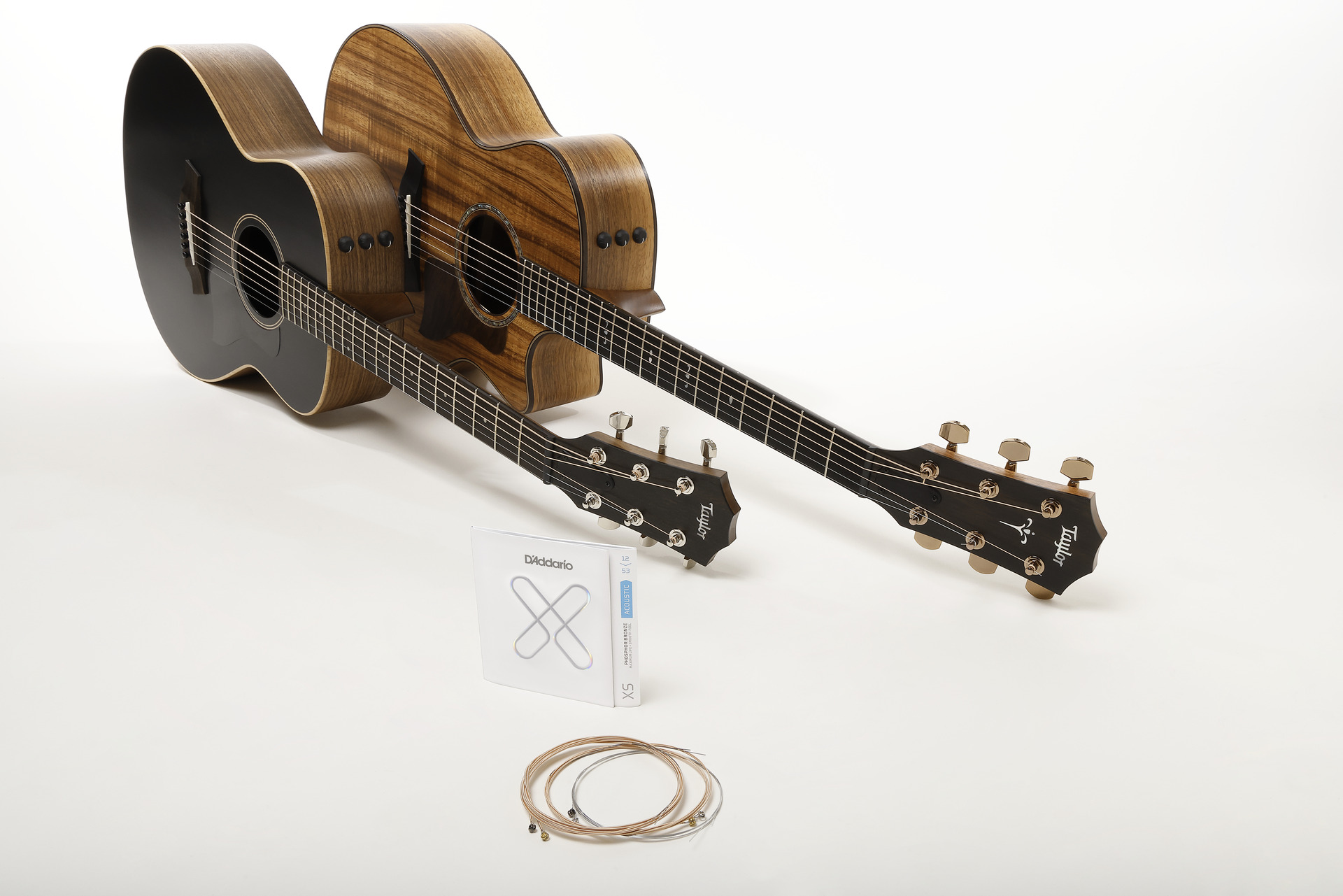
Credit: woodandsteel.taylorguitars.com
Acoustic and Electric Guitar Share the Same Fundamental System
The biggest reason acoustic guitar transfers to electric is simple: the fundamental musical system is the same.
Both instruments generally have six strings tuned:
E – A – D – G – B – E
They use the same basic fretboard layout, chord shapes, scales, intervals, notes, and musical theory.
If you learn an open G major chord on acoustic guitar, you can use essentially the same chord shape on an electric guitar.
If you learn the minor pentatonic scale on acoustic, you can play that same scale on electric.
If you learn how to read chord diagrams, understand barre chords, count rhythms, or navigate the fretboard, those skills remain useful.
The instrument changes, but the underlying guitar vocabulary doesn’t disappear.
Which Acoustic Guitar Skills Transfer to Electric?
A large proportion of your practice transfers directly.
1. Chord Knowledge
Chords are one of the most obvious transferable skills.
If you learn:
- A major
- A minor
- C major
- D major
- E major
- G major
- F major
- Barre chords
- Seventh chords
on acoustic guitar, you already understand how to form those chords on electric.
The physical feel may be different, but the musical concepts are the same.
This gives an acoustic guitarist an immediate advantage when picking up an electric guitar.
2. Chord Changes
Learning to move smoothly between chords is valuable on both instruments.
Suppose you’ve spent months practicing:
G → C → D → Em
on acoustic guitar.
When you switch to electric, the same progression remains exactly the same.
Your fretting-hand coordination doesn’t reset.
You may initially find that the electric guitar requires less pressure, but the underlying muscle memory remains useful.
3. Rhythm and Strumming
Rhythm is one of the most transferable guitar skills.
Acoustic guitar often encourages players to develop strong rhythm because the instrument frequently serves as the main accompaniment.
You learn to:
- Keep steady time
- Strum consistently
- Accentuate beats
- Control dynamics
- Follow chord changes
- Play with a metronome
- Maintain a groove
All of these skills are essential for electric guitar.
Even if you eventually become primarily a lead guitarist, rhythm remains fundamental.
Many electric guitarists spend substantial amounts of time playing rhythm parts.
4. Picking Technique
If you learn alternate picking, downstrokes, upstrokes, or basic fingerpicking on acoustic, these techniques can transfer to electric.
However, the physical sensation can change.
Electric guitar strings often have lower tension and may respond more quickly to lighter picking.
You may therefore need to adjust your attack.
An acoustic guitar can reward a relatively strong picking motion, particularly during strumming.
Electric guitar often allows you to achieve sufficient volume with a much lighter touch.
The technique transfers, but the amount of force required changes.
5. Finger Independence
Acoustic guitar is excellent for developing finger independence.
Your fretting hand needs to coordinate several fingers while your picking hand performs a separate movement.
That coordination is equally important on electric guitar.
Whether you’re playing:
- Chords
- Riffs
- Scales
- Arpeggios
- Lead lines
your hands need to work together precisely.
The more coordinated you become on acoustic, the easier it generally is to adapt to another guitar.
6. Fretboard Knowledge
Understanding the fretboard is highly transferable.
If you learn where the notes are on acoustic guitar, you don’t have to relearn the fretboard on electric.
For example, if you know where every natural note occurs on the sixth string, that knowledge remains valid when you switch guitars.
The same applies to:
- Octave shapes
- Scale patterns
- Intervals
- Pentatonic positions
- Major scales
- Chord tones
The physical instrument changes, but the note layout remains fundamentally the same.
7. Music Theory
Music theory transfers almost completely.
Concepts such as:
- Major and minor keys
- Intervals
- Chord construction
- Scales
- Triads
- Seventh chords
- Chord progressions
- Modes
- Harmonic relationships
don’t belong exclusively to acoustic or electric guitar.
They’re musical concepts.
If you understand why a chord progression works on acoustic, you understand the same progression on electric.
This is one reason learning the theory behind what you’re playing can be more valuable than simply memorizing shapes.
8. Timing
Timing is perhaps one of the most important transferable skills.
A guitarist who can play accurately with a metronome on acoustic already possesses a valuable skill when moving to electric.
Electric guitar often requires extremely precise timing, especially for:
- Riffs
- Muted rhythms
- Funk
- Rock
- Metal
- Pop
- Recording
- Ensemble playing
Acoustic practice can therefore build an excellent rhythmic foundation.
Where Acoustic and Electric Guitar Start to Differ
Although many skills transfer, the instruments have meaningful physical differences.
Understanding them makes the transition much easier.
String Tension
Many electric guitars use lighter-gauge strings than acoustic guitars.
As a result, electric strings can feel easier to bend and fret.
When you first move from acoustic to electric, you might notice that you are applying too much pressure.
Your fingers may press the strings harder than necessary.
This can cause notes to go slightly sharp because you’re pushing the string farther toward the fretboard.
The solution is simple:
Use only as much pressure as necessary to produce a clean note.
The Electric Guitar Neck Can Feel Different
Electric guitars frequently have:
- Slimmer necks
- Different neck shapes
- Different fret sizes
- Different scale lengths
- Lower action
These differences can make certain techniques feel easier.
However, there is no single electric-guitar neck shape.
Some electric guitars have chunky necks, while others are extremely thin.
So the transition depends partly on the particular instrument.
Bending Is Often Easier on Electric
String bending is one area where electric guitar generally introduces a new emphasis.
On acoustic guitar, bending is possible, but it isn’t always central to the style.
On electric guitar, bending is a major expressive technique.
You’ll need to learn how to:
- Bend to a precise pitch
- Control bend speed
- Release the bend smoothly
- Combine bends with vibrato
- Avoid accidentally sounding adjacent strings
Your acoustic experience still helps because you already understand fretting and pitch.
But bending itself requires dedicated practice.
Vibrato Becomes More Prominent
Vibrato is another technique that becomes particularly important in electric guitar playing.
A good electric-guitar vibrato involves controlled movement of the string around a target pitch.
It can be subtle or pronounced depending on the style.
Acoustic players may already have some vibrato experience, but electric guitar often places much greater emphasis on it.
Developing good vibrato takes time.
It isn’t something that automatically appears simply because you’ve learned acoustic guitar.
String Bending and Vibrato Work Together
One reason electric guitar can initially feel different is that bends and vibrato often form part of the same musical phrase.
For example, an electric guitarist might:
- Play a note.
- Bend it upward.
- Reach the target pitch.
- Hold it.
- Add vibrato.
That’s a different technical vocabulary from basic acoustic strumming.
But your existing fretting-hand coordination gives you a useful starting point.
Muting Becomes Extremely Important
Acoustic guitar requires muting, but electric guitar can make unwanted noise much more obvious.
This is especially true with:
- High gain
- Distortion
- Compression
- Loud amplification
If you’re playing a distorted chord and accidentally allow other strings to vibrate, the amplifier can make that unwanted noise very noticeable.
Electric guitar therefore teaches you to control both:
What you play
and
What you don’t play.
This involves both hands.
Your fretting hand can mute unwanted strings while your picking hand can control which strings are struck.
Distortion Changes Everything
One of the most noticeable differences when moving from acoustic to electric is amplification.
An acoustic guitar produces its sound primarily through its physical construction.
An electric guitar relies on a chain that may include:
Guitar → cable → amplifier → effects
This creates a much larger range of possible sounds.
You can use:
- Clean tones
- Overdrive
- Distortion
- Reverb
- Delay
- Chorus
- Tremolo
- Other effects
This means electric guitar introduces a new area of learning:
tone control.
Acoustic Guitar Can Actually Make You Stronger
There is a common idea that starting on acoustic guitar automatically makes someone a better guitarist.
That isn’t necessarily true.
However, acoustic practice can develop certain physical and musical habits that are useful.
Because acoustic guitars often require a somewhat stronger fretting and picking approach, beginners can become comfortable controlling their hands and maintaining rhythm.
But you don’t need to deliberately make electric guitar difficult.
Once you move to electric, allow yourself to adapt to its lower resistance and greater sensitivity.
Don’t Use Excessive Finger Pressure
One mistake acoustic players sometimes make when switching to electric is carrying over too much fretting pressure.
If a note sounds clean, you don’t need to squeeze harder.
Try this:
- Fret a note.
- Pick it.
- Gradually reduce finger pressure.
- Stop reducing when the note begins to buzz.
- Add just enough pressure to make it clean again.
This teaches you how little pressure is actually necessary.
The same principle can improve your acoustic technique too.
Does Acoustic Transfer to Electric Lead Guitar?
Yes, but with additional training.
If you have learned acoustic guitar primarily through:
- Open chords
- Strumming
- Singing
- Basic fingerpicking
you’ll have a solid foundation, but electric lead playing requires additional techniques.
You’ll likely need to work on:
- Scales
- Single-note picking
- Bending
- Vibrato
- Slides
- Hammer-ons
- Pull-offs
- String muting
- Legato
- Improvisation
The good news is that your previous guitar experience makes these concepts easier to approach.
You’re not starting from zero.
Does Acoustic Transfer to Electric Rhythm Guitar?
This transfer is even more direct.
If you already play acoustic rhythm guitar, you have a strong foundation for electric rhythm.
You can transfer:
- Chord progressions
- Strumming patterns
- Timing
- Chord shapes
- Barre chords
- Palm muting concepts
- Rhythm patterns
Electric rhythm playing then adds techniques such as tighter muting, power chords, syncopation, and effects.
Power Chords Are an Easy Transition
Power chords are particularly accessible for acoustic guitarists.
A basic power-chord shape uses fewer notes than a full major or minor chord.
For example, the basic concept is:
Root + Fifth
Power chords are extremely common in rock and other amplified styles.
If you’ve already developed good fretting-hand coordination through acoustic guitar, learning power chords should be relatively straightforward.
Fingerstyle Also Transfers
Acoustic fingerstyle skills can transfer beautifully to electric guitar.
If you already know how to:
- Alternate thumb and fingers
- Play arpeggios
- Control individual strings
- Maintain independent rhythms
you have a valuable foundation.
Electric guitar simply gives those techniques a different tonal environment.
Some electric guitarists use fingerstyle extensively, while others primarily use picks.
What Doesn’t Transfer Automatically?
Some things require specific electric-guitar practice.
These include:
Bending
You need to learn pitch accuracy and control.
Vibrato
Electric guitar often demands more developed vibrato technique.
Gain management
You need to understand how amplification affects your playing.
Feedback control
High-gain setups can produce unwanted feedback.
Tone shaping
You need to learn how guitar controls, amplifiers, and effects interact.
String muting
The louder and more distorted your sound becomes, the more important precise muting becomes.
These aren’t weaknesses in acoustic guitar training. They’re simply additional skills.
Should You Learn Acoustic Before Electric?
You don’t have to.
There is no requirement to master acoustic guitar before learning electric.
A beginner can start directly on electric guitar.
If you already own an acoustic, however, there is no reason to think that your practice is somehow wasted because you want to transition to electric.
Your existing skills can provide an excellent foundation.
The more important question is what kind of music you want to play.
If your goal is rock, metal, blues, funk, or lead guitar, learning electric sooner can be useful because you’ll be practicing the techniques you actually intend to use.
If you enjoy acoustic music, songwriting, folk, country, or fingerstyle, acoustic guitar may remain central to your playing.
Can You Learn Both at the Same Time?
Absolutely.
Learning both can actually be useful because each instrument encourages different skills.
Acoustic practice can emphasize:
- Chords
- Rhythm
- Strumming
- Fingerstyle
- Dynamics
- Song accompaniment
Electric practice can emphasize:
- Scales
- Riffs
- Bends
- Vibrato
- Muting
- Lead playing
- Tone
The underlying fundamentals overlap, so you don’t need two completely separate learning systems.
A Practical Practice Routine for Both
If you have one hour available, you could divide it like this:
15 minutes — Fundamentals
Practice:
- Chords
- Scales
- Fretboard notes
- Timing
20 minutes — Acoustic
Work on:
- Strumming
- Chord changes
- Fingerstyle
- Songs
20 minutes — Electric
Work on:
- Riffs
- Scales
- Bends
- Vibrato
- Muting
5 minutes — Free playing
Play something you enjoy.
This final portion is important because guitar isn’t only about exercises. Playing actual music helps connect technical practice with musical expression.
The Biggest Adjustment: Touch
Perhaps the most important thing to remember when moving from acoustic to electric is that you don’t need to play the electric guitar exactly like your acoustic guitar.
Let your hands adapt.
Use less fretting pressure.
Experiment with lighter picking.
Learn how the guitar responds to volume changes.
Explore different pickup positions.
Practice muting.
Experiment with clean and lightly driven sounds before relying heavily on distortion.
The goal isn’t to transfer every physical habit unchanged.
The goal is to transfer the underlying skills while adapting your technique to the new instrument.
Acoustic Guitar Can Improve Your Electric Rhythm
One particularly valuable benefit of acoustic practice is rhythm development.
Electric guitarists sometimes focus heavily on lead techniques while neglecting rhythm.
But strong electric playing depends on rhythm.
A guitarist who can play:
- Consistent eighth notes
- Syncopated patterns
- Tight chord changes
- Muted rhythms
- Accented beats
is useful in almost any musical setting.
Acoustic guitar is an excellent environment for developing these skills.
Recording Both Instruments
If you’re interested in recording, acoustic and electric guitar provide complementary sounds.
An acoustic guitar can supply:
- Natural rhythm
- High-frequency texture
- Chord definition
- Organic movement
An electric guitar can supply:
- Sustain
- Lead lines
- Riffs
- Atmospheric textures
- Distorted rhythm
Using both can create a much richer arrangement.
The skills you develop on acoustic therefore have value even if electric guitar eventually becomes your primary instrument.
The Bottom Line
So, does acoustic guitar transfer to electric?
Yes—very substantially.
Your knowledge of chords, scales, rhythm, timing, picking, fretboard navigation, music theory, finger coordination, and song structure all transfers to electric guitar.
What changes is the physical response and the technical vocabulary.
Electric guitar introduces greater emphasis on:
- Bending
- Vibrato
- Muting
- Single-note playing
- Gain
- Effects
- Amplification
- Tone control
These skills require additional practice, but you aren’t beginning from scratch.
Think of acoustic guitar as building your core guitar language, while electric guitar adds another set of expressive tools.
The best approach is therefore not to worry about whether acoustic practice will “count” when you eventually pick up an electric guitar. It will.
If you can confidently maintain rhythm, change chords, understand the fretboard, pick accurately, and play cleanly on acoustic, you have already developed many of the foundations needed for electric guitar.
When you switch, give yourself time to adapt to the lighter strings, different neck, lower action, amplification, and new techniques.
Acoustic and electric aren’t two completely separate instruments to learn. They’re two different ways of expressing many of the same fundamental guitar skills.
Frequently Asked Questions For Does Acoustic Guitar Transfer To Electric
Does Playing An Acoustic Guitar Help When Learning Electric Guitar?
Playing an acoustic guitar can be beneficial when learning electric guitar. The skills acquired on an acoustic, such as finger placement and strumming techniques, easily transfer to an electric guitar. However, there are some differences in playing style and techniques that need to be learned when transitioning to electric. Practice on both types of guitars to develop a versatile skill set.
Can I Use The Same Chords On An Electric Guitar As On An Acoustic Guitar?
Yes, you can use the same chords on both acoustic and electric guitars. The finger positions for common chords like C, G, D remain the same across different types of guitars. However, the sound and tone produced by an electric guitar may be different due to the amplification and effects applied. Experimentation with settings and equipment will help you find your desired sound.
Are The Picking Techniques The Same For Acoustic And Electric Guitar?

The picking techniques used for both acoustic and electric guitars are generally the same. Techniques like alternate picking, sweep picking, and hybrid picking can be applied to both types of guitars. However, the sound produced by an electric guitar is different, as it may be amplified and affected by various pedals, giving it a distinct tone. Experiment to find your preferred picking style on each instrument.
Conclusion
To sum up, the transfer from acoustic guitar to electric is not a seamless transition. While some skills, like finger placement and strumming technique, transfer easily, there are distinct differences in sound production, amplification, and playing style. It requires practice and adaptation to fully embrace the electric guitar.
However, with dedication and exploration, musicians can expand their repertoire and create unique sounds on both acoustic and electric guitars. So, don’t be afraid to explore the world of electric guitar while keeping your acoustic roots intact. Happy playing!
As an Amazon Associate, Cleanestor earns from qualifying purchases at no additional cost to you.