
D’Addario Pro-Arte Nylon strings are the best classical guitar strings because they offer a consistent, standard tone that many players trust. If you’re looking for the right set, this guide helps you find the perfect match based on the materials and tension levels that suit your playing style. The main difference between these options is the core and treble material, which dictates how bright or mellow your instrument sounds.
Quick Picks
- Best Overall: D’Addario Pro-Arte Nylon — Standard tone and reliable performance for most players.
- Best Carbon Trebles: D’Addario Pro-Arte Carbon — Superior intonation with brightness and projection.
- Best Coated Strings: D’Addario XT Coated — Advanced treatment for long-lasting corrosion resistance.
- Most Responsive Playability: D’Addario Pro-Arte Dynacore — Modern construction for increased resonance and attack.
- Best Ball-End Design: Ernie Ball Ernesto Palla — Simplifies installation with pre-attached ball ends.
- Best Bronze Alloy: Martin Classical M260 — Unique 80/20 composition for brilliance and clarity.
- Best Low Tension: Savarez 520B Traditional — Designed for players who prefer a softer touch.
- Best Light Force Technology: Belfort Nylon Strings — Focuses on comfort with innovative material engineering.
- Best For Daily Use: Martin M160 Silverplated — Durable silver-plated winding for frequent practice sessions.
- Best For Students: D’Addario Student Nylon — Entry-level set tailored for beginners learning to play.

- Standard classical guitar tone
- Multi-filament nylon core and clear nylon trebles
- Tie-ends with silver-plated copper wrap wire
- Includes code for Players Circle points

- Superior intonation and bright projection
- Dynacore composite basses and fluorocarbon trebles
- Tie-ends with silver-plated copper wrap wire
- Includes code for Players Circle points
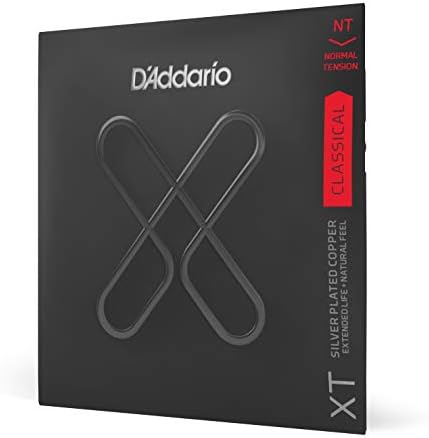
- Corrosion resistance treatment on wound strings
- Composite basses and Pro-Arté nylon trebles
- Tie-ends with silver-plated copper wrap wire
- Includes code for Players Circle points
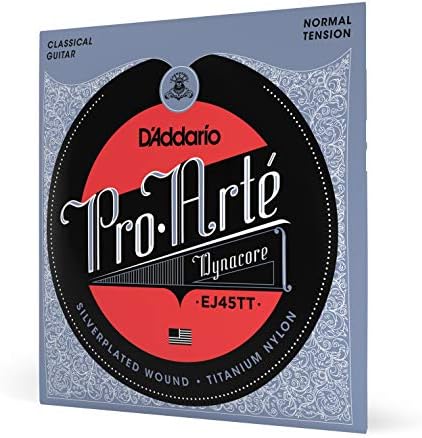
- Traditional foundation with modern production
- Dynacore multifilament basses and titanium trebles
- Tie-ends with silver-plated copper wrap wire
- Includes code for Players Circle points

- Nylon strings for classical guitars
- 80/20 Bronze wound basses and black nylon trebles
- Medium tension
- Equipped with ball-ends

- Gauges: . 028 – . 043
- 80/20 Bronze alloy composition
- Bronze winding for deep basses and bright trebles
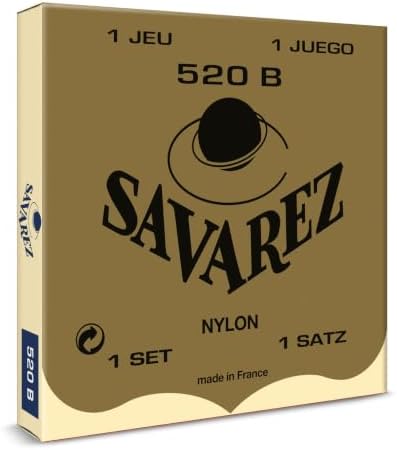
- Rectified nylon trebles
- Traditional wound basses
- Low tension white
- Gauges: .026-.041

- Italian nylon with Light Force Technology
- Includes extra E-string

- Designed for daily use
- Silverplated winding resists corrosion
- Nylon strings for warm, mellow tone

- Entry-level classical guitar strings
- Balanced warmth and projection
- Tie-ends with silver-plated copper wound basses
- Includes code for Players Circle points
1. D’Addario Pro-Arte Nylon Classical Guitar Strings
Best for: Players who want the industry standard classical sound.
These strings use a multi-filament nylon core for the basses and clear nylon for the trebles, creating a mellow, warm tone. They’re made in the USA and include tie-ends for traditional mounting. The inclusion of a VCI bag with a registration code adds value for those who track their gear purchases.
Compared to the D’Addario Student Nylon, these feature a more refined construction process that targets the specific tonal warmth expected by seasoned players. The consistent manufacturing ensures that every set performs similarly, which is helpful if you want to avoid surprises during a restringing session.
Pros
- Traditional warm classical tone
- Responsive multi-filament nylon core
- Tie-end design for standard bridges
- Recyclable VCI packaging
Cons
- Traditional nylon material has a lower brightness ceiling compared to carbon or titanium options.
2. D’Addario Pro-Arté Carbon Classical Strings EJ45FF
Best for: Musicians who need extra brightness and projection.
If your guitar sounds too dark, these strings use fluorocarbon trebles to provide a sharper, more focused sound. The dynacore composite basses work with the trebles to maintain a balanced character across the entire fretboard. They’re well-suited for performers who need their instrument to cut through in a larger room.
The intonation on this set is designed to be superior to the D’Addario Pro-Arte Nylon, providing greater accuracy when playing high up the neck. Anyone who relies on precise pitch for complex pieces will appreciate the clarity these strings provide.
Pros
- Fluorocarbon trebles for increased brightness
- Dynacore composite basses for balance
- Superior intonation across the neck
- Made in the USA
Cons
- The higher tension feel of carbon may be too firm for players used to softer nylon.
3. D’Addario XT Coated Classical Strings XTC45
Best for: Players who want strings that stay fresh for a long time.
These strings feature a special treatment on the wound basses to resist corrosion. This keeps the set sounding like new for longer without changing the natural feel of the nylon. They use a proprietary composite core to ensure the response remains dynamic and clear.
When you look at the Martin M160 Silverplated, the XT Coated set offers a more advanced treatment for longevity. While both are built for frequent use, the XT coating is specifically designed to preserve the tone of an uncoated set while protecting against environmental wear.
Pros
- Corrosion resistance on wound strings
- Dynamic response from composite basses
- Traditional nylon treble feel
- Made in the USA
Cons
- Only the wound strings receive the treatment, leaving the trebles susceptible to oils.
4. D’Addario Pro-Arte Dynacore
Best for: Players seeking a modern, resonant sound.
These strings combine titanium nylon trebles with twisted multifilament basses for a contemporary, distinct tone. The titanium material increases the resonance in the top-end, allowing for a more responsive attack. They’re an excellent choice if you feel your current strings lack character or depth.
This set offers a more modern, resonant sound than the D’Addario Pro-Arte Nylon, which focuses on a traditional, mellow warmth. If you find standard nylon too soft or quiet, the titanium trebles in this set provide the necessary edge.
Pros
- Titanium trebles for increased resonance
- Twisted multifilament core for attack
- Contemporary, balanced tonal profile
- Made in the USA
Cons
- The unique tonal character is less traditional, which may not suit every style of classical music.
5. Ernie Ball 2409 Ernesto Palla Nylon Black and Gold Classical
Best for: Beginners or those who dislike tying knots.
The ball-end design is the highlight here, as it removes the need to tie strings onto the bridge. This saves time and frustration during changes. The basses are wound with 80/20 bronze, which gives them a brighter tone than typical silver-plated copper.
Unlike the D’Addario Pro-Arte Nylon which requires manual tying, this set is ready to mount immediately. Anyone who finds the process of tying knots at the bridge difficult will find this design significantly more convenient for daily maintenance.
Pros
- Ball-end design for fast installation
- 80/20 bronze winding for brightness
- Black nylon trebles for visual contrast
- The strings feature a balanced, middle-of-the-road feel.
Cons
- Ball-end strings aren’t compatible with guitars that require traditional tie-on bridges.
6. MARTIN Classical Guitar Strings (M260)
Best for: Guitarists who prefer the sound of bronze alloys.
These strings use a classic bronze alloy to achieve a deep, rich bass response and bright trebles. The composition is built for clarity and longevity, making them a solid choice for those who want a more brilliant sound from their instrument. They come in a standard gauge range.
Comparing the bronze alloy here to the silver-plated copper used in the D’Addario Student Nylon, you get a much brighter, more metallic resonance. This works well for players who want to emphasize the percussive elements of their fingerstyle playing.
Pros
- 80/20 bronze alloy composition
- Bright and clear treble response
- Deep, rich bass tones
- Consistent gauge range
Cons
- Bronze can feel slightly more abrasive on the fingers than standard silver-plated windings.
7. Savarez 520B Traditional Low Tension Classical Strings
Best for: Players who want a soft, easy-to-press feel.
These strings are categorized as low tension, which makes them easier on the fingers. The trebles are made from rectified nylon, meaning they’re ground to a precise diameter for better consistency. The traditional wound basses provide a classic foundation for the sound.
At .026-.041, the gauges differ from the .028-.043 range found on the Martin Classical M260. This makes them a fit for anyone who struggles with high-tension strings or wants to play for longer periods without fatigue.
Pros
- The strings are designed to be soft and comfortable under the fingers.
- Rectified nylon for consistent diameter
- Traditional wound bass response
Cons
- Strings designed for a softer feel may have less volume and projection than those built for greater resistance.
8. BELFORT Classical Guitar Strings
Best for: Players who prioritize comfort and ease of installation.
The brand uses proprietary Light Force Technology to create a string that feels softer under the fingers. They include an extra E-string and an eBook with video guides to help with the installation process. The strings are designed to be an all-around choice for various styles, from flamenco to fingerstyle.
This set is more focused on the learning experience than the D’Addario Pro-Arte Nylon, as it provides extra support and documentation. The inclusion of an extra string is a helpful safety net for anyone who might accidentally break one while learning to restring.
Pros
- Light Force Technology for comfort
- Includes extra E-string
- Comprehensive installation support
- Suitable for various playing styles
Cons
- The focus on comfort might trade off some of the raw volume found in professional-grade sets.
9. Martin M160 Classic Silverplated Hard Tension Ball End
Best for: Frequent players who need reliable strings.
These strings are built for daily use, featuring silver-plated winding that resists corrosion. They offer a warm, mellow tone that’s characteristic of professional-grade nylon sets. The ball-end design makes them very easy to install on compatible guitars.
While the Martin Classical M260 uses bronze for brightness, this M160 set uses silver-plating to prioritize a mellow sound and long life. Anyone who practices for several hours every day will appreciate the durability of the silver-plated winding.
Pros
- Silver-plated winding for longevity
- Designed for frequent daily practice
- Warm, classic nylon tone
- Ball-end for easy changing
Cons
- Silver-plating can sometimes feel slightly more slippery than other materials.
10. D’Addario Student Nylon Classical Strings EJ27N-3D
Best for: Beginners just starting their musical journey.
These strings are the entry-level offering from the brand, designed to be accessible for new students. They balance warmth and projection, providing a predictable sound that’s perfect for learning. Like other D’Addario sets, they come with a registration code for reward points.
This set is simpler in its construction than the D’Addario Pro-Arte Dynacore, focusing on basic playability rather than advanced resonance. If you are just starting, the straightforward features of this set provide a focused learning experience.
Pros
- Designed for beginner guitarists
- Balanced warmth and projection
- Standard tie-end installation
- Includes reward points code
Cons
- Lacks the advanced core materials found in the Pro-Arte or Dynacore lines.
Also Worth Considering
Henry’s Strings Nylon Guitar Strings are a ball-end set meant for quick changes. They are an alternative to the Ernie Ball Ernesto Palla for those who want a simple installation experience.
D’Addario Pro-Arte Nylon Extra Hard Tension is a variant of the Best Overall pick. It offers specific resistance and volume characteristics for players who prefer a high-tension feel from their instrument.
Ernie Ball Classical Guitar Strings are a tie-on version of the Ernesto Palla line. They’re bested by the D’Addario Pro-Arte Nylon in terms of consistent tonal reputation, but they’re a great alternative if you prefer the Ernie Ball feel on a traditional bridge.
How We Chose
Thirty Amazon listings were compared on string material, tension level, and installation method, and near-duplicates were left out. A set had to clearly state its core construction and tension profile to earn a place. Products were evaluated based on the intended user, such as students or professional performers. Picks that featured unique technology like ball-ends or specific coatings were prioritized to give a range of options. If a listing lacked core details about the material or the feel of the strings, it was excluded to ensure only clear, data-backed choices remained.
How to Choose the Right Classical Guitar Strings
Material and Tone
The material of the treble strings and the winding of the basses determine the sound. Nylon provides a mellow, warm tone, while carbon trebles are brighter and project more. Bronze-wound basses offer a metallic, brilliant sound, whereas silver-plated copper is known for a classic, mellow warmth.
Tension Levels
Tension dictates how the strings feel under your fingers. Low tension is softer and easier to play, making it ideal for beginners or those who want to avoid fatigue. Normal tension is the standard, while high tension offers more volume and resistance, which is preferred by many concert players.
Installation Needs
Consider whether your bridge requires tie-on strings or ball-end strings. Tie-ends are the traditional choice and require some practice to mount securely. Ball-ends are much faster to install and are ideal for players who want to minimize the time spent restringing their instrument.
Frequently Asked Questions
Can I use classical strings on an acoustic steel-string guitar?
You should generally avoid this, as the bridge and bracing of a steel-string guitar are designed for the higher tension of metal strings. Classical strings have a different gauge and physical resistance profile, which may result in poor intonation and low volume. D’Addario String Tension Guide.
How often should I change my classical strings?
This depends on how much you play. If you practice daily, you might notice a loss of brightness after a few weeks. If you use coated strings like the D’Addario XT Coated, they may last longer than uncoated sets, but all strings eventually lose their tone due to oxidation.
What is the advantage of carbon trebles?
Carbon trebles are denser and thinner than nylon strings. This allows them to vibrate more efficiently, resulting in a brighter, high-projection sound. They are often chosen by performers who need to be heard in larger venues or who prefer a more modern, crisp tonal quality.
Do ball-end strings affect the sound?
The difference in sound caused by a ball-end is minimal compared to the convenience of the design. The primary change is the ease of installation. However, you must ensure your bridge is designed to accommodate the ball, as some traditional classical bridges are not compatible.
Why do some strings have different tensions?
Tension is adjusted by changing the diameter and material density of the strings. Heavier strings have more mass and require more force to reach pitch, which provides increased volume and a punchier response while requiring more finger strength.
How do I stop my classical strings from slipping at the bridge?
Tying a proper knot is key to preventing slippage. Ensure you loop the string through the bridge hole at least twice before pulling it tight against the bridge block. If you use a set like the D’Addario Pro-Arte Nylon, the nylon monofilament material is designed to grip itself once tension is applied, provided the knot is seated firmly against the wood.
Does the humidity of my room affect string life?
Yes, high humidity can cause the nylon to absorb moisture, which changes its elasticity and pitch stability. If you live in a damp climate, the silver-plated copper wrap found on the Martin M160 Silverplated may corrode. Keeping your guitar in a case with a desiccant pack helps preserve the life of any set you choose.
Are there differences between silver-plated and copper-wound basses?
Silver-plated copper is the industry standard for a warm, mellow tone, which is why it’s used in the D’Addario Student Nylon. Pure copper or bronze-wound strings, like the Martin Classical M260, provide a brighter, more metallic sound. Choose silver-plated for traditional classical music and bronze if you want extra brilliance for fingerstyle or pop.
Can I mix strings from different sets?
You can mix and match strings if you want to customize your tension or tone, but you must be careful with gauge consistency. If you replace a standard treble with a high-tension carbon string, the balance across the fretboard may shift. Using a complete set, such as the D’Addario Pro-Arte Carbon, ensures the intonation is balanced.
Why do my new strings go out of tune so quickly?
New nylon strings have a high degree of elasticity and take time to “stretch” into their final length. This is normal for all nylon sets, including the Savarez 520B Traditional. You can speed up the process by gently tugging on each string while tuning, which helps the material settle into the bridge and nut slots more quickly.
What causes a string to buzz against the frets?
Buzzing is often caused by a string that’s too thin for the nut slot or a tension level that’s too low for your guitar’s action. If you switch to the Savarez 520B Traditional low-tension set and hear buzzing, your guitar may need a setup adjustment. Higher tension sets like the D’Addario Pro-Arte Dynacore can sometimes eliminate minor fret buzz by providing more resistance.
Does the color of the nylon affect the sound?
The color of the nylon, such as the black trebles in the Ernie Ball Ernesto Palla, is primarily an aesthetic choice. While manufacturers use different dyes and formulations, the material properties of the black nylon are generally comparable to clear nylon. The most significant factor in the sound remains the core material and the tension of the specific set.
How do I know if my guitar bridge is compatible with ball-end strings?
Look at the holes in your bridge. If they’re small and designed specifically for a loop-style knot, they won’t hold a ball-end securely. If the holes are larger or have a slot for the ball to seat against the bridge plate, you can use the Ernie Ball Ernesto Palla or Martin M160 Silverplated sets without any extra hardware.
Is it necessary to oil my fretboard when changing strings?
It isn’t required to oil the fretboard every time you change strings, but it’s a good opportunity to do so while the instrument is unstrung. Use a dedicated fretboard conditioner rather than household oil. This keeps the wood from drying out and makes it easier to clean the area where the strings sit, helping your new set last longer.
Why do some sets include an extra string?
Sets like the Belfort Nylon Strings include an extra E-string because the high E is the thinnest string and the most prone to breaking during the installation process. If you’re a beginner or prone to overtightening, having a spare ensures you can finish the job without needing a second full set.
Can I use a string winder on classical strings?
You can use a string winder, but be careful not to turn the tuning peg too fast. Nylon strings stretch much more than steel strings, and rapid winding can lead to overshooting the target pitch. Turn the peg slowly and monitor the tension, especially when using high-tension sets like the D’Addario Pro-Arte Dynacore.
What is the purpose of rectified nylon?

Rectified nylon, used in the Savarez 520B Traditional, is ground to a specific diameter along its entire length. Standard extruded nylon can sometimes have slight variations in thickness. By rectifying the string, the manufacturer ensures better intonation and a more consistent tone when you play notes further up the neck.
Do I need to cut the excess string after installing?
Once you have tuned the strings to pitch and they have settled, you can trim the excess length near the tuning peg for a cleaner look. Don’t trim them until you’re sure the string has stopped stretching, as you might need to pull more length through if the knot slips during the initial break-in period.
Conclusion
Choosing the right set is a personal journey, so don’t be afraid to experiment with different tensions until you find your favorite sound. Once you’ve picked a new pair, take your time restringing your instrument carefully. You’ll hear the difference immediately, and your guitar will surely thank you for the upgrade.
As an Amazon Associate, Cleanestor earns from qualifying purchases at no additional cost to you.