
The Jean Paul FL-430 is the best intermediate flute for precise intonation and flexible design. This guide compares key features to help you find the right instrument.
- Best Overall: Jean Paul FL-430 — Features a split E mechanism for easier third-octave performance.
- Best Student Transition: Yamaha YFL-222 — Offers a reliable nickel silver body for consistent daily practice.
- Most Versatile Features: Glory Silver Plated — Includes a B foot joint for expanded tonal range.
- Best Closed Hole: Cecilio C Flute — Simplifies the learning process with a standard closed-hole setup.

- Engineered for accurate intonation
- Setup by NAPBIRT-certified technicians
- Open hole design with removable plugs
- Offset G and split E mechanism

- Nickel silver body
- Offset G key system
- Silver-plated keys
- Includes footjoint

- Water resistant leather pads
- Durable cupronickel construction
- Open hole 17 keys design
- Silver plated cupronickel body and keys
- Nickel/silver plated finish
- Undercut beveled embouchure
- Closed hole C flute with 16 keys
- Includes case, stand, and cleaning accessories
1. Jean Paul FL-430 Intermediate Concert Open-Hole Flute
Recommended Flute Buying Guides:
Best for: Students upgrading from a beginner model who need extra technical support.
The Jean Paul FL-430 is designed for players moving beyond basic instruments. Its standout feature is the open-hole design, which allows for better tonal control. Included removable plugs allow you to start with a closed-hole feel and adapt as your finger placement improves.
Engineered for accurate intonation, this flute helps you maintain pitch during practice.
Pros
- Includes removable plugs for open holes
- Split E mechanism for easier high notes
- Offset G key system for comfort
- Expertly setup and play-tested
Cons
- Standard C foot joint limits range for some advanced music
- Open-hole design requires precise finger placement once plugs are removed
2. Yamaha YFL-222 Intermediate Flute
Best for: Players who prioritize brand reliability and consistent build quality.
The Yamaha YFL-222 is a predictable, high-quality instrument. The silver-plated keys provide a professional look and a responsive feel under the fingers, ensuring that your technique remains sharp.
This model focuses on the essentials of flute construction. By keeping the design simple, it avoids unnecessary complications, allowing you to focus entirely on your embouchure and breath control.
This model isn’t intended for players who need the advanced tonal versatility of open-hole keys, as it features a standard closed-hole setup.
Pros
- Durable nickel silver body
- Standard offset G key system
- Reliable silver-plated keys
- Designed for consistent practice
Cons
- Closed-hole design lacks the flexibility of open holes
- Lacks the split E mechanism found on other picks
3. Glory Silver Plated Intermediate 17keys
Best for: Players who need an extended range for complex musical scores.
It stands out by including a B foot joint, which allows you to play a low B note—a requirement for much of the intermediate and advanced repertoire. The Glory Silver Plated features a silver-plated cupronickel body.
Anyone who prefers the feel of a standard C foot joint should consider another option, as the B foot joint adds length to the instrument.
Pros
- Includes a B foot joint for more notes
- Durable cupronickel body
- High-grade needle springs for responsive keys
- Leather pads for better air tightness
Cons
- B foot joint increases the overall length of the instrument
4. Cecilio Closed Hole C Flute
Best for: Beginners who want a complete, all-in-one package to start playing immediately.
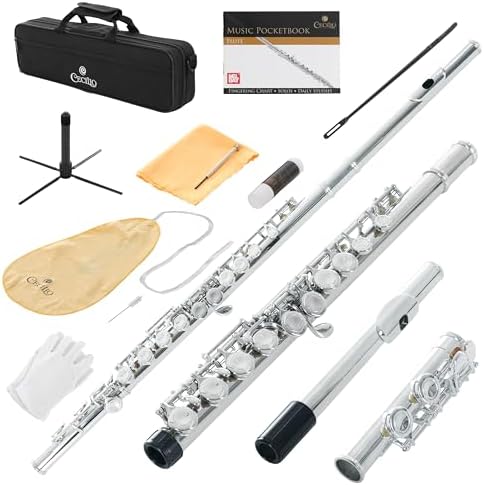
The Cecilio C Flute is a complete beginner’s kit. It includes a foldable stand, cleaning rod, and technique pocketbook.
The instrument features a closed-hole design, the standard for students. The 16-key layout is standard, and the offset G key helps keep your hand position comfortable during practice. It’s a functional and accessible instrument for those just beginning their musical journey.
This model lacks the tonal flexibility of open-hole keys required by intermediate players.
Pros
- Includes a full suite of accessories
- Undercut beveled embouchure for sound production
- Standard 16-key closed-hole layout
- Offset G key for comfortable hand alignment
Cons
- Closed-hole design is limited for advanced techniques
- The standard closed-hole layout lacks the B foot joint found on the Glory.
How We Chose
Thirty Amazon listings were compared on key features, durability of materials, and included accessories, and near-duplicates were left out. Each flute had to feature a consistent key system and a durable body material to be included in this article. Products that lacked basic technical information or clear descriptions of their key configuration were removed.
How to Choose the Best Intermediate Flute
Key Systems and Hole Design
The choice between open-hole and closed-hole keys is the most important factor in your progression. Open-hole keys, like those on the Jean Paul FL-430, encourage precise finger placement and allow for extended techniques. Closed-hole models, such as the Cecilio C Flute, are easier to master initially.
Foot Joint Configurations
The foot joint determines the lowest note you can play. Most standard flutes use a C foot joint, but models like the Glory Silver Plated offer a B foot joint. A B foot joint is necessary for advanced music but adds length.
Ergonomics and Comfort
Features like the offset G key system help reduce strain during long sessions. The National Association of Professional Band Instrument Repair Technicians emphasizes the importance of proper instrument maintenance, so choosing a model with accessible, well-made keys will ensure it stays in playing condition for much longer.
Related guides
Frequently Asked Questions
Is an open-hole flute better for intermediate players?
Open-hole flutes are generally considered better for intermediate players because they require more precise finger placement. Models like the Jean Paul FL-430 include plugs, which allow you to start with a closed-hole feel and remove them once you have gained confidence.
What is the advantage of a split E mechanism?
A split E mechanism, found on the Jean Paul FL-430, makes it much easier to play the third-octave E note. On flutes without this feature, that specific note can be unstable or difficult to produce. It’s a significant mechanical advantage for any player tackling more challenging musical scores.
How do I maintain the pads on my flute?
To keep the pads in good condition, always use the cleaning cloth provided with your instrument to remove moisture after every session. Instruments like the Glory Silver Plated use high-quality leather pads that are designed for better air tightness, but they still require careful drying to prevent premature wear.
Can I upgrade my closed-hole flute to open-hole?
Modifying a closed-hole flute into an open-hole model is not recommended. The key mechanisms are fundamentally different in design and construction. If you want open holes, it is better to transition to a model specifically designed for that purpose, such as the Jean Paul FL-430.
Is a silver-plated finish better than nickel for sound?
A silver-plated finish is often preferred for its aesthetic appeal and the way it interacts with the player’s touch, but the core material of the body, such as the cupronickel used in the Glory Silver Plated, has a greater impact on the overall tone and durability. While plating can influence the feel, the structural integrity of the metal beneath is what determines the instrument’s longevity and consistency.
How often should the keys be oiled?
Professional maintenance is the best approach for key lubrication. While some kits come with minor accessories for surface cleaning, the internal mechanism of the keys, especially the high-grade needle springs in the Glory Silver Plated, requires specific lubricants and technical knowledge to maintain correctly. Over-oiling can attract dust and grime, which may eventually hinder the movement of the keys.
Does the weight of the flute affect a student’s performance?
Weight affects comfort during long rehearsals. B foot joint models like the Glory Silver Plated are heavier than standard C foot joint flutes. Difficulty holding the instrument steady leads to fatigue and poor posture.
What is the purpose of the cleaning rod?
The cleaning rod removes condensation after playing. Wrap the cloth around the rod to swab the bore. Keeping the interior dry prevents pad deterioration and maintains air tightness.
Why do some flutes have an undercut beveled embouchure?
An undercut beveled embouchure, found on the Cecilio C Flute, is designed to make it easier for students to produce a clear, resonant tone. The shape of the hole and the angle of the edge help focus the air stream, which is particularly helpful for beginners who are still learning to control their breath and embouchure. This feature simplifies the early stages of learning to play.
Are all flute cases the same?
Cases vary in durability and protection. Durable cases protect against impacts and environmental changes. Store the flute securely to prevent misalignment or scratches.
What should I do if a key feels sticky?
Sticky keys are often the result of moisture or debris on the pads. Use a piece of cleaning paper or a very soft, lint-free cloth to gently clean the surface of the pad. If the issue persists, the springs, such as the high-grade needle springs in the Glory Silver Plated, might need a professional adjustment to ensure the key closes with the correct amount of pressure and seals properly.
Why is the offset G key preferred?
The offset G key system is designed to align with the natural curvature of the human hand. By placing the G key slightly off the main line of the other keys, it reduces the stretch required for the ring finger. This ergonomic design, featured on both the Jean Paul FL-430 and the Yamaha YFL-222, helps prevent hand tension and makes it easier for students to play for longer periods without discomfort.
How does the headjoint affect the sound?
The headjoint is the most critical part of the flute for sound production. The shape and quality of the headjoint determine the responsiveness and tonal character of the instrument. While the Yamaha YFL-222 features a standard headjoint design, players may eventually look for custom headjoints as they advance, though the stock headjoints provided with these models are engineered to provide a balanced and reliable starting point for intermediate performance.
Can humidity affect my flute?
Yes, extreme changes in humidity can affect the pads and the metal of the instrument. It’s best to keep your flute in a stable environment and avoid leaving it in very hot or very cold places, such as a car. If you live in an area with high humidity, ensure that you’re diligent about drying the instrument after every practice session to prevent the pads from absorbing excess moisture.
Is it necessary to use joint grease?
Joint grease, which is included with the Cecilio C Flute and the Glory Silver Plated, is used to ensure the headjoint and footjoint slide together smoothly. You only need a very small amount. Over-application can attract dust, so use it sparingly to keep the joints fitting perfectly without becoming loose or stuck.
Why does the split E mechanism matter for the third octave?
The third-octave E is notoriously difficult to play on standard flutes. The split E mechanism, as seen on the Jean Paul FL-430, automatically closes the lower G key when the high E is played. This adjustment improves the stability and tone of the note, making it significantly easier to produce a clear, centered sound without the need for complex fingerings or advanced embouchure adjustments.
What is the difference between nickel silver and cupronickel?
Both are common alloys used in the construction of student and intermediate flutes. Nickel silver, used in the Yamaha YFL-222, is known for its durability and bright sound. Cupronickel, featured in the Glory Silver Plated, is also highly durable and often praised for its wonderful tonal qualities. Both materials are chosen for their ability to withstand the demands of daily practice while providing a consistent, reliable playing experience.
How do I know if the pads are sealing correctly?
A proper seal is vital for the instrument to play across its full range. If you notice that some notes are harder to play or sound “airy,” it may indicate a leak. You can test this by pressing the keys lightly; they should all close with equal pressure. If you suspect a leak, especially with leather pads like those on the Glory Silver Plated, a professional technician should inspect the mechanism.
Can I practice with the plugs in the open holes?
Yes, using the removable plugs included with the Jean Paul FL-430 is a great way to transition to open-hole playing. You can start by plugging all the holes to focus on your embouchure and general technique. As you become more comfortable with your hand position, you can remove one or two plugs at a time, allowing you to gradually adapt to the more precise finger placement required for open-hole flutes.
How long should I practice each day?
Consistency is more important than duration. Even 20 to 30 minutes of focused practice each day is more effective than one long session once a week. Use the materials provided, such as the pocketbook included with the Cecilio C Flute, to guide your practice sessions and ensure you’re working on proper technique, posture, and breath control in a way that builds your skills steadily over time.
Why do some flutes have 16 keys and others 17?
The number of keys is determined by the configuration of the flute. The addition of a B foot joint, which is found on the 17-key Glory Silver Plated, adds an extra key to allow for the lower B note.
What is the role of the needle spring?
The needle spring is the component that provides the tension to keep a key closed or open. High-grade needle springs, such as those in the Glory Silver Plated, are designed for long-term reliability and a consistent, responsive feel.
How do I store the flute safely?
Always store your flute in its case when you aren’t playing it. Ensure that the cleaning rod and any other accessories are in their designated spots so they don’t press against the keys or the body of the flute. Keeping the instrument in a clean, dry area away from direct sunlight or extreme temperatures will help maintain the finish and the integrity of the pads.
Why is the offset G key better for beginners?
The offset G key is designed to accommodate the natural angle of the hand. By offsetting the key, models like the Jean Paul FL-430 help the hand stay relaxed.
Can I play intermediate music on a beginner flute?
You should upgrade when your current flute limits your ability to play the music you want to learn. Features like the split E mechanism or B foot joint are designed to handle the technical requirements of advanced scores. Upgrading makes these pieces more accessible and enjoyable to play.
What should I look for in a flute stand?
A good flute stand, like the foldable one included with the Cecilio C Flute, should be stable and provide a secure place to set your instrument down during short breaks in practice. It should hold the flute upright to prevent the pads from staying in contact with moisture for too long. Ensure the stand is designed specifically for a flute to avoid any risk of the instrument tipping over or being damaged.
How do I know if my instrument is “ready to play”?
A “ready to play” instrument, such as the Jean Paul FL-430, is inspected by a technician to ensure keys work, pads seal, and intonation is accurate. This means you do not need to make adjustments before playing. It is a significant benefit for students who want to focus on music rather than maintenance.
Why is intonation important?
Intonation refers to the accuracy of the pitch of your notes. Precise intonation, a key feature of the Jean Paul FL-430, ensures that you’re playing in tune with yourself and with other musicians. Developing a good ear for intonation is a fundamental skill for any flutist, and having an instrument that’s engineered for accuracy makes it much easier to achieve and maintain perfect pitch across the entire range of the flute.
Can I use the same cleaning cloth for the outside and inside?
It’s best to have separate cloths or to use the cleaning rod with a single cloth for the inside and a clean, soft cloth for the outside. The cloth used for the inside will naturally accumulate moisture and residue from the bore. Using a dedicated, clean cloth for the exterior helps maintain the silver-plated finish of your flute without transferring any grime from the inside of the instrument.
Why choose a flute with leather pads?
Leather pads, like those on the Glory Silver Plated, are highly regarded for their water resistance and superior air tightness. A tight seal is essential for the flute to respond well to your breath, especially in the lower register. These pads are designed to provide a consistent, responsive feel that helps maintain a clear tone throughout the entire range of the instrument, making them a preferred choice for many players.
What is the advantage of a silver-plated body?
A silver-plated body provides a beautiful, professional appearance and a durable surface that’s resistant to tarnishing if properly maintained. It also contributes to the tonal character of the flute, often providing a bright, clear sound that’s well-suited for both solo and ensemble playing. Many intermediate flutes, including the Jean Paul FL-430 and Yamaha YFL-222, use silver plating to achieve this balance of aesthetics and performance.
How does the embouchure hole shape affect the sound?
The shape of the embouchure hole is carefully engineered to influence how air enters the flute. An undercut beveled embouchure, as featured on the Cecilio C Flute, is designed to help the air stream strike the edge of the hole at the correct angle.
Is the B foot joint necessary for all intermediate players?
The B foot joint isn’t strictly necessary for all intermediate players, but it’s a requirement for many advanced pieces of music. If you’re starting to encounter scores that require a low B note, then an instrument like the Glory Silver Plated will be the right choice for you. If your current repertoire doesn’t require this note, a standard C foot joint flute will be perfectly adequate for your needs.
How do I store my flute if I am traveling?
When traveling, always use a hard, protective case. Ensure the flute is disassembled properly and that each part is securely held in its place within the case. Avoid placing the case in areas where it might be crushed or exposed to extreme temperatures. If you’re flying, keep the instrument with you as carry-on luggage to ensure it stays in a controlled environment and isn’t subjected to the handling of checked baggage.
What is the benefit of a cupronickel body?
Cupronickel is a durable alloy that’s often used in the construction of intermediate flutes. It’s known for its strength and its ability to withstand the rigors of frequent practice. The Glory Silver Plated uses cupronickel to provide a solid, long-lasting instrument that offers a wonderful tone, making it a reliable choice for players who want a durable flute that will grow with them as their skills improve.
How do I clean the keys?
The keys should be wiped down with a soft, clean cloth after every practice session to remove fingerprints and skin oils. Avoid using any harsh chemicals or abrasive cleaners, as these can damage the silver plating. If the keys become very dirty, a professional technician can perform a deep cleaning and polishing, which will keep the mechanism moving smoothly and looking its best for years to come.
Why does the split E mechanism simplify playing?
The third-octave E is notoriously difficult because it requires a specific combination of fingerings that can be unstable on a standard flute. The split E mechanism on the Jean Paul FL-430 simplifies this by automatically adjusting the key configuration when the high E is played.
Can I practice with an open-hole flute if I have small hands?
You can practice with an open-hole flute even with smaller hands by using the removable plugs. The plugs allow you to play the flute as a closed-hole model while you adjust to the key spacing. Once your fingers become more flexible, you can remove the plugs to enjoy the open-hole design.
How should I hold the flute?
Proper posture is essential for good flute playing. Hold the instrument parallel to the floor, with your head turned slightly to the left. Your hands should be relaxed, with your fingers curved naturally over the keys. Models like the Jean Paul FL-430 and Yamaha YFL-222 with offset G keys are designed to support this natural hand position, helping you stay comfortable and avoid tension during your practice sessions.
What is the best way to develop a strong embouchure?
Developing a strong embouchure takes time and consistent practice. Start by focusing on producing a clear, consistent tone on single notes. Use the instructions in the pocketbook included with the Cecilio C Flute to guide your practice. As you progress, you can experiment with different dynamics and articulations, always focusing on maintaining a steady air stream and a relaxed throat, which are the foundations of a good sound.
How do I know when it’s time to upgrade?
Consider upgrading when your current flute limits your ability to play the music you want to learn. If you need advanced features like an open-hole system, a split E mechanism, or a B foot joint, moving to an intermediate model provides the tools needed to tackle more complex repertoire.
Why do some flutes come with gloves?
Gloves, like those included with the Glory Silver Plated, are often provided to help keep the surface of the instrument clean. Using gloves when handling the flute can prevent oils from your skin from transferring to the silver-plated finish, which helps keep the instrument looking its best and reduces the need for frequent polishing. They’re a simple, practical accessory for maintaining your flute’s appearance.
Is the case included with the flute usually enough?
The cases provided with these models, such as the durable case with the Cecilio C Flute, are designed to offer adequate protection for daily use. As long as you handle the case with care and store it in a safe place, it should provide the protection your flute needs during transport and storage.
How do I ensure the headjoint is properly aligned?
The headjoint should be aligned so the embouchure hole is in line with the keys on the body. You can check this by looking down the length of the instrument; the center of the embouchure hole should be positioned directly in line with the keys.
Final Thoughts

Choosing an instrument is an exciting journey that sets the tone for your musical growth. Once you’ve narrowed down your favorites, don’t hesitate to visit a local shop to play a few models yourself. You’ll find that the right flute won’t just sound great—it’ll truly feel like an extension of your own voice.
As an Amazon Associate, Cleanestor earns from qualifying purchases at no additional cost to you.