
The Rode RØDE NT1 Signature is the best home studio microphone here because its box lists a shock mount, pop filter and XLR cable, so you’ll only need to add an interface. This guide helps anyone setting up a room for vocals, podcasts or streaming who needs clear sound without guessing what else to buy. The one thing that separates these picks is what comes in the box versus what you still have to find. Some ship as bare microphones while others arrive with stands, shields and cables ready to plug in.
- Best Overall: Rode RØDE NT1 Signature — includes a shock mount, pop filter and XLR cable right in the box.
- Best Classic XLR: Audio-Technica AT2020 — high SPL handling and wide dynamic range suit project studios.
- Best Professional Grade: Shure SM4 — patent-pending interference shielding blocks RF noise from phones and routers.
- Best Dual Connectivity: MAONO A04 Gen2 — USB and XLR outputs let you record straight into a PC or an interface.
- Best Noise Rejection: Audio-Technica AT2035 — switchable 80 Hz high pass filter and 10 dB pad give extra control.
- Best Simple USB: FIFINE T669 — plug-and-play USB output connects directly to a laptop without drivers.
- Best High SPL: AKG P120 — handles sound pressure levels up to 150 dB without distortion.
- Best Mid-Diaphragm: MXL 990 — FET preamp and mid-diaphragm deliver balanced highs and tight lows.
- Best Complete Kit: Dejasound Studio Condenser — ships with a five-panel isolation shield, headphones and adapters.
- Best Broadcast Dynamic: Shure SM7B Dynamic Microphone — air suspension shock isolation minimizes handling vibrations.

- Includes shock mount, pop filter and XLR cable
- Large-diaphragm condenser NT1 voicing
- Among the lowest self-noise microphones made
- Cardioid pattern focuses on voice, rejects room

- Side address studio condenser microphone
- Suited for project and home studios
- High SPL handling and wide dynamic range
- Low mass diaphragm with extended frequency response

- SM4 has brass 1-inch dual-diaphragm capsule
- Uniform cardioid polar pattern rejects off-axis noise
- Large sweet spot reduces proximity effect
- Interference shielding blocks RF noise from devices

- A04 Gen2 has dual XLR and USB connections
- 192kHz/24bit sampling rate, 30Hz-16kHz response
- MAONO Link software adjusts gain and noise reduction
- Cardioid pattern includes pop filter and windscreen foam

- For home, project, professional studio and live use
- Cardioid pattern reduces side and rear pickup
- Large diaphragm for natural sound and low noise
- High SPL handling and wide dynamic range
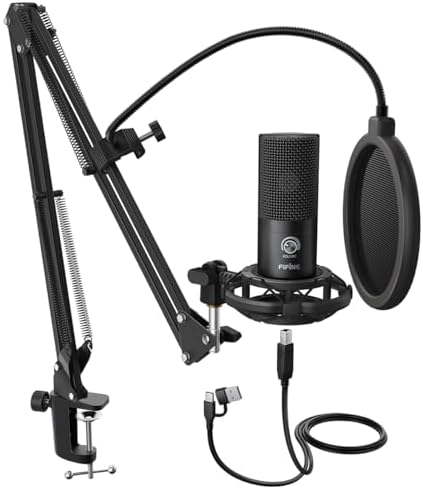
- USB plug-and-play connection to PC and laptop
- Wide frequency response handles high SPLs
- Boom arm rotates 180° and extends 135°
- 13" horizontal arm offers a 30" reach

- Low-mass diaphragm for clear sonic detail
- Handles sound pressure levels up to 150 dB
- Built with high-quality materials for durability
- Includes 1 x P120 Microphone and stand adapter

- MXL 990 has FET preamp and mid-diaphragm
- Cardioid pattern rejects side and back noise
- Includes shock mount, stand adapter, carrying case
- 20 Hz to 20 kHz frequency response

- DJM5 USB output connects to PC or smartphone
- Cardioid pattern, 16mm diaphragm, 192kHz/24Bit rate
- Supports 5V voltage with 3.5mm monitor headphone jack
- Isolation shield has 5 foldable sound-absorbing panels
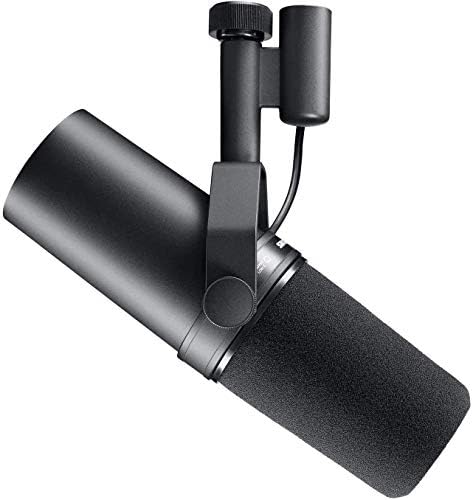
- Shure SM7B dynamic cartridge with wide-range response
- Cardioid pattern with air suspension shock isolation
- Built-in pop filtering and detachable windscreen
- Professional XLR output connects to interfaces and mixers
1. RØDE NT1 Signature Series Studio Condenser Microphone
Best for: singers needing a quiet vocal chain
This condenser arrives with everything a singer needs except the audio interface. The box lists the NT1 Signature in black, an SM6 shock mount with a built-in pop filter, an XLR cable and a dust cover. You won’t have to hunt down separate accessories just to make your first recording.
Rode describes this model as whisper-quiet, ranking among the lowest self-noise microphones ever made. The tight cardioid pattern focuses on the voice directly in front of it and rejects the rest of the room.
Anyone recording loud guitar cabinets might find the lack of a stated maximum decibel limit a reason to look elsewhere.
Pros
- Includes SM6 shock mount with integrated pop filter
- XLR cable and dust cover come in the box
- Tight cardioid pattern focuses on vocals
- Large-diaphragm condenser design
Cons
- The box lists the mic, mount, cable and cover but not an audio interface, so that remains a second purchase.
2. Audio-Technica AT2020 Cardioid Condenser Studio XLR Microphone
Best for: project studios needing versatile XLR performance
The AT2020 has been a standard side-address condenser for home studios for years. Its listing highlights a custom engineered low-mass diaphragm designed to provide extended frequency response and superior transient response. That translates to quick, detailed capture of plucked strings or sharp vocal consonants without smearing the initial attack.
A cardioid polar pattern reduces pickup of sounds from the sides and rear, improving isolation of whatever sits directly in front of it. High SPL handling and wide dynamic range mean it won’t distort easily when a singer pushes hard or a podcaster laughs loudly. The output connector is an integral three-pin XLRM type, keeping the connection secure during long sessions.
Singers working in noisy shared apartments will notice the room behind them more than they would with a dynamic alternative like the Shure SM7B.
Pros
- Custom engineered low-mass diaphragm
- Wide dynamic range for varied sources
- Integral 3-pin XLRM output connector
- Cardioid pattern reduces side and rear pickup
Cons
- The listing specifies an XLRM output but includes no cable, so connecting it requires a separate purchase.
3. Shure SM4 XLR Studio Condenser Microphone Kit
Best for: creators battling wireless router interference
Shure built the SM4 around a brass one-inch dual-diaphragm capsule for clean, controlled low-end frequencies and smooth, detailed highs. What really sets it apart is the patent-pending interference shielding technology. It blocks RF noise from cell phones, laptops and Wi-Fi routers, which matters if your desk doubles as your office.
An integrated pop filter and woven mesh Faraday cage keep plosives and unwanted electrical noise out of your recordings before they even hit your software. The uniform cardioid polar pattern ensures off-axis rejection stays consistent across different angles. A large sweet spot reduces the proximity effect, letting you move slightly without the bass suddenly booming.
Rugged, all-metal construction backs up Shure’s reputation for durability. With a stated capacity of capturing sounds up to 140 dB, it records loud instruments clearly without distortion.
Podcasters who only speak at conversational volumes won’t benefit much from the extreme headroom this capsule provides.
Pros
- Brass 1-inch dual-diaphragm capsule
- Patent-pending interference shielding blocks RF noise
- Integrated pop filter and Faraday cage
- Handles sound pressure levels up to 140 dB
- All-metal construction
Cons
- Capable of capturing sounds up to 140 dB, so anything louder than that ceiling risks distorting the signal.
4. MAONO A04 Gen2 XLR/USB Condenser Microphone Kit
Best for: podcasters switching between computers and interfaces
Dual connectivity is the main draw here. The A04 Gen2 offers both XLR and USB connections, letting you plug straight into a PC or phone for immediate recording, or route through an audio interface using XLR when you want more control. The USB mode supports a 192kHz/24bit sampling rate through its professional sound chipset.
MAONO Link software adds advanced control when you’re connected via USB. You can adjust microphone gain, toggle noise reduction on or off, select different reduction strengths, and apply scene EQ presets, a compressor and a limiter. The 16mm electret condenser transducer picks up sound from the front with a strong bass response, ideal for voices within a two-to-six-inch range.
The kit includes a scissor arm stand, shock mount, pop filter, windscreen foam and a USB cable.
Pros
- Dual XLR and USB connectivity
- 192kHz/24bit sampling rate over USB
- MAONO Link software with EQ, compressor and limiter
- Includes adjustable scissor arm stand and shock mount
- 16mm electret condenser transducer
Cons
- The box lists a USB cable and accessories but not an XLR cable, making XLR mode a second purchase.
5. Audio-Technica AT2035 Cardioid Condenser Microphone
Best for: engineers wanting onboard tone shaping switches
Designed for critical home, project and professional studio applications, the AT2035 builds on the basics with added flexibility. A switchable 80 Hertz high pass filter lets you roll off low-frequency rumble from air conditioners or desk bumps directly at the microphone. The 10 dB pad drops the input level instantly, protecting the capsule when recording loud sources.
Its large diaphragm delivers smooth, natural sound and low noise, while the cardioid polar pattern isolates the desired source by reducing side and rear pickup. A custom shock mount is included to provide superior isolation from physical vibrations traveling up the stand.
Voiceover artists who record exclusively in acoustically treated booths might never touch the high pass filter or pad.
Pros
- Switchable 80 Hz high pass filter
- 10 dB pad for loud sources
- Large diaphragm for smooth, natural sound
- Custom shock mount included
- High SPL handling and wide dynamic range
Cons
- The listing includes a custom shock mount but no XLR cable, so you’ll need to supply your own to connect it.
6. FIFINE T669 Studio Condenser USB Microphone
Best for: beginners wanting instant USB plug-and-play
Setup doesn’t get simpler than a direct USB connection. The T669 plugs into a PC or laptop without additional hardware or drivers, making it a straightforward choice for podcasts, Skype calls and basic vocal tracking. It’s incompatible with Xbox, but works seamlessly with standard computers.
The cardioid condenser capsule captures audio from the front while avoiding ambient noise. It offers a wide frequency response and handles high SPLs with ease, backed by rugged construction for durable performance. The included boom arm features 180-degree up-and-down rotation and 135-degree forward-and-backward extension, giving you plenty of positioning options over your desk.
Musicians planning to record through a professional mixing board will find the lack of an XLR output prevents that workflow.
Pros
- Direct USB plug-and-play connection
- 8.2ft USB-B to USB-A/C cable included
- Scissor arm stand with 180° rotation
- Double pop filter and shock mount included
- All steel construction on the arm stand
Cons
- The boom arm features a 13″ fixed horizontal arm and a 30″ reach, which dictates how far you can position it from the clamp.
7. AKG Pro Audio P120
Best for: drummers recording loud acoustic kits
Handling sound pressure levels up to 150 dB is the headline feature here. That massive ceiling means the P120 captures extremely loud sources like snare drums or amplified guitars without distorting the signal. A -20 dB preattenuation pad is built in to drop the level further when needed.
The 2/3-inch low-mass diaphragm delivers clear sound with accurate sonic detail across a 20 to 20,000 Hz frequency bandwidth. Equivalent noise sits at 19 dB-A, with a signal-to-noise ratio of 75 dB-A. A bass cut filter at 300 Hz rolling off at 6 dB per octave helps tame low-end buildup in untreated rooms.
Pros
- Handles sound pressure levels up to 150 dB
- -20 dB preattenuation pad included
- 300 Hz bass cut filter at 6 dB/octave
- 20 – 20,000 Hz frequency bandwidth
- 2/3-inch low-mass diaphragm
Cons
- The box lists the P120 microphone and a stand adapter, and not a shock mount or cable, so those are second purchases.
8. MXL 990 Condenser Microphone
Best for: vocalists preferring a champagne finish
Equipped with an FET preamp and a mid-diaphragm, the MXL 990 aims for professional sound quality in both digital and analog setups. The balanced output provides silky sweet highs while retaining tight lows and a smooth midrange. Its wide 20 Hz to 20 kHz frequency response suits both male and female vocalists equally well.
A cardioid polar pattern rejects noise from the sides and back, focusing solely on your voice so you hear more of yourself and less of the room. It requires +48V phantom power to operate, meaning it must be paired with an interface or preamp capable of supplying that voltage.
Pros
- FET preamp with mid-diaphragm design
- 20 Hz to 20 kHz frequency response
- Custom shock mount and carrying case included
- Balanced output for detailed sound
- Cardioid pattern rejects side and back noise
Cons
- Requires +48V phantom power, so interfaces without that specific supply can’t run this microphone.
9. Dejasound Upgraded Studio Recording Microphone with Isolation Shield & Pop
Best for: streamers needing acoustic treatment included
This kit goes further than almost anything else here by including a foldable isolation shield. Made of five high-density sound-absorbing panels with a triple acoustic design, the shield measures 27.55 inches by 10.23 inches. It wraps around the microphone to block reflections from nearby walls, which is crucial in bedrooms or living rooms.
The condenser uses a 16mm diaphragm, a cardioid polar pattern, a 192kHz/24Bit sampling rate and a 30Hz-16kHz frequency response. Built-in controls let you manage echo, adjust volume up or down, mute the signal and monitor through a 3.5mm headphone jack. It connects via USB for plug-and-play use with PCs, smartphones and laptops.
You also get a tripod stand, pop filter, foam cover, two adapters for Lightning and Type-C, a three-meter power cable and headphones.
Pros
- Five-panel foldable isolation shield included
- 192kHz/24Bit sampling rate over USB
- Built-in echo control, volume adjustment and mute button
- 3.5mm monitor headphone jack
- Includes Lightning and Type-C adapters plus headphones
Cons
- The entire kit weighs 4.1lbs (1.86kg), which is what anyone moving their setup between rooms daily has to plan around.
10. Shure SM7B Dynamic Vocal Microphone
Best for: broadcasters seeking classic radio tone
Unlike the condensers dominating this list, the SM7B uses a dynamic cartridge. That design captures warm, balanced vocals with exceptional clarity, making it a staple for singing, podcasting, voiceover and professional studio work.
A precise cardioid pickup pattern works alongside air suspension shock isolation to minimize background noise and handling vibrations. Built-in pop filtering and a detachable windscreen reduce plosives and breath noise, delivering polished audio without forcing you to buy external filters. Rugged all-metal construction and advanced electromagnetic shielding prevent unwanted hum.
Professional XLR output connects to interfaces and mixers for full control over gain and EQ.
Singers recording very quiet, breathy acoustic performances might find a dynamic cartridge misses the subtle air a condenser catches.
Pros
- Dynamic cartridge with wide-range frequency response
- Air suspension shock isolation minimizes vibrations
- Built-in pop filtering and detachable windscreen
- Advanced electromagnetic shielding prevents hum
- Rugged all-metal construction
Cons
- Professional XLR output means you must own an interface or mixer to connect it to a computer.
Also Worth Considering
The ROCCAT Torch USB Microphone is a wired USB mic with RGB AIMO lighting and a quick mute function aimed at PC gaming and streaming. The FIFINE T669 beats it for recording setups because the FIFINE includes a full scissor arm stand, shock mount and double pop filter in the box, while the ROCCAT listing focuses on lighting and boom arm compatibility. Gamers who prioritize visual desk aesthetics and tap-to-mute convenience might still prefer it.
The TONOR Microphone Isolation Shield Set is a studio recording microphone bundled with an isolation shield for PC and laptop use. The Dejasound Studio Condenser surpasses it by listing exact shield dimensions, a 192kHz/24Bit sampling rate and included headphones, whereas TONOR’s title only confirms the shield’s presence. Buyers who just need basic room reflection blocking without worrying about advanced specs could consider it.
How We Chose
A listing had to state its polar pattern, output connection and at least one defining feature. The goal was mapping each listing’s stated facts to a specific buyer’s workflow.
How to Choose the Right Home Studio Microphone
Connection type and your current gear
Decide how you’ll connect before picking a model. USB mics like the FIFINE T669 plug straight into computers without extra hardware. XLR models like the Shure SM7B require an audio interface or mixer. The MAONO A04 Gen2 offers both paths, letting you start with USB and switch to XLR later if your setup grows.
What comes inside the box
Look closely at the included accessories. The Rode RØDE NT1 Signature ships with a shock mount, pop filter and XLR cable. The Dejasound Studio Condenser adds an isolation shield and headphones. Bare microphones like the AKG P120 include only a stand adapter, meaning you’ll source mounts and cables separately.
Handling loud versus quiet sources
Check the stated sound pressure level limits if you record drums or amplifiers. The AKG P120 handles up to 150 dB, and the Shure SM4 reaches 140 dB. For quiet voiceovers, self-noise matters more; the Rode RØDE NT1 Signature emphasizes its whisper-quiet operation for delicate vocal tracking.
Room noise and acoustic treatment
Untreated rooms need help rejecting echoes. A tight cardioid pattern is standard across these picks, but physical barriers do more. The Dejasound Studio Condenser includes a foldable isolation shield that wraps around the microphone to cut room reflections. The Shure SM4 uses interference shielding to block electronic noise from routers and phones.
Frequently Asked Questions
Do I need phantom power for these microphones?
It depends on the model. Condenser microphones with XLR outputs require +48V phantom power supplied by an interface or mixer. The MXL 990 explicitly states it needs +48V phantom power to operate. Dynamic microphones like the Shure SM7B don’t need it. USB models like the FIFINE T669 draw power directly from your computer’s port.
Can I use these microphones for live streaming?
Yes, but connection type dictates your workflow. USB models such as the MAONO A04 Gen2 plug directly into streaming PCs for immediate use. XLR models like the Audio-Technica AT2035 require an interface connected to your computer. Software features matter too; the MAONO’s link software allows real-time gain and EQ adjustments specifically during USB streaming.
Why does the capsule size matter for my recordings?
Capsule size influences how a microphone captures detail. Large diaphragm condenser microphones generally provide smoother low-end response and lower self-noise, which benefits solo vocalists. The Shure SM4 uses a one-inch dual-diaphragm capsule, while the AKG P120 employs a 2/3-inch diaphragm. Smaller capsules often capture faster transients.
Are USB microphones worse than XLR ones for studio work?
Not necessarily, though they serve different stages of a workflow. USB mics like the FIFINE T669 convert audio internally, limiting your ability to swap preamps. XLR mics like the Shure SM7B send a raw signal to your chosen interface for processing. The MAONO A04 Gen2 bridges this gap by offering both outputs on a single body.
Will my microphone pick up my computer fan noise?

Condenser microphones are highly sensitive and often capture background mechanical noise. The Rode RØDE NT1 Signature combats this with its advertised whisper-quiet self-noise specification. Physical barriers help significantly; the Dejasound Studio Condenser includes a folding soundproof cover specifically designed to block environmental distractions from reaching the 16mm capsule.
Is an isolation shield really necessary for home recording?
In untreated spaces, yes. Hard walls bounce sound back into the microphone, creating a hollow, boxy tone. An isolation shield absorbs those reflections before they hit the capsule. The Dejasound Studio Condenser includes a 27.55in x 10.23in foldable shield for this exact purpose. Without one, you’ll rely entirely on the microphone’s polar pattern to reject room noise.
Conclusion
For most people setting up a room for vocals or podcasts, the Rode RØDE NT1 Signature remains the strongest starting point because it includes the shock mount, pop filter and cable you’d otherwise have to hunt down. If you just need to plug into a laptop and talk today, the FIFINE T669 handles that with zero extra gear. Pick the connection type that matches your current desk, and you’ll be recording in minutes.
As an Amazon Associate, Cleanestor earns from qualifying purchases at no additional cost to you.