
The Rode RØDE NT1 Signature is the best at-home studio microphone because it ships with a shock mount, pop filter and XLR cable in one box. You’ll only need to add an audio interface before you can record your first take. This guide helps anyone setting up a home space for vocals, podcasts or streaming who needs to pick the right mic without guessing what else to buy.
What actually separates these picks isn’t just how they sound. It’s whether they plug straight into a computer, what hardware they demand, and which accessories arrive with them versus which ones you still have to source. Read the specs below, match them to your room, and you’ll know exactly what fits.
- Best Overall: Rode RØDE NT1 Signature — complete vocal kit with included shock mount, pop filter and XLR cable.
- Best Project Studio Standard: Audio-Technica AT2020 — high SPL handling and wide dynamic range for versatile recording.
- Best High-End Condenser: Shure SM4 — brass dual-diaphragm capsule with patent-pending interference shielding technology.
- Most Versatile USB: Logitech Blue Yeti — four pickup patterns and onboard controls for any recording situation.
- Best Dual Connectivity: MAONO A04 Gen2 — switches between XLR and USB connections with software control.
- Best High SPL Handling: AKG P120 — captures sounds up to 150 dB without distortion.
- Most Durable Dynamic: Shure SM58 — rugged metal construction built for touring and professional use.
- Best Broadcast Sound: Audio-Technica AT2040 — hypercardioid pattern and integrated shock mount for maximum isolation.
- Simplest USB Setup: FIFINE T669 — plug-and-play connection with an all-steel scissor arm stand.
- Best Professional Dynamic: Shure SM7B — air suspension shock isolation and advanced electromagnetic shielding.

- Includes shock mount, pop filter and XLR cable
- Large-diaphragm condenser NT1 voicing
- Among the lowest self-noise microphones made
- Tight cardioid pattern focuses on voice

- Side address studio condenser microphone
- Ideal for project and home studios
- High SPL handling and wide dynamic range
- Custom low mass diaphragm with extended frequency response

- Brass 1-inch dual-diaphragm capsule
- Uniform cardioid polar pattern rejects off-axis noise
- Large sweet spot reduces proximity effect
- Interference shielding blocks RF noise from devices
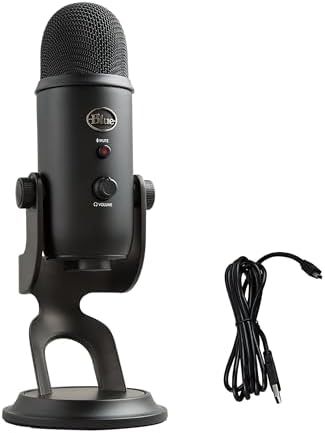
- Custom three-capsule array USB mic
- Blue VO!CE software with effects and modulation
- Four pickup patterns: cardioid, omni, bidirectional, stereo
- Onboard controls for volume, pattern, mute and gain

- USB/XLR Connectivity: The A04 Gen2 is a super versatile condenser microphone for capturing rich. Thanks to its dual XLR & USB connections, it's just…
- Studio-quality Sound: This condenser microphone has been designed with professional sound chipset, which let the USB mic hold high resolution…
- Advanced Software Control: MAONO Link software takes your audio customization to the next level, allowing you to adjust various parameters and…
- Double Noise Reduction: microphone has cardioid polar pattern, eliminating unwanted off-axis noise. Comes with pop filter and windscreen foam that…

- Versatile Connectivity – Compatible with popular audio interfaces for easy setup, making it ideal for use with popular recording software and…
- High SPL Handling – Capable of handling high sound pressure levels up to 150 dB, making it perfect for capturing loud sources without distortion.
- Durability – Built with high-quality materials to ensure long-lasting performance, making it a reliable choice for both professional and home studio…
- What's in the box? 1 x P120 Microphone. 1 x Stand Adapter

- LEGENDARY VOCAL CLARITY: A finely tuned frequency response with subtle midrange lift delivers warm, articulate vocals that cut through any mix,…
- TRUSTED WORLDWIDE: The microphone of choice for artists and performers everywhere, from small venues to major stages, delivering consistent,…
- PRECISION CARDIOID PERFORMANCE: A uniform cardioid pickup pattern focuses tightly on your voice while minimizing background noise and feedback,…
- INTEGRATED POP PROTECTION: A refined spherical grille and built-in filter work seamlessly to reduce plosives, breath, and wind noise, preserving…
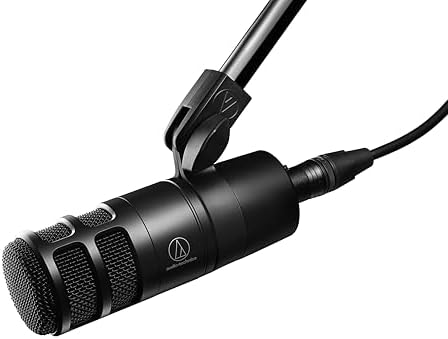
- Dynamic microphone delivers warm, assertive broadcast sound that’s perfect for podcasting; Large diaphragm for smooth, natural sound and low noise
- Multistage foam mesh windscreen provides superior internal pop filtering
- Integrated shock mount attenuates noise, shock and vibration transmitted through mic stands, booms and mounts
- Hypercardioid polar pattern reduces pickup of sounds from the sides and rear for maximum vocal isolation
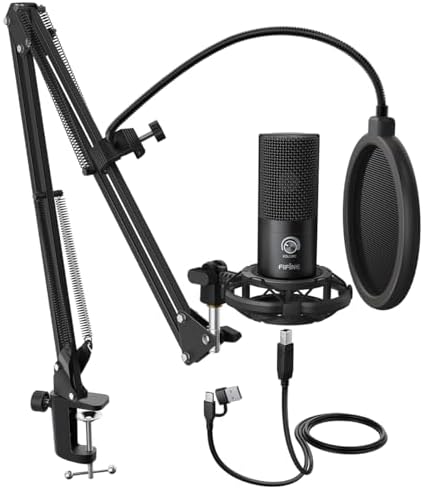
- [USB Output] Enables simple setup. USB studio recording microphone kit provides a direct convenient plug-and-play connection to pc and laptop without…
- [Excellent Sound Quality] With rugged construction for durable performance, the vocal recording microphone, USB condenser mic for PC,offers a wide…
- [Durable Arm Set] The podcast microphone bundle with versatile and sturdy broadcast suspension boom scissor arm with 180° up and down rotation, 135°…
- [Easy to Attach] The streaming microphone for PC includes adjustable boom studio scissor arm stand that features a heavy-duty combo mount consisting…
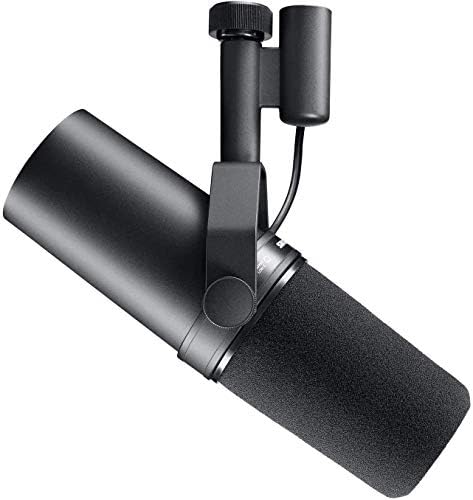
- NATURAL VOCALS: Engineered with a dynamic cartridge and wide-range frequency response, the Shure SM7B captures warm, balanced vocals with exceptional…
- FOCUSED AUDIO: A precise cardioid pickup pattern works with air suspension shock isolation to minimize background noise, handling vibrations, and…
- BROADCAST-READY CLARITY: Built-in pop filtering and a detachable windscreen reduce plosives, breath, and wind noise, delivering clean, polished audio…
- PRO-LEVEL XLR CONTROL: Professional XLR output connects seamlessly to audio interfaces and mixers, giving you full control over gain, EQ, and tone…
1. RØDE NT1 Signature Series Studio Condenser Microphone
Best for: singers needing a quiet, ready-to-record condenser setup.
This microphone arrives as a complete package. The box holds the NT1 Signature, an SM6 shock mount with a built-in pop filter, an XLR cable and a dust cover. You don’t have to hunt down matching parts; you just connect it to an interface and start tracking vocals.
Comparing its included accessories to the Shure SM4, the Rode provides an XLR cable where the Shure listing doesn’t list one in the box. Anyone who records loud instruments like guitar amplifiers should look elsewhere, since this model is optimized for vocals and streams rather than extreme sound pressure levels.
Pros
- Includes SM6 shock mount with pop filter
- XLR cable and dust cover in the box
- Tight cardioid pattern rejects room noise
- Large-diaphragm condenser voicing
Cons
- the box lists a shock mount, pop filter, XLR cable and dust cover, and not an interface
2. Audio-Technica AT2020 Cardioid Condenser Studio XLR Microphone
Best for: home producers wanting a versatile side-address condenser.
Audio-Technica calls this the standard in side-address studio condenser technology for project studios. Its custom-engineered low-mass diaphragm delivers extended frequency response and superior transient response, meaning fast sounds like acoustic guitar plucks stay crisp. The cardioid polar pattern reduces pickup from the sides and rear, helping isolate your target sound in an untreated bedroom.
The listing highlights the microphone itself and its connector.
Pros
- Custom engineered low-mass diaphragm
- Extended frequency response and superior transient response
- High SPL handling and wide dynamic range
- Cardioid polar pattern improves isolation
- Integral 3-pin XLRM output connector
Cons
- The box contains only the microphone itself, so a stand mount and XLR cable remain necessary additions before you can record.
3. Shure SM4 XLR Studio Condenser Microphone Kit
Best for: engineers needing clean audio near wireless devices.
A brass 1-inch dual-diaphragm capsule sits at the heart of this condenser. It delivers controlled low-end frequencies and smooth, detailed highs for natural reproduction. What really sets it apart is the patent-pending interference shielding technology, which blocks RF noise from cell phones, laptops and Wi-Fi routers. If your desk doubles as your recording booth, that shielding keeps digital buzz out of your tracks.
Shure designed the SM4 with a large sweet spot that reduces the proximity effect. You can move around a bit while close-miking vocals without your tone turning muddy. An integrated pop filter and woven mesh Faraday cage minimize plosives, making recordings mix-ready right from the start. It handles sounds up to 140dB, so loud instruments won’t cause distortion.
Pros
- Brass 1-inch dual-diaphragm capsule
- Patent-pending interference shielding blocks RF noise
- Integrated pop filter and woven mesh Faraday cage
- Captures sounds up to 140dB
- Rugged, all-metal construction
Cons
- Handles sounds up to 140dB, so sources exceeding that ceiling risk distortion where a higher-rated mic would stay clean.
4. Logitech Creators Blue Yeti USB Microphone
Best for: creators switching between solo and group recording formats.
Four pickup patterns make this USB microphone unusually flexible. You can select cardioid for solo vocals, omni for conference calls, bidirectional for interviews, or stereo for instruments. Blue VO!CE software adds broadcast effects, advanced modulation and HD audio samples directly to your stream.
Onboard controls put headphone volume, pattern selection, instant mute and mic gain right on the body. The adjustable desktop stand lets you pivot the mic toward the sound source, and no-latency monitoring lets you hear yourself in real time.
Pros
- Custom three-capsule array
- Four pickup patterns: cardioid, omni, bidirectional, stereo
- Onboard audio controls for volume, pattern, mute and gain
- Blue VO!CE software with effects and modulation
- Plug ‘n Play setup on Mac or PC
Cons
- Ships with a desktop stand rather than a boom arm, so clearing desk space means buying a separate mounting solution afterward.
5. MAONO A04 Gen2 XLR/USB Condenser Microphone Kit
Best for: podcasters moving between USB computers and XLR interfaces.
Dual connectivity defines this microphone. You can plug it straight into a PC or phone via USB for immediate recording, or route it through an XLR connection to an audio interface or mixer.
The 16mm electret condenser transducer captures a warm, silky character with strong bass response. It supports a 192kHz/24bit sampling rate over USB, and its frequency response spans 30Hz to 16kHz. The recommended recording range sits between 2 and 6 inches from the source.
Pros
- Dual XLR and USB connections
- 192kHz/24bit sampling rate
- MAONO Link software with EQ, compressor and limiter
- 16mm electret condenser transducer
- Includes scissor arm stand, shock mount and pop filter
Cons
- XLR mode requires external phantom power, so connecting to a basic mixer without it leaves you limited to USB operation.
6. AKG Pro Audio P120
Best for: musicians recording very loud instruments at home.
AKG includes a preattenuation pad rated at -20 dB and a bass cut filter set to 300 Hz with a 6 dB/octave slope. These switches let you tailor the mic’s response before the sound even hits your interface. The equivalent noise level sits at 19 dB-A, with a signal-to-noise ratio of 75 dB-A and sensitivity of 24 mV/Pa. Electrical impedance is listed at <= 200 Ohms.
The box contains the P120 microphone and a stand adapter, leaving out the XLR cable the Rode RØDE NT1 Signature provides. Recording sessions stall until you source that missing cable separately.
Pros
- Handles sound pressure levels up to 150 dB
- 2/3-inch low-mass diaphragm
- -20 dB preattenuation pad
- 300 Hz bass cut filter at 6 dB/octave
- Equivalent noise level of 19 dB-A
Cons
- The box lists only the microphone and a stand adapter, so an XLR cable remains a required second purchase.
7. Shure SM58 Pro XLR Dynamic Vocal Microphone
Best for: performers needing a rugged dynamic vocal mic.
Generations of live performers have relied on this dynamic microphone, and its finely tuned frequency response carries a subtle midrange lift. That lift helps warm, articulate vocals cut through dense mixes without extra equalization. A uniform cardioid pickup pattern focuses tightly on your voice while minimizing background noise and feedback, keeping recordings clean even in noisy rooms.
Durability is the headline feature here. Shure built it with rugged metal construction and a reinforced stand adapter meant to withstand touring demands. The refined spherical grille and built-in filter reduce plosives, breath and wind noise seamlessly. You won’t need to attach external pop filters to get a usable vocal take.
Voiceover artists looking for airy, highly detailed narration tracks will find this mic too focused on midrange punch.
Pros
- Finely tuned frequency response with midrange lift
- Uniform cardioid pickup pattern
- Rugged metal construction
- Reinforced stand adapter
- Spherical grille and built-in filter reduce plosives
Cons
- Engineered primarily for live performance and stage durability, so it misses the delicate high-frequency detail studio condensers provide for quiet voiceovers.
8. Audio-Technica AT2040 Hypercardioid Dynamic Podcast Microphone
Best for: podcasters seeking maximum vocal isolation in noisy rooms.
A hypercardioid polar pattern sets this dynamic microphone apart from standard cardioid models. It reduces pickup of sounds from the sides and rear far more aggressively, giving you maximum vocal isolation. If your recording space shares walls with traffic or roommates, that tighter pattern keeps unwanted noise out of your podcast feed.
The large diaphragm produces smooth, natural sound with low noise, delivering the warm, assertive broadcast tone podcasters want. A multistage foam mesh windscreen handles internal pop filtering, so hard consonants don’t distort your takes. Audio-Technica also built an integrated shock mount directly into the design, attenuating vibrations transmitted through stands and booms before they reach the capsule.
Its hypercardioid pattern requires precise positioning compared to the wider cardioid field on the Shure SM7B. Speakers who move around constantly while talking will drift out of the optimal capture zone and notice volume drops.
Pros
- Hypercardioid polar pattern for maximum isolation
- Large diaphragm for smooth, natural sound
- Multistage foam mesh windscreen
- Integrated shock mount attenuates vibration
- Includes pivoting stand mount and threaded adapter
Cons
- The hypercardioid pattern demands strict positioning, so anyone who shifts around a lot during recordings will fall outside its narrow sweet spot.
9. FIFINE T669 Studio Condenser USB Microphone
Best for: beginners wanting an instant desk-ready USB recording kit.
Plug this USB condenser directly into your PC or laptop and start recording without installing drivers or adding hardware. The kit arrives fully equipped: an all-steel scissor arm stand, a studio-grade shock mount, a double pop filter and an 8.2ft USB-B to USB-A/C cable. That double pop filter uses two layers of dissipation to remove rushing air and minimize popping sounds during voiceovers.
The scissor arm offers serious flexibility. It rotates 180° up and down, extends 135° forward and backward, and reaches 30″ from its base. The heavy-duty C-clamp attaches to desks securely, while the low-profile, table-hugging design keeps the hardware out of your camera frame. A cardioid condenser capsule captures audio from the front and avoids ambient noise from the rest of the room.
Its USB-only output prevents connection to traditional XLR mixers, unlike the MAONO A04 Gen2 which supports both formats. Musicians planning to expand into multi-channel analog recording rigs will hit a wall with this single-output design.
Pros
- Direct USB plug-and-play connection
- All-steel scissor arm stand with 30″ reach
- Double pop filter with two layers of dissipation
- 8.2ft USB-B to USB-A/C cable included
- 180° rotation and 135° extension on the arm
Cons
- Connects exclusively via USB, so integrating it into a traditional XLR mixing console later is impossible.
10. Shure SM7B Dynamic Vocal Microphone
Best for: professionals demanding broadcast-quality dynamic vocal capture.
This dynamic microphone represents the top tier of spoken-word recording. A dynamic cartridge paired with a wide-range frequency response captures warm, balanced vocals with exceptional clarity. Air suspension shock isolation works alongside the precise cardioid pickup pattern to minimize background noise, handling vibrations and room interference so your voice stays front and center.
Built-in pop filtering and a detachable windscreen reduce plosives and breath noise without requiring extra accessories hanging off the stand. Advanced electromagnetic shielding prevents unwanted hum and interference, keeping the signal clean in environments crowded with electronics. The professional XLR output connects to interfaces and mixers, giving engineers full control over gain, EQ and tone shaping.
Recording with the SM7B typically demands a powerful preamp to drive its output to usable levels. Compared to the Logitech Blue Yeti, which runs instantly off USB power, this microphone requires substantial external gain staging before you hear anything but a whisper.
Pros
- Dynamic cartridge with wide-range frequency response
- Air suspension shock isolation
- Built-in pop filtering and detachable windscreen
- Advanced electromagnetic shielding
- Rugged all-metal construction
Cons
- Requires a professional XLR interface with significant gain, so a simple laptop connection won’t produce a usable signal.
Also Worth Considering
The MAONO PD200W Wireless Podcast Microphone is a hybrid wireless dynamic mic offering XLR and USB connections. The MAONO A04 Gen2 beats it for stationary desk setups by including a full scissor arm stand, shock mount and pop filter in the box. Creators who need to walk around a room while recording might still prefer the wireless freedom this model suggests.
The TONOR Microphone Isolation Shield Set pairs a studio recording microphone with an isolation shield for PCs and laptops. The FIFINE T669 provides a more complete physical setup with its all-steel scissor arm and double pop filter already matched to the mic. Those struggling specifically with room reflections might value the dedicated shield approach instead.
The Dejasound Isolation Shield Pop Filter is a music condenser mic bundle featuring an upgraded isolation shield and pop filter for smartphones and PCs. The Rode RØDE NT1 Signature delivers superior baseline performance through its legendary low self-noise circuitry. Singers working in exceptionally noisy apartments could still benefit from the added physical barrier this kit provides.
How We Chose
Thirty-four Amazon listings were compared on connectivity type, included accessories, and stated technical specifications, and near-duplicates — another colour, another variant of a model already represented — were left out. To earn a place, a listing had to clearly state its polar pattern, connection method, and exactly which components ship with the microphone. Products lacking basic specification details or omitting accessory information entirely were removed from consideration. The final ten represent distinct approaches to home recording. Separation relies on whether a microphone uses USB or XLR connections, if it employs condenser or dynamic capsules, and how many accessories ship alongside the main unit. Every selected product solves a specific recording problem described directly in its own seller copy.
How to Choose the Right At-Home Studio Microphone
Connection type and existing gear
Decide first how the microphone reaches your computer. USB models like the Logitech Blue Yeti plug directly into a laptop without extra hardware. XLR options such as the Audio-Technica AT2020 require an audio interface with phantom power. The MAONO A04 Gen2 bridges both worlds, offering dual connectivity for changing setups. Match the output to the gear you already own.
What arrives in the box
Look closely at the included accessories before buying. The Rode RØDE NT1 Signature ships with a shock mount, pop filter and XLR cable, forming a complete vocal chain. The FIFINE T669 adds an all-steel scissor arm stand. Models like the AKG P120 include only a stand adapter, meaning cables and mounts remain separate purchases you must plan for ahead of time.
Polar pattern and room noise
Your recording environment dictates the ideal polar pattern. A tight hypercardioid design on the Audio-Technica AT2040 isolates vocals heavily, rejecting sound from the sides and rear. Standard cardioid patterns found on the Shure SM58 offer slightly wider capture zones. Untreated bedrooms benefit from tighter patterns, while dedicated studio spaces allow for broader pickup configurations.
Capsule type and intended source
Condenser microphones like the Shure SM4 use sensitive capsules that capture detailed highs and controlled lows, excelling at vocals and acoustic instruments. Dynamic models such as the Shure SM7B handle extreme volume gracefully and reject room reflections better. Loud guitar cabinets suit dynamic designs, while quiet voiceovers thrive on condenser sensitivity. Understanding microphone polar patterns helps clarify why manufacturers specify these directional behaviors for different recording tasks.
Frequently Asked Questions
Do I need phantom power for these microphones?
It depends entirely on the connection type and capsule design. Condenser microphones using XLR outputs, like the AKG P120 and Audio-Technica AT2020, require phantom power from an audio interface to operate. Dynamic models such as the Shure SM58 don’t need it. USB microphones like the Logitech Blue Yeti draw power directly from your computer’s port.
Can I use these microphones for live performances?
Dynamic models are built for the stage. The Shure SM58 features rugged metal construction and a reinforced stand adapter specifically engineered for touring demands. Condenser microphones like the Rode RØDE NT1 Signature prioritize studio vocal clarity and low self-noise over road durability. Always check the manufacturer’s stated build materials before taking any studio-focused gear to a live venue.
Why do some microphones need an audio interface?
Microphones with XLR outputs transmit analog signals that computers can’t process directly. An audio interface converts that signal to digital data. The Shure SM7B and Audio-Technica AT2020 rely on this external conversion. USB models like the FIFINE T669 contain built-in converters, allowing direct computer connection without additional hardware boxes cluttering your desk.
Are USB microphones worse than XLR models?
USB and XLR simply serve different workflows. The Logitech Blue Yeti offers four pickup patterns and onboard controls instantly accessible via USB. XLR models like the Shure SM4 provide professional routing through mixers and interfaces for granular control. Neither format is inherently inferior; the right choice depends on whether you prioritize immediate convenience or modular studio expansion.
How important is the included shock mount?

A shock mount physically decouples the microphone from vibrations traveling through desk surfaces and floorboards. The Audio-Technica AT2040 integrates one directly into its body, while the Rode RØDE NT1 Signature ships with the SM6 mount as part of its standard package. Without isolation, typing sounds or footfalls easily rumble into sensitive condenser capsules, ruining otherwise clean vocal takes.
What does high SPL handling actually mean?
Sound Pressure Level handling indicates how loud a source can be before the microphone distorts. The AKG P120 manages up to 150 dB, making it suitable for extremely loud instruments. The Shure SM4 caps at 140dB. If you record quiet podcasts, this specification matters less, but drummers and guitarists must prioritize higher limits to maintain clean audio signals.
Conclusion
For most people building a home setup, the Rode RØDE NT1 Signature remains the strongest starting point because it supplies every essential accessory without requiring separate purchases. If you just need something that plugs straight into a laptop, the FIFINE T669 handles that job with zero extra gear. Pick the one that matches your current hardware and start recording today.
As an Amazon Associate, Instrument Insight earns from qualifying purchases at no additional cost to you.