
The Peterson StroboClip HD earns the top spot with high-precision strobe accuracy and Sweetened Tuning presets. Finding the best banjo tuner means deciding between high-precision digital clips that grip your headstock and permanent geared hardware that replaces slipping pegs directly on the neck.
- Most Responsive: KLIQ UberTuner — Rapid vibration-based pitch detection with full-color screen.
- Best Low-Profile: D’Addario Micro Banjo Tuner — Mounts directly to the banjo hoop bracket out of sight.
- Best Rechargeable: Snark ST-2 — Internal battery with dual microphone and vibration sensors.
- Best Geared Peg Set: Golden Gate P-147 — Traditional 4:1 planetary gear set with nickel plating.
- Best Visual Display: Fender FCT-2 — Smooth needle LCD display with dual-hinged headstock clip.
- Best 5th String Tuner: Golden Gate P-149 — Dedicated 10:1 gear ratio designed for standard 9mm tapered holes.
- Best Modern Interface: Sondery Rechargeable Tuner — Phone-style high-definition TFT screen with USB charging.
- Best Multi-Instrument: AARVI Clip On — Six instrument modes with four bonus picks included.
- Best Replacement Pegs: BQLZR Zinc Alloy — Complete five-string set of 4:1 geared zinc pegs.

- Strobe tuner with ±0.1 cent accuracy
- 50+ Sweetened Tuning presets
- Chromatic tuner for many instruments
- HD display with 24 hours battery life
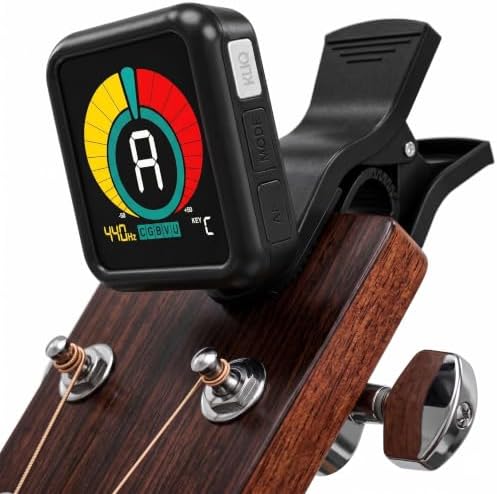
- Accurate to within 1 cent
- 360° adjustable color display
- Vibration-based tuning ignores background noise
- Padded clip fits many instruments

- Sensitive piezo transducer for banjo
- Calibration range of 435-455Hz
- Full color display with dual swivels
- Discreet hoop bracket design

- Rechargeable battery
- Full-color display with 360° rotation
- Pitch calibration 415–466Hz
- Built-in mic or vibration sensor

- Set of four deluxe banjo tuners
- 4:1 planetary gear system
- Nickel-plated finish
- Removable ivoroid buttons

- Vibration-based tuning for loud venues
- Color LCD needle display
- Modes for guitar, bass, ukulele, violin
- Dual-hinge clip for headstock

- Fits 9mm tapered holes
- 10:1 planetary gear system
- Triple nickel plating
- Removable ivoroid button

- Calibration range 410-460Hz
- High definition TFT screen
- Rechargeable battery with USB cable
- 360-degree swivel clamp

- 6 tuning modes plus chromatic
- High-sensitivity vibration sensor
- 360° rotating display and universal clip
- Auto power-off after 3 minutes

- Zinc alloy with pearl buttons
- Fast and accurate tuning
- Lightweight and portable design
1. Peterson StroboClip HD Clip-On Guitar Tuner
Best for: Banjoists needing studio-grade precision and sweetened tunings.
The Peterson StroboClip HD sets the benchmark for instrument tuning by using real strobe patterns instead of standard jumpy digital needles. The high-definition backlit screen uses 192 visual segments to track pitch fluctuations instantly without display lag. Its biggest strength lies in the 50+ Sweetened Tuning presets, which tweak interval spacing slightly to eliminate the harsh, sour intervals that often plague banjos using standard equal temperament.
The rubber-lined articulated jaw grips securely onto thick or thin pegheads without marring delicate finishes. Transposition settings handle alternate tunings and capos easily, making it great for players who switch between open G, drop C, or sawmill tunings on stage. The housing feels durable, and the display remains completely readable under direct sunlight or stage floodlights.
- Pros:
- Over 50 sweetened presets optimize tricky instrument temperaments
- 192-segment HD backlit screen works in all lighting conditions
- Wide transposition range for capos and dropped tunings
- Cons:
- Replaceable CR2032 battery delivers up to 24 hours of continuous use before replacement
2. KLIQ UberTuner Clip On Guitar Tuner -Black
Best for: Jamming in noisy festival circles and dark venues.
The KLIQ UberTuner uses a piezo sensor to read neck vibrations rather than ambient sound. This design means you can easily tune your banjo in the middle of a loud bluegrass jam session while fiddles and guitars play nearby. The full-color display provides crisp visual feedback, rotating 360 degrees so you can angle it toward your eyes whether clipped to the front or back of the peghead.
Dedicated instrument modes include settings for banjo, mandolin, guitar, bass, and violin, alongside a universal chromatic mode. The padded clamp holds firmly without leaving marks on your lacquer or wood. It also features pitch calibration between 430 Hz and 450 Hz, which gives you flexibility if you need to tune alongside an acoustic piano that sits slightly off standard concert pitch.
- Pros:
- High-speed piezo vibration sensor ignores ambient room noise
- 360-degree rotating screen accommodates left- and right-handed players
- Dedicated banjo mode plus chromatic setting
- Solid rubber-padded clamp protects headstock finish
- Cons:
- Calibration range caps at 450 Hz, ruling out ensembles tuning higher
3. D’Addario Accessories Micro Banjo Tuner
Best for: Players wanting an invisible tuner that stays on the rim.
The D’Addario Micro Banjo Tuner uses a non-marring bracket instead of a headstock clamp. This custom mount clamps straight onto your banjo’s tension hoop, letting the unit stay mounted inside your instrument case without removal. It sits neatly out of view from the audience, preserving the vintage look of your headstock while remaining easy for you to see from your playing stance.
The piezo transducer picks up direct rim vibrations for fast tracking across all five strings. The multi-color display features dual swivels, giving you wide viewing angles whether you play seated or standing with a strap. It also features a handy visual metronome feature to help practice your timing without producing loud clicks.
- Pros:
- Discreet non-marring hoop bracket stays attached inside the case
- Calibration adjusts across a 435 Hz to 455 Hz range
- Dual-swivel screen adjusts to limitless viewing positions
- Built-in visual metronome helps timing practice
- Cons:
- Bracket design mounts only to banjo tension hoops, preventing use on other headstocks
4. Snark ST-2 Chromatic Multi-Instrument Tuner
Best for: Musicians wanting internal rechargeable power and dual sensing.
The Snark ST-2 features a rechargeable internal battery. You recharge the internal cell via cable, eliminating the need to search for coin cells right before a gig. It features Snark’s fastest processing chip, grabbing notes instantly without annoying hesitation or needle jumping.
This unit gives you the choice between an internal vibration sensor and an onboard microphone. The microphone setting lets you tune up on a stand without attaching anything to your peghead, while the vibration clip takes over when the rehearsal space gets loud. The ball-and-socket clamp rotates completely, allowing full visibility regardless of where you attach it on your banjo neck.
- Pros:
- Rechargeable internal design eliminates buying coin-cell batteries
- Dual-sensor selector switches between internal mic and vibration clip
- Broad calibration range running from 415 Hz to 466 Hz
- High-resolution full-color display with 360-degree rotation
- Cons:
- Ball-and-socket joint adds physical height, requiring removal before closing tight hardshell cases
5. Golden Gate P-147 Deluxe Banjo Tuners
Best for: Upgrading slipping friction pegs on standard four-peg headstocks.
The Golden Gate P-147 provides four replacement machine heads for five-string banjos. If your instrument suffers from loose friction pegs that slip under string tension, these planetary tuners provide a mechanical solution. The compact housings house a specialized gear system that allows smooth, controlled tuning adjustments without jumping past your target note.
Triple nickel plating gives these tuners a bright, durable finish that matches traditional banjo metalwork while fighting off corrosion and sweat damage. Removable ivoroid buttons feel smooth between your fingers, offering a classic aesthetic suitable for modern instruments and pre-war vintage builds alike. The mechanical gear design ensures your strings hold pitch securely even under aggressive clawhammer or three-finger picking attacks.
Installing these mechanical tuners requires woodworking and peghead modification if your banjo’s peg holes don’t match standard dimensions.
- Pros:
- 4:1 planetary gear ratio delivers smooth mechanical string control
- Classic nickel-plated finish resists sweat and corrosion
- Removable ivoroid buttons provide traditional aesthetic and grip
- Replaces slipping friction pegs on vintage and modern banjos
- Cons:
- The box includes only the main tuners, requiring a separate purchase for the fifth string peg.
6. Fender FCT-2 Professional Multi-Instrument Clip-On Tuner
Best for: Banjo players who prefer a traditional, simple needle display.
The Fender FCT-2 features a high-contrast needle display. As you pluck your banjo strings, the colored digital needle sweeps across the screen and settles firmly at center pitch. The uncluttered layout makes it easy to read out of the corner of your eye while on stage, preventing visual confusion during quick tuning checks.
The dual-hinge clip mounts cleanly on either side of small or large pegheads, folding relatively flat against the wood. It uses direct vibration detection, ignoring conversations, crowd chatter, and ambient venue volume. The frequency detection range runs from B0 up to B7, tracking both deep low-tuned strings and high fifth strings with equal responsiveness.
- Pros:
- Intuitive LCD needle display centers clearly on target notes
- Wide B0 to B7 frequency tracking handles low and high notes
- Dual-hinge clip folds flat and works on both sides of headstock
- Operates immediately at standard A440 calibration
- Cons:
- Fixed A440 calibration can’t adjust for non-standard pitch references
7. Golden Gate P-149 Nickel Banjo Tuner
Best for: Replacing a sticky or slipping 5th string side peg.
The Golden Gate P-149 replaces failing fifth string pegs. The fifth string sits halfway up the neck, where string tension easily pulls standard friction pegs loose. This single replacement tuner utilizes an internal 10:1 planetary gear system, giving you exceptional mechanical leverage and tiny tuning increments that make locking your high G string simple.
The unit is sized to fit modern and vintage banjo necks with standard 9mm tapered side peg holes. It matches the traditional look of classic bluegrass rigs thanks to lustrous triple nickel plating that holds up against grime and finger moisture. The vintage-style ivoroid button matches standard peg sets and unscrews easily if you ever wish to swap hardware.
- Pros:
- High-precision 10:1 planetary gear ratio locks the tricky fifth string
- Sized specifically for standard 9mm tapered neck holes
- Durable triple nickel plating prevents tarnish from hand sweat
- Removable ivoroid button matches traditional peg sets
- Cons:
- Fits only 9mm tapered fifth-string holes, ruling out straight-bored or non-standard neck shafts
8. Sondery Rechargeable Clip On Tuner TFT
Best for: Players wanting crisp phone-like screen graphics and USB power.
The Sondery Rechargeable Tuner features a crisp color TFT display. Pitch tracking appears clean and fluid, with bright high-definition graphics that stay visible when performing under bright outdoor sunlight or dark club stages. Two 360-degree swivel joints on the clip arm allow you to position the screen around crowded headstocks or vintage tuners.
Power comes from an internal lithium cell that charges with an included USB cable, eliminating the need to dispose of dead coin-cell batteries. A single charge provides up to 4 hours of continuous operation, supported by an auto-off feature that powers the device down after 3 minutes of idle time. The piezo sensor tunes directly from instrument vibration across a 410 Hz to 460 Hz calibration range.
Musicians on multi-day camping festivals without power banks must manage its 4-hour runtime ceiling before needing a wall outlet.
- Pros:
- Sharp high-definition TFT screen reads easily under harsh sunlight
- Internal USB-rechargeable battery eliminates disposable button cells
- Dual 360-degree swivel joints provide flexible positioning
- Broad 410 Hz to 460 Hz pitch calibration range
- Cons:
- 4-hour continuous runtime per charge requires regular access to USB power
9. AARVI Guitar Tuner Clip On
Best for: Multi-instrumentalists who want a simple clip with spare picks.
The AARVI Clip On offers a functional, multi-mode digital tuning solution designed to clip cleanly to all headstock thicknesses. Its high-sensitivity vibration sensor handles noisy rooms by ignoring ambient acoustic chatter and zeroing in on the instrument’s structural resonance. The screen rotates across 360 degrees, allowing left-handed and right-handed players to get an unobstructed view of the display.
The software includes six dedicated instrument modes plus a chromatic setting. It comes boxed with a set of flat picks, giving you instant accessories for your gig bag. An integrated power-saving circuit shuts down the screen after 3 minutes without vibration, conserving battery life when left on the banjo neck.
Players dealing with custom pitch centers can’t adjust the reference pitch, as this tuner lacks adjustable frequency calibration settings.
- Pros:
- Six dedicated tuning modes plus universal chromatic tracking
- Wide-jawed 360-degree clamp fits various peghead shapes
- Shuts off automatically after 3 minutes of inactivity
- Includes four bonus guitar picks in the package
- Cons:
- Lacks manual pitch calibration adjustments away from default concert pitch
10. BQLZR Zinc Alloy Banjo Tuning Pegs 5 String Chrome
Best for: Players wanting a full 5-string matching set of geared metal pegs.
The BQLZR Zinc Alloy peg set offers a full replacement package that tackles every tuning peg on your five-string banjo at once. The kit includes four headstock pegs and a matching fifth string machine head for a uniform look. Each component utilizes a geared mechanism to prevent string slippage and improve pitch stability compared to vintage wooden friction pegs.
Constructed from chrome-finished zinc alloy, the housings resist everyday play wear and tarnishing. The pearloid peg buttons add a distinct decorative look to your banjo headstock while offering comfortable mechanical grip when winding strings up to pitch. Stated measurements list the four main pegs at 66mm by 23mm, with the smaller fifth peg checking in at 45.5mm by 23mm.
Woodworkers and hobbyists must measure carefully, as banjos with non-standard neck holes will require modification to fit these peg housings.
- Pros:
- Full matching set includes four headstock pegs and one fifth string peg
- Smooth 4:1 planetary gear ratio prevents strings from slipping out of tune
- Polished zinc alloy construction resists corrosion
- Pearloid buttons provide a stylish decorative appearance
- Cons:
- Stated dimensions of 66mm x 23mm and 45.5mm x 23mm require drilling if peghead holes don’t match
Also Worth Considering
- SNARK SN-8 All Instrument Tuner: Designed for multi-instrument use with a tight gripping clamp and bright display. The Snark ST-2 beats it by offering a rechargeable internal battery and dual mic sensing, though players wanting a standard battery-powered backup might still consider it.
- Golden Gate Tuner-Nickel-3/8in-Single Geared Banjo: This individual fifth-string replacement peg features a nickel finish and brown button designed for 3/8-inch holes. The Golden Gate P-149 beats it with a listed 10:1 gear ratio and ivoroid button, but owners with 3/8-inch peg bores can use this specific size.
How We Chose
30 Amazon listings were compared on sensor type, mounting style, and gear ratio specifications, and near-duplicates — another colour, another size of one already here — were left out. Listings qualified by detailing specific banjo compatibility, whether through dedicated vibration modes, rim hoop brackets, or physical banjo peg dimensions. Products lacking clear mechanical ratios or explicit sensor specifications were disqualified from the final selection. The remaining items split naturally between non-invasive digital clip tuners for daily practice and permanent mechanical planetary gears designed to replace slipping factory headstock hardware.
How to Choose the Right Banjo Tuner
Clip-On Sensors vs. Mechanical Peg Sets
Decide first whether you need an electronic digital tuner or physical machine parts. Clip-on tuners like the KLIQ UberTuner attach temporarily without tools to read string vibrations. Replacement peg sets like the Golden Gate P-147 permanently replace the physical tuning hardware on your headstock to stop strings from physically slipping out of tune.
Display Visibility and Lighting
Bright performance environments wash out dim digital screens quickly. The Peterson StroboClip HD uses 192 visual segments designed specifically to stay visible under outdoor sunlight and stage spots. The Sondery Rechargeable Tuner offers a smartphone-like TFT screen, whereas traditional needle displays like the Fender FCT-2 give a straightforward, minimalist view for quick tuning adjustments.
Tuning Accuracy and Temperament
Standard equal temperament can leave open banjo chords sounding slightly out of tune. The Peterson StroboClip HD solves this with high-precision strobe accuracy and Sweetened Tuning presets that compensate for instrument-specific scale quirks. Clip-on models like the KLIQ UberTuner offer standard chromatic accuracy, which works well for standard jam sessions and fast rehearsals.
Mounting Style and Instrument Aesthetics
Consider where the tuner sits while you play. Headstock clips grip the top scroll, which some traditional players find visually distracting. The D’Addario Micro Banjo Tuner mounts directly to the metal tension hoop with a discreet bracket, keeping the tuner hidden from the audience while remaining easily visible to the player.
Mechanical Gear Ratios for Banjo Pegs
When replacing tuning machines, gear ratios dictate how much the post turns per button revolution. The Golden Gate P-147 and BQLZR Zinc Alloy provide 4:1 ratios for stable, smooth headstock adjustments. For the difficult fifth string, the Golden Gate P-149 offers a 10:1 planetary ratio for ultra-fine micro-adjustments. Reliable tuning stability also depends heavily on proper maintenance of your bridge, tailpiece, and neck geometry, as outlined in the Deering Banjo maintenance guide.
Frequently Asked Questions
Can I use a standard guitar tuner on my banjo?
Yes, chromatic clip-on tuners work across both instruments because they detect pitch from neck vibrations. Models like the Fender FCT-2 feature chromatic modes that track banjo notes accurately. However, dedicated banjo modes, found on the KLIQ UberTuner and AARVI Clip On, recognize open G banjo tuning directly, making string selection much faster.
Why does my banjo go out of tune when playing with a capo?
Standard banjo frets and string tension cause sharp notes when clamped behind a capo. The Peterson StroboClip HD addresses this issue directly using Sweetened Tuning presets and capo transposition features. These presets offset pitch slightly so open chords and fretted positions remain harmonious across the entire banjo neck.
What is the difference between friction pegs and geared planetary tuners?
Friction pegs rely entirely on screw tightness to hold pitch, often slipping when string tension pulls against the peg. Geared tuners like the Golden Gate P-147 use internal 4:1 gears to hold strings firmly in place. The Golden Gate P-149 uses a 10:1 ratio on the fifth string for finer control.
How does a hoop-mounted tuner work on a banjo?

Hoop-mounted tuners clamp directly onto the metal tension hooks around the banjo head rather than the peghead. The D’Addario Micro Banjo Tuner uses a non-marring bracket that picks up vibrations straight from the banjo pot. This keeps the unit hidden from view and allows you to store it inside your case.
Do clip-on vibration tuners work in loud rooms?
Vibration tuners detect physical sound waves traveling through the wood rather than acoustic sound waves moving through the air. The KLIQ UberTuner and Sondery Rechargeable Tuner rely strictly on piezo vibration sensors, allowing accurate tuning on loud festival stages. The Snark ST-2 gives you the option to switch between a vibration sensor and an internal microphone.
Final Thoughts
The Peterson StroboClip HD is the best banjo tuner for most players thanks to its high-precision strobe accuracy and custom sweetened presets that eliminate sour chord intervals. If you want a simpler option that hides completely out of sight on your tension hoop, choose the D’Addario Micro Banjo Tuner instead. Grab the model that fits your instrument setup and lock your strings in tune today.
As an Amazon Associate, Instrument Insight earns from qualifying purchases at no additional cost to you.