
The Audio-Technica ATH-M50X earns the spot as the best studio recording headphones because its 45 millimeter drivers and consistent frequency response provide the accurate, balanced sound that professionals need. Whether you’re tracking vocals or mixing a track, these headphones offer the isolation and clarity required for critical listening. This guide helps you navigate the technical jargon to find the right pair for your studio, focusing on the specific design features that impact your daily workflow.
Choosing the right headphones depends mostly on whether you need to record in a loud room or mix in a quiet, controlled space. Closed-back models keep sound from leaking into your microphone, while open-back models provide a more natural, spatial sound for mixing. These options were compared based on their listed driver size, impedance, and overall build, helping you avoid models that don’t fit your specific recording setup.
Quick Picks
- Best Overall: Audio-Technica ATH-M50X — Balanced sound and durable, swiveling earcups for professional monitoring.
- Best for Tracking: beyerdynamic DT 770 Pro — Standard closed-back isolation for recording vocals without microphone bleed.
- Best for Mixing: beyerdynamic DT 990 Pro — Open-back design provides the depth needed for accurate mixing.
- Most Iconic Design: Sony MDR7506 — Industry-standard, foldable build with a long, reliable cord.
- Best Noise Isolation: Sennheiser HD 280 Pro — High attenuation blocks external sound for focused, quiet recording.
- Most Versatile Impedance: beyerdynamic DT 770 Pro X — Low impedance allows for direct connection to any source.
- Best Semi-Open: AKG K240 Studio — Varimotion diaphragms offer clear highs for detailed analytical listening.
- Best Compact Monitor: Audio-Technica ATH-M40x — Robust, foldable design with flat response for accurate monitoring.
- Best Entry-Level: Audio-Technica ATH-M20x — Simple, reliable build focused on low-frequency performance for beginners.
- Best 50mm Driver: FIFINE HD8 — Large drivers deliver dynamic sound with detachable cable flexibility.

- 45 millimeter drivers with rare earth magnets
- Copper clad aluminum wire voice coils
- Extended frequency range with deep bass response
- Circumaural design for sound isolation

- 80-ohm impedance works with interfaces or laptops
- Closed-back isolation keeps sound out of mic
- Passive shielding for vocal booths and loud rooms
- Replaceable grey velour pads, spring-steel headband

- 250-ohm impedance needs interface or amp
- Open-back design for mixing reference
- Wide natural stereo image for mixing and mastering
- Replaceable grey velour pads, spring-steel headband

- Neodymium magnets and 40 millimeter drivers
- Closed ear design reduces external noises
- 9.8 foot cord with gold plated plug, not detachable
- 1/4 inch adapter included, folds for storage

- Closed ear headphones with up to 32 dB attenuation
- Lightweight ergonomic design, coiled 3.3 9.8 feet cord
- Extended frequency response with natural sound reproduction
- Around the ear design with padded earcups
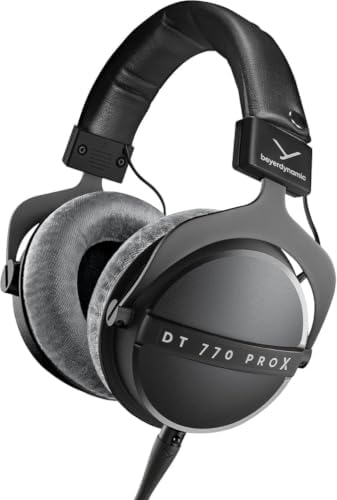
- 48-ohm drive plugs into any source directly
- Closed-back isolation prevents headphone bleed in mic
- STELLAR.45 driver for high-resolution studio sound
- Detachable mini-XLR cable, replaceable velour ear pads

- Stereo 1/8" connector with screw-on 1/4" adapter
- 3M (9.9 feet) cable included
- 30 mm XXL transducers with patented Varimotion diaphragms
- Self-adjusting headband and over-ear pads

- 40 millimeter drivers with rare earth magnets
- Copper clad aluminum wire voice coils
- Circumaural design contours around the ears
- 90 degree swiveling earcups for one ear monitoring

- Designed for studio tracking and mixing
- 40 mm drivers with rare earth magnets
- Copper clad aluminum wire voice coils
- Tuned for enhanced low frequency performance

- Large 50mm unit drivers, 20Hz~20kHz frequency range
- Adjustable headband and soft padded ear cushions
- Weight of 265g for over ear headphones
- Circumaural closed-back design provides noise isolation
1. Audio-Technica ATH-M50X Professional Studio Monitor Headphones
Best for: Professionals needing reliable, flat sound for everyday monitoring.
These headphones are a staple in recording environments because they provide consistent, clear audio across a wide range of frequencies. The 45 millimeter drivers use rare earth magnets. Their circumaural design fits comfortably over the ears, which helps block out ambient noise while you work.
The 90-degree swiveling earcups are a major advantage for engineers who need to listen with one ear while tracking. Because the cable is detachable, you can easily replace it if it wears out, which is a common issue with fixed-cable models. Compared to the 40 millimeter drivers on the Sony MDR7506, the larger 45 millimeter drivers on this model provide a more robust soundstage for analytical tasks.
Anyone who requires an open-back soundstage for mixing will find these closed-back headphones too confined for that specific stage of production.
Pros
- 45 millimeter proprietary drivers
- Detachable cable for easy replacement
- 90-degree swiveling earcups
- Extended frequency response for accuracy
Cons
- Closed-back design limits the natural soundstage compared to open-back options
2. beyerdynamic DT 770 Pro (80 Ohm)
Best for: Vocalists and podcasters who need to prevent microphone bleed.
This model is built specifically for the tracking stage of recording. Its closed-back design acts as a passive shield, ensuring that the sound from your headphones doesn’t leak into the sensitive microphone in front of you. The 80-ohm impedance makes them an ideal match for standard audio interfaces, providing plenty of volume without needing extra amplification.
The construction centers around a durable spring-steel headband and replaceable velour pads, which remain comfortable during long sessions. Since the cable is a fixed 3-meter straight cord, you have plenty of room to move around your booth without feeling tugged or restricted. At 80 ohms, these require less power than the 250-ohm beyerdynamic DT 990 Pro, making them easier to drive from most studio hardware.
Listeners looking for a portable, foldable pair for travel will find the fixed headband and large frame bulky to carry.
Pros
- Designed for closed-back isolation
- Replaceable velour ear pads
- Durable spring-steel headband
- Ideal 80-ohm impedance for interfaces
Cons
- Fixed 3-meter cable can’t be swapped
3. beyerdynamic DT 990 Pro (250 Ohm)
Best for: Mixing engineers who prioritize a natural, wide soundstage.
As an open-back model, these headphones allow sound to pass through the earcups, creating a more realistic listening experience. This is crucial during the mixing process, as it helps you hear the placement and depth of instruments more clearly than closed-back designs allow.
The velour pads and spring-steel headband ensure they stay comfortable through marathon mixing sessions. Because the design is open, you get a wide, natural stereo image that helps your mixes translate well to other playback systems. This model requires significantly more power to drive than the 48-ohm beyerdynamic DT 770 Pro X, so ensure your interface is rated for higher impedance loads.
Anyone recording in a noisy room or tracking sensitive vocals should avoid these, as the open-back design allows sound to leak in and out freely.
Pros
- Open-back design for wide soundstage
- Replaceable velour ear pads
- Sturdy spring-steel headband
- Honest, neutral mixing reference
Cons
- 250-ohm impedance requires a dedicated amplifier for full volume
4. Sony MDR7506 Professional Large Diaphragm Headphone
Best for: Field recordists and producers who need a portable, proven tool.
These headphones are famous for their rugged, foldable construction, making them a favorite for professionals on the go. The 40 millimeter drivers deliver a detailed sound. Their closed-ear design is highly effective at reducing external noise, which is essential when you’re monitoring in less-than-ideal environments.
The 9.8-foot coiled cord gives you plenty of slack, though it’s permanently attached to the unit. The entire structure folds down into a small footprint, fitting easily into a gear bag. When comparing the frequency range, this model lists 10 Hertz to 20 kilohertz, which is a wider bottom-end response than the 20 Hertz to 20 kilohertz range on the FIFINE HD8.
Users who prefer a detachable cable for custom lengths or easy repairs will be frustrated by the fixed, non-detachable cord.
Pros
- Foldable design for easy travel
- 40 millimeter drivers with neodymium magnets
- Rugged, professional-grade construction
- 10 Hertz to 20 kilohertz range
Cons
- Fixed cable limits repair options
5. Sennheiser HD 280 Pro Headphone
Best for: Recording in high-noise environments where isolation is paramount.
If your primary challenge is blocking out loud surroundings, these headphones are built to handle it. They’re rated for up to 32 dB of attenuation, which is a significant amount of noise reduction for a passive, closed-back design. The ergonomic construction is lightweight, ensuring you can wear them for hours without feeling neck strain.
You can easily replace the earpads, headband padding, and the cord, which helps these headphones last through years of hard use. The sound is tuned for a warm, natural reproduction that remains clear even in busy environments. Compared to the Audio-Technica ATH-M20x, this model offers a higher degree of sound attenuation to keep your focus entirely on the recording.
Anyone who finds high-clamping pressure uncomfortable will need to adjust to the snug fit required to achieve that 32 dB of isolation.
Pros
- Up to 32 dB of noise attenuation
- Replaceable earpads and cord
- Lightweight, ergonomic design
- Warm, natural sound reproduction
Cons
- Tight fit may feel restrictive during very long sessions
6. beyerdynamic DT 770 Pro X (48 Ohm)
Best for: Producers who switch between laptops, consoles, and interfaces.
The main draw of this model is its 48-ohm impedance, which makes it compatible with almost any device you own. You don’t need a dedicated headphone amp to get clear, loud audio, whether you’re plugging into a phone, a laptop, or a professional console. The STELLAR.45 driver technology provides high-resolution sound that’s crisp and accurate for both tracking and mixing.
The inclusion of a detachable mini-XLR cable is a massive improvement over the older fixed-cable versions, allowing for quick swaps. The velour pads are replaceable, ensuring the headphones stay fresh even after years of daily use. While the 48-ohm impedance is very versatile, it’s lower than the 250-ohm rating on the beyerdynamic DT 990 Pro, which some purists prefer for specific high-end setups.
Anyone who needs the specific acoustic signature of the original 250-ohm models might find the “X” tuning different from what they’re used to.
Pros
- 48-ohm impedance works with any source
- Detachable mini-XLR cable
- STELLAR.45 driver for high resolution
- Replaceable velour ear pads
Cons
- Lower impedance may not satisfy those with high-end dedicated amps
7. AKG K240STUDIO Semi-Open Studio Headphones
Best for: Analytical listening and long sessions requiring high comfort.
These semi-open headphones are a classic choice for professionals who need a balance between isolation and a natural soundstage. The patented Varimotion diaphragms within the 30 millimeter transducers deliver a wide dynamic range, which is great for hearing the nuances in a mix. Because they’re semi-open, they provide a more airy sound than fully closed designs without leaking quite as much audio as open-back models.
The self-adjusting headband is a standout feature, as it automatically conforms to your head shape without needing manual clicks. They come with a 9.9-foot cable and a screw-on adapter, making them ready for both home and studio use. Compared to the FIFINE HD8, these use 30 millimeter drivers against the 50 millimeter units found on that pick.
Tracking very quiet vocals with a sensitive mic might be risky, as the semi-open design does allow some sound to bleed out.
Pros
- Self-adjusting headband for comfort
- Semi-open design for balanced sound
- Includes 3-meter detachable cable
- Wide dynamic range for mixing
Cons
- Smaller 30 millimeter drivers lack the bass impact of larger units
8. Audio-Technica ATH-M40x Professional Studio Monitor Headphone
Best for: Engineers needing a flat, honest response for critical monitoring.
This model is a more compact, neutral-sounding sibling to the M50X. It uses precision-engineered drivers to provide a very flat frequency response, which is exactly what you want when you need to hear the truth in your recording. The circumaural design contours well to the ears, providing good isolation for loud environments.
Like the higher-end models, it features 90-degree swiveling earcups for one-ear monitoring and a detachable cable system. The build is robust, designed to take the wear and tear of a busy studio. When you compare the compact drivers here to the larger units on the Audio-Technica ATH-M50X, you see a smaller footprint that still retains high-end engineering.
Anyone looking for an enhanced bass response will find this model too flat, as it’s tuned for accuracy rather than punchy low-end.
Pros
- Flat, neutral frequency response
- Detachable cable included
- 90-degree swiveling earcups
- Compact, robust construction
Cons
- 40 millimeter drivers are smaller than the M50X’s 45 millimeter units
9. Audio-Technica ATH-M20x Professional Studio Monitor Headphones
Best for: Beginners starting their first home studio setup.
If you’re just beginning to record at home, these provide a solid, no-nonsense entry point. They feature drivers that are specifically tuned to enhance low-frequency performance, which helps when you’re tracking bass or drums. The single-side cable exit keeps the wire out of your way while you perform.
The build quality is surprisingly advanced for an entry-level pair, featuring the same circumaural design as the higher-tier models in the series. They’re lightweight and comfortable enough for tracking sessions that last a few hours. Compared to the Sennheiser HD 280 Pro, these are a lighter, more basic option for those not requiring extreme noise attenuation.
This model doesn’t feature a detachable cable, so if the cord breaks, you can’t simply swap it for a new one.
Pros
- Tuned for enhanced low-end
- Advanced build quality for beginners
- Comfortable circumaural design
- Single-side cable exit
Cons
- Fixed cable isn’t user-replaceable
10. FIFINE HD8 Wired Studio Monitor Headphone
Best for: Users who want large drivers and flexible connection options.
These headphones stand out because of their large 50 millimeter drivers, which produce a deep, dynamic bass and stable mids. They’re designed to be versatile, working well for everything from DJing to recording vocals. The passive noise-canceling design helps block out ambient noise, creating a more immersive space for your work.
They come with two 9.8-foot detachable cables, including both 3.5mm and 1/4-inch plugs, so you don’t need to hunt for adapters. The 265g weight is balanced to keep them comfortable during long marathon sessions. When comparing the 50 millimeter drivers here to the smaller units on the Sony MDR7506, you get a larger sound profile for your monitoring needs.
Anyone who needs a compact, foldable design will find these harder to pack away than the folding Sony MDR7506.
Pros
- Large 50 millimeter drivers
- Includes two detachable cables
- Passive noise-canceling design
- Balanced, comfortable fit
Cons
- Bulky design doesn’t fold for travel
Also Worth Considering
The AKG II Stereo Studio Headphones offer the classic semi-open design known for comfort, though they lack the swiveling cups found on the Audio-Technica ATH-M50X. They’re a good alternative for those who prefer the AKG fit for long mixing sessions.
The M-AUDIO HDH40 Closed-Back Over-Ear Headphones provide a basic, closed-back experience for beginners. They’re surpassed by the Audio-Technica ATH-M20x in terms of build quality and frequency tuning, but they remain a functional choice for simple tracking.
The OneOdio Podcast Keyboard Guitar Laptop is a budget-focused model with 50 millimeter drivers. While these drivers match the size of the ones in the FIFINE HD8, the FIFINE model offers a more dedicated studio-monitor build for professional recording tasks.
How We Chose
Thirty Amazon listings were compared on driver size, cable connectivity, and impedance ratings, and near-duplicates were left out. Each product had to provide clear information on its acoustic design—whether closed, open, or semi-open—to ensure it served a specific recording purpose. Models with detachable cables were prioritized for their longevity in professional environments. Products that didn’t specify their driver size or intended use were excluded to ensure that only transparently marketed equipment reached this guide. The selection process focused on identifying which headphones provided the best value through their build materials and stated technical capabilities, ensuring a variety of needs were met from entry-level tracking to professional-grade mixing.
How to Choose the Right Studio Recording Headphones
Closed-Back vs. Open-Back Designs
Closed-back headphones, like the beyerdynamic DT 770 Pro, are essential for tracking because they prevent sound from leaking into your microphone. Open-back models, such as this studio standard, allow air to move through the earcups, providing a wider, more natural stereo image that’s ideal for mixing.
The Importance of Impedance
Impedance, measured in ohms, determines how much power your headphones need. Low-impedance models like the 48-ohm beyerdynamic DT 770 Pro X work well with laptops and phones. High-impedance headphones, such as this professional model, require a dedicated audio interface or headphone amplifier to reach their full potential.
Comfort and Durability
Since studio sessions can last for hours, look for replaceable ear pads and durable headbands. Models like the Sennheiser HD 280 Pro emphasize ergonomics, while the Audio-Technica ATH-M50X uses high-quality materials to ensure the headphones survive daily use. A detachable cable is also a major plus for longevity.
Related guides
- Why is Audacity Recording at End of Track
- Can’t Hear Mic in FL Studio
- Can You Record Vocals on FL Studio Fruity Edition
Frequently Asked Questions
Do I need a headphone amplifier for studio headphones?
It depends on the impedance. Headphones with low impedance, like the 48-ohm beyerdynamic DT 770 Pro X, don’t need an amplifier. Models like this open-back classic perform best with an amplifier to ensure they reach the correct volume and dynamic range for accurate mixing.
Can I use studio headphones for casual listening?
Yes, you can. Many people enjoy the detailed, neutral sound of studio headphones for everyday music enjoyment. Models like the Audio-Technica ATH-M50X are popular for this because they offer a balanced sound signature that works well with most music genres and are comfortable enough for long-term wear.
What is the advantage of a detachable cable?

A detachable cable is a key feature for durability. If your cable frays or breaks, you can simply swap it for a new one without replacing the entire pair of headphones. Models like the Audio-Technica ATH-M50X and the FIFINE HD8 include this feature to ensure a longer product life.
How do I know if my headphones are tracking or mixing?
Tracking headphones are typically closed-back to prevent sound bleed, such as the Sennheiser HD 280 Pro. Mixing headphones are often open-back, like this industry favorite, to provide a wider, more natural soundstage that helps you hear depth and placement accurately while you work on your mix.
Conclusion
The Audio-Technica ATH-M50X remains the most versatile choice for most users, offering a balance of accuracy and durability that fits almost any studio task. If you need something simpler for basic tracking, the Audio-Technica ATH-M20x provides a reliable, entry-level solution. Choose your pair based on your primary task and start recording today.
As an Amazon Associate, Cleanestor earns from qualifying purchases at no additional cost to you.