
The Audio-Technica ATH-M50X is the best pick for music studio headphones for most creators because it provides a balanced, accurate sound profile that professionals trust for critical listening. This guide helps you choose the right pair by focusing on the specific design features that impact your daily workflow, such as cable type, comfort, and noise isolation. While many models offer high-quality audio, the key difference between these picks lies in how they handle long-term wear and the environment of your studio.
Quick Picks
- Best Overall: Audio-Technica ATH-M50X — Balanced, professional-grade sound with a convenient detachable cable.
- Industry Standard: Sony MDR7506 — The reliable, foldable choice long used for professional tracking.
- Best Semi-Open: AKG K240STUDIO — Provides a wider, natural soundstage ideal for mixing and mastering.
- Most Comfortable: AIAIAI TMA-2 Studio — Features premium Alcantara cushions designed for extended creative sessions.
- Best Entry-Level: Audio-Technica ATH-M20x — A straightforward, durable option for those starting their studio journey.
- Best Planar Magnetic: ASUS ROG Kithara — Uses advanced driver technology for high-fidelity detail and separation.
- Best Wireless: Beats Studio Pro — Offers flexible connectivity with both wireless and wired options.
- Best Rotatable Frame: M-AUDIO HDH40 — Includes a versatile 180-degree frame for flexible monitoring positions.
- Best for Podcasting: MAONO MH601 — Features dual-ear monitoring flexibility and a large 50mm aperture driver.
- Best Noise Isolation: Sennheiser HD 280 Pro — Designed to block significant external sound for concentrated recording.

- 45 millimeter drivers with rare earth magnets
- Copper clad aluminum wire voice coils
- Extended frequency range with deep bass response
- Circumaural design contours around the ears

- Neodymium magnets and 40 millimeter drivers
- Closed ear design reduces external noises
- 9.8 foot cord with gold plated plug
- Folds up for storage in soft case

- Stereo 1/8" connector and screw-on 1/4" adapter
- 3M (9.9 feet) cable included
- 30 mm XXL transducers with Varimotion diaphragms
- Self-adjusting headband and over-ear pads
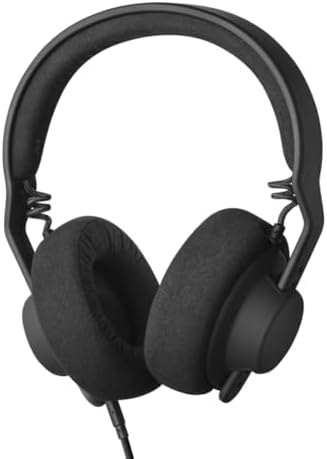
- Over ear headphones deliver detailed sound
- Ultra soft resilliant Alcantara cushions
- Lighter and stronger speaker unit than PET
- Modular TMA-2 DJ allows customisation and upgrades

- Designed for studio tracking and mixing
- 40 mm drivers with rare earth magnets
- Copper clad aluminum wire voice coils
- Tuned for enhanced low frequency performance

- ROG-tuned 100mm HIFIMAN planar magnetic drivers
- Open-back architecture for natural soundstage
- On-cable full-band MEMS boom microphone
- 4.4mm balanced plug, 3.5mm and 6.3mm plugs

- Custom acoustic platform delivers balanced audio
- USB-C lossless audio support included
- Active noise cancelling blocks distractions
- One-touch pairing with Apple and Android

- 40mm neodymium dynamic magnet driver
- 180-degree rotatable frame with telescopic arms
- Impedance of 32ohm and 95dB sensitivity
- 2.7m long fixed cable with 1/4" adapter

- MAONO MH601 built-in 50 mm large aperture driver
- Detachable 9.8ft spring-loaded 3.5mm to 6.35mm cable
- 90° swiveling earcups for dual or single-ear monitoring
- Protein earmuffs block 85% of ambient noise

- Dynamic closed ear headphones
- Up to 32 dB attenuation of outside sound
- Cord Length 3.3 9.8 feet Coiled
- Around the ear design with padded earcups
1. Audio-Technica ATH-M50X Professional Studio Monitor Headphones
Best for: Creators who need a versatile, industry-trusted monitoring tool.
These headphones excel by combining a balanced frequency range with a design that handles the rigors of daily use. The 45mm drivers deliver clear bass and detailed highs, which helps when you’re making precise adjustments to a mix. Its circumaural design creates a strong acoustic seal, helping you stay focused even when the room around you is loud.
The swiveling earcups are a massive help for one-ear monitoring, a common task during vocal tracking or DJ work. Because the cable is detachable, you can easily swap it out if it wears down, which is a significant advantage over fixed-cable models like the Sony MDR7506. You get a professional build that feels durable enough for years of heavy service.
Anyone who needs an ultra-lightweight headset might find these too bulky, as their robust construction adds weight compared to the lighter Sennheiser HD 280 Pro.
Pros
- 45mm large aperture drivers
- Detachable cable for longevity
- 90-degree swiveling earcups
- Professional-grade headband material
Cons
- Heavier build might cause fatigue over very long sessions.
2. Sony MDR7506 Professional Large Diaphragm Headphone
Best for: Engineers who prioritize a proven, time-tested monitoring design.
These headphones are a staple in recording environments because they provide a reliable, detailed sound that engineers know intimately. The 40mm drivers deliver a clear, honest representation of your audio, which is exactly what you need when you’re tracking instruments or vocals. It’s a straightforward tool that doesn’t complicate your workflow.
The closed-ear design is effective at keeping sound in and external noise out, which helps with recording accuracy. While the 9.8-foot cord isn’t detachable, its length provides plenty of room to move around a studio space. Compared to the Audio-Technica ATH-M50X, this model lacks a swappable cable, meaning you must be careful not to damage the fixed connection.
Users who require high-end comfort for extended studio sessions might find the earpads less plush than the memory foam found on the AIAIAI TMA-2 Studio.
Pros
- Rugged construction for professional environments
- Folds for easy storage and travel
- Includes 1/4-inch adapter
- Closed-ear design for noise reduction
Cons
- Fixed cable means the entire unit needs service if the cord breaks.
3. AKG K240STUDIO Semi-Open Studio Headphones
Best for: Mixing and mastering engineers who prefer a natural soundstage.
This semi-open design offers a different experience than closed-back models by allowing a bit more air to move through the drivers. The 30mm XXL transducers with Varimotion diaphragms provide a wide dynamic range, which is great for hearing the subtle space and depth in a complex mix. It’s a classic choice for those who don’t need total isolation but want high accuracy.
The self-adjusting headband is a standout feature for comfort, as it finds a perfect fit without you needing to fiddle with sliders. It’s built to last through long hours of recording and listening. It’s a much more open-sounding option than the Sennheiser HD 280 Pro, which is designed specifically to block out as much outside sound as possible.
Those working in noisy environments should look elsewhere, as the semi-open architecture will let in ambient room noise that could interfere with critical recording.
Pros
- Semi-open design for a natural soundstage
- Self-adjusting headband for comfort
- Includes screw-on 1/4-inch adapter
- Patented Varimotion diaphragms
Cons
- Doesn’t block external noise as well as closed-back alternatives.
4. AIAIAI TMA-2 Studio Wired Black Over-Ear Headphones
Best for: Professionals who prioritize long-term wearing comfort above all else.
The focus here is entirely on the user experience during long creative marathons. The Alcantara memory foam cushions are noticeably soft and provide a premium feel that resists the wear often seen in standard protein leather. The modular design is a unique touch, allowing you to replace or upgrade parts individually rather than buying a whole new set if one piece fails.
The sound is detailed and clean, thanks to drivers designed to minimize distortion compared to standard PET units. It feels lighter on the head than the Audio-Technica ATH-M50X, making it a better choice if you struggle with headband pressure. It’s a modern, sustainable approach to studio hardware that keeps the focus on the creator’s comfort.
Anyone who prefers a traditional, non-modular construction might find the assembly process unnecessary, as this requires more setup than the fixed M-AUDIO HDH40.
Pros
- Ultra-soft Alcantara cushions
- Modular parts for easy customization
- Distortion-reducing speaker units
- Sustainably sourced materials
Cons
- Modular design requires assembly before initial use.
5. Audio-Technica ATH-M20x Professional Studio Monitor Headphones
Best for: Beginners who need a reliable, no-nonsense studio headphone.
This model keeps things simple by focusing on the essentials of studio tracking and mixing. The 40mm drivers are tuned to emphasize low frequencies, which can be helpful if you’re working on rhythm-heavy tracks. Its circumaural design does a good job of creating an acoustic seal, keeping your focus on the audio rather than the room.
The single-side cable exit is a smart design choice, as it prevents the cord from getting tangled in your gear while you work. While it lacks the swiveling cups found on the Audio-Technica ATH-M50X, it provides a very solid, entry-level experience that covers all the basics. It’s a workhorse that does exactly what it promises without extra features.
People who need to monitor with one ear free will find the fixed earcups frustrating compared to the 90-degree swiveling cups on the MAONO MH601.
Pros
- Tuned for enhanced low-frequency performance
- Convenient single-side cable exit
- Durable build quality
- Excellent sound isolation
Cons
- Earcups don’t swivel to let you listen with a single ear while keeping the other uncovered.
6. ASUS ROG Kithara Gaming/Audiophile Open-Back Wired Headphones with Mic
Best for: Audiophiles who demand the precision of planar magnetic drivers.
Planar magnetic technology changes the way sound is produced, resulting in a level of detail and low distortion that standard dynamic drivers often can’t match. The 100mm drivers provide a wide, natural soundstage that’s excellent for picking out individual elements in a mix. The open-back architecture adds to this sense of space, making it feel like you’re listening to speakers in a room.
The build is premium, featuring a robust metal frame and an eight-level adjustable headband. It includes a variety of plugs, including a 4.4mm balanced option, which makes it very compatible with high-end DACs and amps. This is a much more technical piece of gear than the standard, closed-back Sony MDR7506.
Recording vocalists should be careful, as the open-back design allows sound to bleed out, which could be picked up by a nearby sensitive microphone.
Pros
- Advanced planar magnetic drivers
- Wide, natural soundstage
- Includes multiple cable adapters
- Robust metal frame construction
Cons
- Open-back design causes significant sound leakage.
7. Beats Studio Pro Premium Wireless Over-Ear Headphones- Up to 40-Hour
Best for: Creators who need to switch between studio work and mobile use.
These headphones are uniquely flexible because they offer both wireless freedom and a high-quality wired connection. The active noise cancelling is a huge benefit if you’re working in a busy office or commuting, as it lets you block out distractions instantly. When you’re back in the studio, you can plug in the 3.5mm cable for a standard analog experience.
The battery life is impressive, lasting up to 40 hours, which covers even the longest workdays. The personalized spatial audio adds an immersive quality that’s fun for movies or casual listening. It’s a more feature-rich device than the strictly wired M-AUDIO HDH40, though it’s more complex to manage due to the internal battery.
Anyone who wants a purely passive experience might find the reliance on a battery for noise-cancelling features unnecessary compared to a traditional closed-back studio headset that blocks sound without power.
Pros
- Wireless and wired connectivity
- Long battery life
- Active noise cancelling
- Spatial audio support
Cons
- Requires battery power to utilize noise-cancelling features.
8. M-AUDIO HDH40 Closed-Back Over-Ear Headphones
Best for: Podcasters and musicians who need a flexible, rotatable frame.
The standout feature here is the 180-degree rotatable frame, which lets you adjust the position of the earcups to suit your specific monitoring style. This is incredibly helpful when you’re recording multiple instruments or need to quickly switch between ears. The stainless steel telescopic arms add a level of durability that makes them feel very secure.
With 32-ohm impedance, these are easy to drive with a wide range of devices, from simple tablets to professional audio interfaces. The leather cushioning on the headband makes them comfortable for long sessions. It’s a more versatile frame design than the rigid structure of the Audio-Technica ATH-M20x.
Users with larger heads might find the fit of the headband tight, as the telescopic arms have a specific range that differs from the self-adjusting style of the AKG K240STUDIO.
Pros
- 180-degree rotatable earcups
- Durable stainless steel arms
- Wide equipment compatibility
- Comfortable leather cushioning
Cons
- Fixed cable limits movement compared to detachable options.
9. MAONO MH601 Wired Studio Headphone
Best for: Podcasters who need clear, zero-latency monitoring.
This model is built specifically for creators who need to hear themselves clearly while recording. The 50mm drivers produce a deep, accurate sound that helps you catch every detail of your voice. The 90-degree swiveling earcups are perfect for the classic “one ear on, one ear off” monitoring technique used by radio hosts and podcasters.
The detachable spring-loaded cable is a nice touch, giving you extra reach without it getting in the way. It’s designed to be a passive device, so you never have to worry about charging a battery. This makes it a more convenient, plug-and-play solution than the battery-dependent Beats Studio Pro.
Those who need built-in microphones for quick voice calls will be disappointed, as this is strictly a monitoring tool and lacks a microphone.
Pros
- Large 50mm aperture drivers
- Detachable spring-loaded cable
- 90-degree swiveling earcups
- Passive design requires no battery
Cons
- Lacks a built-in microphone for voice communication.
10. Sennheiser HD 280 Pro Headphone
Best for: Recording in loud environments where silence is mandatory.
When you need to block out the world, these are the go-to choice. They’re famous for their ability to attenuate up to 32 dB of outside sound, which is essential if you’re tracking vocals in a room with a loud computer fan or air conditioner. The around-the-ear design creates a very tight seal that keeps your focus entirely on the audio.
Everything about these is built for longevity, including the replaceable earpads, headband padding, and cord. It’s a more purpose-built isolation tool than the more general-purpose AKG K240STUDIO. If you’re a drummer or a vocalist, this level of noise reduction is a major advantage.
Anyone who prefers a wide, open soundstage will find these too “closed in,” as the focus here is strictly on isolation rather than natural airiness.
Pros
- Up to 32 dB noise attenuation
- Highly durable and replaceable parts
- Comfortable, lightweight design
- Excellent for loud environments
Cons
- Sound signature can feel restricted due to heavy isolation.
Also Worth Considering
The Tascam TH-02 Studio Monitor Headphones provide a straightforward, closed-back design for those needing a basic monitoring tool, though they lack the swappable parts of the Audio-Technica ATH-M50X. The OneOdio Over Ear Headphones Studio offers a 50mm driver unit and protein leather earcups, making them a comfortable alternative to the Audio-Technica ATH-M20x for entry-level mixing. Finally, the OneOdio DJ Hi-Res Over-Ear Headphones serve as a dedicated DJ-focused pair, though the MAONO MH601 remains more versatile for general podcasting and studio tasks due to its swiveling cup design.
How We Chose
Models with unique design elements, such as rotatable frames or planar magnetic drivers, were prioritized to offer a range of solutions for specific studio challenges. Only products with clear, descriptive listings were included to ensure that buyers have access to all necessary performance details before making a decision.
How to Choose the Right Studio Headphones
Sound Profile and Accuracy
For mixing and mastering, you need a flat, accurate sound that doesn’t color your audio. Look for models like the Audio-Technica ATH-M50X or AKG K240STUDIO, which are designed to provide a transparent representation of your recording. Avoid headphones that heavily boost bass unless you’re specifically looking for that for rhythm tracking.
Comfort and Long-Term Wear
If you spend hours in the studio, the headband and earpads are just as important as the sound. Memory foam and breathable materials like Alcantara, found on the AIAIAI TMA-2 Studio, help reduce fatigue. A self-adjusting headband, such as the one on the AKG K240STUDIO, ensures a consistent fit without manual adjustments.
Noise Isolation Needs
Your recording environment dictates your isolation needs. For mixing in a quiet space, semi-open designs like the AKG K240STUDIO offer a more natural soundstage.
Build and Connectivity
Studio gear takes a beating, so look for replaceable parts. A detachable cable, like the one on the Audio-Technica ATH-M50X or MAONO MH601, means you can keep using the headphones even if the cord is damaged. Consider whether you need a 1/4-inch adapter for your audio interface, which is included with most professional models listed here.
Related guides
Frequently Asked Questions
Do I need a special amplifier for these headphones?
Most studio headphones on this list, like the M-AUDIO HDH40, have low impedance and work well with standard gear. However, high-end models like the ASUS ROG Kithara might benefit from a dedicated amplifier to reach their full potential, especially if you’re using a high-fidelity DAC.
Can I use these for gaming or general listening?
Yes, you can. Models like the Beats Studio Pro or the ASUS ROG Kithara are excellent for general use because they offer balanced sound. While they’re built for the studio, their clarity makes them great for hearing details in movies or games that standard consumer headphones often miss.
How do I clean the earpads?
Use a soft, slightly damp cloth to wipe down the material after each session. For headphones with replaceable pads like the Sennheiser HD 280 Pro, you can eventually swap them for fresh ones if they show signs of wear, which keeps your headset feeling like new for years.
Is wireless better than wired for studio work?

Wired is almost always preferred for studio work because it provides zero-latency audio, which is critical for recording. Wireless options like the Beats Studio Pro are great for travel or casual listening, but always keep a wired cable handy for when you need to track or mix precisely.
What does “closed-back” mean?
A closed-back design, like the Sony MDR7506, means the earcups are sealed to prevent sound from leaking out and to block external noise from getting in. This is the standard for recording vocals or instruments, as it ensures your headphone audio doesn’t get picked up by your microphone.
Conclusion
The Audio-Technica ATH-M50X remains the best choice for music studio headphones for most people because it balances professional-grade accuracy with a durable, user-friendly design. If you need something simpler and more affordable, the Audio-Technica ATH-M20x is a great starting point for your studio. Start by identifying your primary use case to pick the right pair today.
As an Amazon Associate, Instrument Insight earns from qualifying purchases at no additional cost to you.