
Finding the best saxophone reeds determines how easily you start a note and how much control you maintain during complex musical passages. While materials vary from traditional cane to modern synthetics, the primary difference remains how each option handles moisture and consistency.
- Best Overall: Vandoren Traditional Alto — offers excellent response and tonal clarity for all registers.
- Most Consistent Cane: D’Addario Rico Organic — provides a reliable, standard response for students and educators.
- Best Synthetic Performance: Legere Légère Signature Alto — combines tonal depth with total immunity to humidity.
- Best for Beginners: Vandoren JUNO — features a highly responsive design tailored for novice players.
- Best for Classical: Legere Légère French Cut — engineered specifically for a dark, focused classical sound.
- Best for Baritone: Vandoren Traditional Bari — delivers consistent, flexible performance across the baritone range.
- Best for Tenor: Legere Légère Signature Tenor — offers smooth, centered sound with exceptional tonal overtones.
- Best Value Bulk: Sovvid Professional Alto — includes a large count with protective storage for consistent use.

- Responsive in all registers
- Flexible for legato and staccato
- Available for clarinets and saxophones
- Sealed in Flow Pack

- Traditional blank and profile
- Harvested and manufactured in USA
- Standard for students and educators
- Suitable for students and jazz musicians

- Consistent tonal depth
- Synthetic material resists humidity
- Ready to play without soaking
- Includes carry case

- Pack of 10 reeds
- Responsive for novice players
- Made by Vandoren
- Sealed in individual case
- Designed for classical saxophonists
- Synthetic material resists humidity
- Ready to play without soaking
- Includes carry case

- Responsive in all registers
- Flexible for legato and staccato
- Available for clarinets and saxophones
- Sealed in Flow Pack

- Thinner and stiffer design
- Synthetic material resists humidity
- Ready to play without soaking
- Includes carry case

- Strength 2.5, box of 10
- Laser engraved size mark
- Available in 4 strengths
- Sealed in plastic cases
1. Vandoren SR212 Alto Sax Traditional Reeds Strength 2; Box
Best for: Players who need a versatile, responsive reed for any musical style.
These reeds are widely recognized for their ability to maintain a clear, rich tone even during quiet attacks in the high register. The traditional cut offers a high level of flexibility, which helps when you need to navigate large intervals or switch between legato and staccato playing styles. Because each reed is sealed in its own pack, they arrive in a state that preserves the cane’s natural qualities until you’re ready to play.
The design emphasizes body and clarity, making it a standard choice for those who prioritize sound quality in their daily practice. Compared to the Sovvid Professional Alto, which features a thinner vamp for easier playing, this model provides a more traditional resistance that many experienced players prefer for tonal control. It’s an ideal starting point for anyone looking to refine their sound across the entire range of the instrument.
Anyone who requires a reed that never needs to be managed for humidity will find this cane-based option less convenient than the synthetic Legere Légère Signature Alto.
Pros
- Maintains clear tone in high registers
- Offers high flexibility for varied articulation
- Individually sealed for freshness
- Suitable for all saxophone types
Cons
- Cane material is sensitive to humidity changes
2. D’Addario Rico Organic
Best for: Students and teachers looking for a reliable, standard-setting reed.
This reed is designed with a traditional profile that focuses on ease of response, which is why it remains a common choice in educational settings. By using naturally grown cane, the manufacturer maintains a familiar feel that helps students develop their embouchure and immediate sound production. It’s a straightforward tool that prioritizes consistency so that players can focus on learning techniques rather than fighting their equipment.
The focus here is on the transition from the field to the factory, ensuring that the cane is processed to meet high standards of reliability. When you compare this to the Vandoren JUNO, which is also built for beginners, the Rico Organic offers a more traditional cane feel against the JUNO’s specific design for novice response. It’s a dependable option that supports a student’s growth from their first notes to more advanced repertoire.
Players who need a synthetic reed that resists warping will find this organic cane model less durable than the Legere Légère Signature Alto.
Pros
- Designed for ease of response
- Standard choice for educators globally
- Uses naturally grown cane
- Consistent manufacturing process
Cons
- Requires regular moisture management
3. Legere Légère Signature Alto
Best for: Professionals who demand consistent, long-lasting performance in any environment.
This synthetic reed stands out because it’s completely unaffected by humidity or temperature, meaning it plays exactly the same way every time you pick it up. You don’t need to pre-soak it, which saves time before practice or performances. The material is crafted to mimic the tonal depth of high-quality cane while providing the durability that synthetic construction allows.
The design aims for a centered, expressive sound that holds up to the demands of daily, rigorous playing. When looking at the Vandoren Traditional Alto, which requires careful handling of cane, this synthetic option offers a significant advantage in longevity against the traditional material’s natural tendency to soften. It’s a practical choice for anyone who plays in varying locations where environmental conditions change frequently.
Anyone who prefers the specific, organic vibration of traditional cane will find this synthetic option different from the Vandoren Traditional Alto.
Pros
- Impervious to environmental humidity
- No pre-soaking required
- Highly durable material
- Includes a protective storage case
Cons
- Synthetic feel differs from traditional cane
4. Vandoren JUNO Alto Saxophone Reeds
Best for: Novice players who need extra help with initial sound production.
These reeds are specifically engineered to make the early stages of learning easier by increasing responsiveness for the player. The cut is designed to help beginners achieve a stable sound without the resistance that can sometimes frustrate those just starting their musical journey. By focusing on the needs of novices, this reed helps build confidence during the first weeks and months of playing.
Each reed is individually cased to ensure that the beginner always has a fresh, protected option available. When compared to the D’Addario Rico Organic, which is also a student-focused reed, this model is specifically tuned for novice responsiveness against the Rico’s general educational standard. It provides a supportive experience that minimizes the physical effort needed to get a consistent tone.
Advanced players who seek a more complex, nuanced tonal range will find this reed too limited compared to the Vandoren Traditional Alto.
Pros
- Designed specifically for beginners
- Highly responsive for novice players
- Individually cased for protection
- Supports easier sound production
Cons
- Limited tonal complexity for professionals
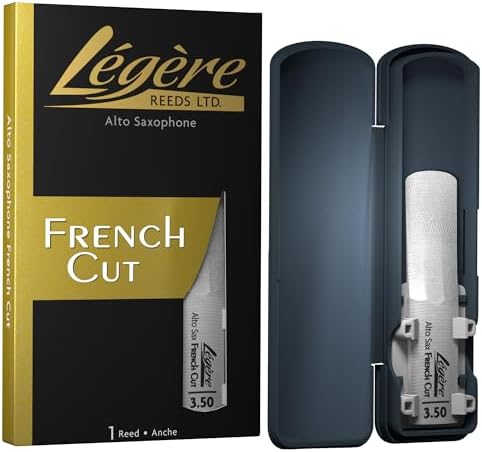
5. Legere Légère French Cut
Best for: Classical saxophonists seeking a specific dark, focused sound.
The French Cut is engineered with a unique design to produce a dark and centered tone, which is a hallmark of many classical performance styles. Like other synthetic options from this brand, it’s built to last and isn’t affected by changes in humidity or temperature. This makes it a reliable choice for players who perform in diverse venues where the air quality might otherwise alter the behavior of a standard cane reed.
Because it requires no pre-soaking, you can start playing with the same sound quality immediately. When you compare this to the Legere Légère Signature Alto, which is designed for general clear and expressive sound, this model offers a more specific focus on a dark, classical tone against the Signature’s broader tonal profile. It’s a specialized tool for performers who have a clear goal for their sound.
Anyone who plays jazz or pop music and prefers a brighter, more open sound will find the dark focus of this reed less suitable than the Vandoren Traditional Alto.
Pros
- Designed for a dark, focused sound
- Not affected by humidity
- No pre-soaking needed
- Includes a carry case
Cons
- Sound profile is highly specialized
6. Vandoren SR243 Bari Sax Traditional Reeds Strength 3; Box
Best for: Baritone saxophonists who need flexible, reliable performance across all registers.
This reed carries the same design philosophy as the alto version, focusing on excellent response even during the most delicate, quiet passages. Baritone players often face challenges with reed consistency due to the size of the instrument, but this model is designed to provide the necessary body and clarity to the sound. The flexibility of the cut makes it easier to manage the large intervals often found in baritone saxophone music.
Each reed is sealed in a flow pack, ensuring that it remains fresh and ready for play regardless of how long it sits in your case. When compared to the Legere Légère Signature Tenor, which uses synthetic materials for its response, this cane reed offers a traditional feel that is essential for the specific timbre of the baritone saxophone. It’s a solid, professional-grade choice for those who want a classic response.
Players who perform outdoors or in unstable environments will find this cane reed less consistent than the synthetic Legere Légère Signature series.
Pros
- Excellent response in all registers
- Flexible for legato and staccato
- Individually sealed for freshness
- Richness of tone and clarity
Cons
- Cane material requires moisture management
7. Legere Légère Signature Tenor
Best for: Tenor saxophonists who want a smooth, centered tone with long-lasting durability.
These reeds are thinner and stiffer than typical cane, which allows them to respond without any hesitation. This design creates a smooth playing experience that produces colorful overtones, giving the tenor saxophone a pristine and professional sound. Because they’re synthetic, they provide a consistent experience that doesn’t degrade like traditional cane.
The reeds come with a storage case to keep them safe from environmental damage. Comparing this to the Vandoren Traditional Bari, which uses cane, this synthetic model provides a consistent, ready-to-play experience against the Bari’s need for traditional moisture control. It’s an excellent choice for tenor players who want to avoid the variability of natural materials.
Anyone who is strictly looking for the traditional, organic vibration of cane will find this synthetic option different from the Vandoren Traditional Alto.
Pros
- Responds without hesitation
- Thinner and stiffer than cane
- Not affected by humidity
- Includes a protective case
Cons
- Synthetic material may feel different
8. Sovvid 10 Pack Professional Alto Saxophone Reeds with Plastic Box
Best for: Players who want a bulk supply of reeds with protective storage.
This reed is designed with a thinner vamp and an unfiled cut to help make playing easier. The brand and size are laser-engraved onto the reed, which is a helpful feature for keeping track of your specific strength. The inclusion of a plastic box with baffles to separate the reeds helps keep them organized and protected from potential damage.
The manufacturing process focuses on stable vibration and reduced resistance, aiming to help players achieve a clear sound with less effort. When compared to the Vandoren Traditional Alto, which uses a traditional cut for all-around flexibility, this model uses a thinner vamp design to lower resistance against the Traditional’s more balanced approach. It’s a practical choice for those who go through reeds quickly and want a consistent, labeled product.
Players who need the absolute highest level of professional tonal control may find this bulk-focused option less refined than the Vandoren Traditional Alto.
Pros
- Laser-engraved size markings
- Thinner vamp for easier play
- Includes protective plastic case
- Baffles keep reeds separated
Cons
- Cane material requires standard maintenance
Also Worth Considering
The Legere Légère Classic is a synthetic student-focused reed that offers durability for those just starting out; it’s outperformed in tonal depth by the Legere Légère Signature Alto, which is better suited for experienced players. The Legere Légère Signature in strength 3.25 is a variant of the Signature line; it’s best for those who need more resistance than the 2.5 version, which is the standard choice here. Finally, the Legere Légère Signature for Baritone is the synthetic counterpart to the Vandoren Traditional Bari; while it offers the same humidity resistance as other synthetics, it’s an alternative for those who prefer synthetic over the cane used in the Vandoren model.
How to Choose the Best Saxophone Reeds
Material and Consistency
Choose between natural cane and synthetic materials based on your environment. Cane, such as the Vandoren Traditional Alto, offers a classic, organic sound but requires moisture management. Synthetics like the Legere Légère Signature Alto are immune to humidity and temperature, making them more stable for players who perform in varied locations.
Skill Level and Response
Beginner reeds, such as the Vandoren JUNO, feature designs that prioritize ease of sound production, helping novices develop their embouchure without excessive resistance. As you advance, you may prefer reeds like the Vandoren Traditional Alto or the Legere Légère French Cut, which offer more specific control over tone, articulation, and resistance.
What Comes in the Box
Consider how the reeds are stored to ensure they remain in peak condition. Many options, including the Sovvid Professional Alto, include protective cases or individual packaging. Proper storage, as noted by the U.S. Food and Drug Administration regarding general woodwind instrument hygiene, helps prevent the buildup of bacteria and keeps the reeds safe from physical damage when they aren’t in use.
Frequently Asked Questions
Is a synthetic reed worth the switch?
A synthetic reed is worth it if you prioritize consistency and durability over the organic feel of cane. Products like the Legere Légère Signature Alto don’t change with humidity, meaning they play the same every time. If you find yourself constantly managing cane reeds that warp or dry out, synthetic options provide a reliable alternative.
How do I know which strength to choose?
Most brands offer a range of strengths, typically starting from 1.5 for beginners up to 3.5 or higher for professionals. Beginners usually start with a 2.0 or 2.5, as seen in the Vandoren JUNO and Sovvid Professional Alto listings. You should choose a strength that allows you to produce a full sound without feeling excessive resistance.
Should I soak my reeds before playing?
You should soak natural cane reeds, such as the Vandoren Traditional Alto, to help them vibrate properly and prevent them from drying out too quickly. Synthetic reeds, like those from Legere, don’t require any pre-soaking and are ready to play immediately. Always check the specific instructions provided by the reed manufacturer.
Can I use the same reed for different styles?

While some reeds are designed for specific styles, such as the Legere Légère French Cut for classical music, many traditional reeds are versatile enough for multiple genres. The Vandoren Traditional Alto is known for its flexibility in both jazz and classical settings, allowing players to adapt their sound through embouchure and air control.
How often should I replace my reeds?
You should replace your reed as soon as it shows signs of chipping, warping, or a significant loss in sound quality. While synthetic reeds generally last longer than cane, they still eventually wear out. A good rule is to rotate through a few reeds rather than using one until it fails, which helps maintain consistent performance.
Final Thoughts
The Vandoren Traditional Alto remains the top choice for most saxophonists due to its reliable response and tonal clarity. For those who need a synthetic option that withstands all weather conditions without pre-soaking, the Legere Légère Signature Alto is an excellent, low-maintenance alternative. Start your journey by selecting a strength that matches your current skill level.
As an Amazon Associate, Instrument Insight earns from qualifying purchases at no additional cost to you.