
The PreSonus Eris 3.5 is the best overall affordable studio monitor, packing versatile connectivity and acoustic tuning into a compact frame. Whether you are mixing music or editing video, these monitors turn a messy audio mix into a professional experience. The right choice depends on your workspace size and cable requirements.
- Best Overall: PreSonus Eris 3.5 — Combines compact size with essential acoustic tuning controls.
- Most Accurate Sound: Yamaha HS4 — Delivers a flat, professional response for detailed mixing.
- Best Mid-Range Driver: Edifier MR4 — Uses a wooden cabinet to help reduce unwanted resonance.
- Best Wireless Connectivity: Edifier MR3 — Features Bluetooth multi-point and app-based EQ customization.
- Simplest Controls: Mackie CR3.5 — Includes handy front-panel tone and volume adjustments.
- Best Wired Latency: M-Audio BX3 — Engineered specifically for zero-latency audio monitoring.
- Best Built-In DAC: Ortizan C7 — Captures digital audio directly via USB for fidelity.
- Best Larger Woofer: PreSonus Eris E5 — Offers a bigger 5.25-inch driver for deeper bass.
- Best High-Frequency Range: Yamaha HS5 Studio Monitor — Reaches up to 30 kHz for crisp detail.
- Best for Large Rooms: Yamaha HS8 Studio Monitor — Uses massive 8-inch drivers for powerful output.
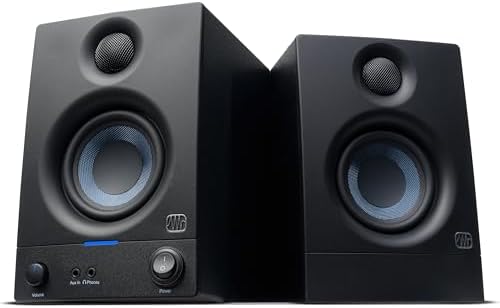
- Sold as a complete stereo pair
- 50 watts of built-in amplification
- 3.5” woven-composite woofers and 1” silk-dome tweeters
- Frequency response from 80 Hz–20 kHz
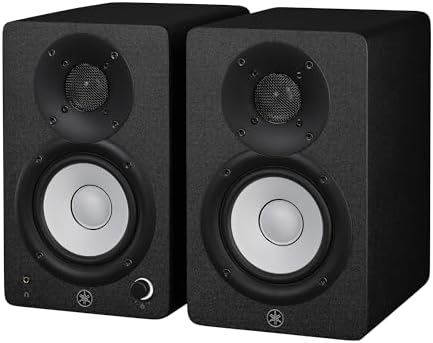
- Packaging: Pair
- 4.5" cone woofer and 1" dome tweeter
- 60 Hz – 22 kHz frequency response (-10 dB)
- 26 W and above 26 W output power

- 1-inch silk dome tweeters and 4-inch composite woofers
- MDF wooden structure helps reduce resonance
- 1/4-inch TRS, RCA, AUX inputs and headphone output
- Switches between monitor mode and music mode
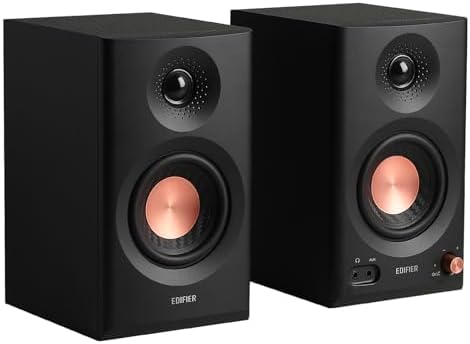
- Flat response across 52Hz to 40kHz
- Balanced TRS, RCA, AUX inputs and Bluetooth multi-point
- 18W*2 RMS output with peak SPL of 92.5dB
- Music, Monitor, and Custom modes available

- Sold as a pair for desks and small studios
- Tone Knob adjusts voicing from your desk
- Location Switch corrects bass near walls or free

- Latency Free Wired Connection – Engineered for zero-latency audio monitoring, these wired desktop speakers provide a pure, uninterrupted signal…
- Studio-Grade Sound – Upgrade your built-in computer speakers with crystal-clear, bi-amplified power that delivers professional studio monitor quality…
- 3.5-inch Kevlar Woofers – Designed for ultimate acoustic performance, the Black Kevlar low-frequency drivers provide a smooth, punchy bass response…
- Natural Silk Dome Tweeters – Experience the full spectrum of frequencies with natural silk dome tweeters that provide precise stereo imaging and…

- 【Multiple INPUTS】The stereo speakers home audio is built with RCA which ensure a lossless connection surround sound system for TV; With the addition…
- 【HIFI BOOKSHELF SPEAKERS】The built-in 24-bit DAC captures digital audio directly via USB, minimizing signal loss during conversion and maximizing…
- 【3.5 INCH CARBON FIBER SPEAKER AND 0.75inch SILK DOME TWEETER】The 0.75-inch tweeter and 3.5-inch mid-bass golden acoustic combination, with a…
- 【PROFESSIONAL TUNING】According to the characteristics of the speaker units, after dozens of professional adjustments in the laboratory, subtle…
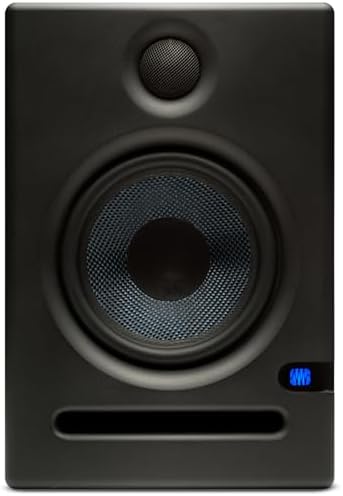
- An outstanding way to upgrade your monitoring so that your mixes translate.
- Now comes included with Studio One Prime and Studio Magic plug-in suite, over $1000 USD worth of music production software.
- 5.25-inch woven composite woofer delivers solid low-end sound with minimal bass distortion.
- 1-inch ultra-low-mass silk-dome tweeter eliminates harshness and provides balanced high-frequency sound.

- Includes (2) Yamaha HS5 studio monitors
- 2 Way bass reflex bi amplified near field studio monitor with 5 inch Cone woofer and 1 inch dome tweeter
- Has monitors emphasize sonic purity without any coloring or alternation of the original sound
- 54 hertz to 30 kilohertz frequency response; 45W LF plus 25W HF bi amp system for high-performance 70 watts power amplification

- 38Hz – 30kHz frequency response
- 75W LF plus 45W HF bi-amp system for high-performance 120W power amplification
- 8-inch cone woofer, 1-inch dome tweeter
- Large magnets in an Advanced Magnetic Circuit design
1. PreSonus Eris 3.5 Powered Studio Monitors
Best for: Creators who need a compact, versatile monitor for small spaces.
These monitors are designed to fit where larger speakers can’t while providing a balanced sound profile. The 3.5-inch woven-composite woofers handle the low end, and the 1-inch silk-dome tweeters keep the high frequencies from sounding harsh. You get high and low-frequency tuning controls, which help you adjust the output to match your room’s acoustics. It connects to almost any desk setup using balanced TRS, RCA, or the front-panel aux input.
Anyone who works with high-end audio interfaces requiring professional XLR connections will find this model limited, as it lacks that specific input type compared to the Yamaha HS5 Studio Monitor, which features both XLR and TRS inputs. The front-facing headphone jack makes it easy to switch to silent monitoring without reaching behind the unit. It’s a solid, simple starting point for anyone who needs to hear their audio clearly without cluttering their workspace.
Pros
- Includes high and low tuning knobs.
- Front-panel headphone jack for quick access.
- Features balanced TRS and RCA inputs.
- Compact footprint for smaller desks.
Cons
- Lacks XLR inputs for professional gear.
- Limited to a 3.5-inch woofer, so the deepest bass is less pronounced.
2. Yamaha HS4 Powered Studio Monitor in Black
Best for: Producers who prioritize a flat, honest sound for mixing.
The Yamaha HS4 is built for accuracy, featuring a 4.5-inch woofer and a 1-inch dome tweeter that aim for a transparent sound. This model uses a bass-reflex design to improve low-frequency performance in a small cabinet. You can easily adjust the sound to your room using the dedicated room control and high trim switches on the back. It comes with the necessary cables to get started, including a stereo mini-to-RCA cable and a dedicated speaker cable.
If you compare the frequency response to the M-Audio BX3, the HS4 covers a wider range at 60 Hz – 22 kHz, which helps you hear more detail in the high end. The inclusion of anti-slip pads in the box is a thoughtful addition for desktop placement. This monitor isn’t for someone who wants “flattered” or boosted bass, as its goal is to show you exactly what is in your mix, for better or worse.
Pros
- Includes anti-slip pads for stability.
- Features both XLR/TRS combo and RCA inputs.
- Dedicated room control and high trim switches.
- Wide frequency response for its size.
Cons
- Requires more desk space than the more compact entry-level options.
- The output power of 26 watts is lower than some competitors.
3. Edifier MR4 Power Studio Monitor Speakers
Best for: Listeners who want a wooden cabinet to minimize sound distortion.
The Edifier MR4 uses an MDF wooden structure, which is designed to reduce resonance and provide a cleaner sound than plastic alternatives. It offers a unique dual-mode design that lets you switch between monitor mode for production and music mode for relaxation. With a 4-inch woofer and a 1-inch silk dome tweeter, it provides a balanced sound that’s tuned for a near-flat response. The front panel includes a single knob for volume and mode switching, keeping your desk looking clean.
While the MR4 is quite flexible, it doesn’t support the Bluetooth connectivity found on the Edifier MR3, which offers wireless convenience for mobile devices. It provides balanced TRS and unbalanced RCA inputs, making it compatible with most mixers. This model isn’t for someone who needs deep, room-shaking sub-bass, as the 4-inch driver is optimized for mid-range clarity rather than low-end power.
Pros
- MDF wooden cabinet reduces unwanted vibration.
- Dual modes for mixing and casual listening.
- Easy-to-use front control knob.
- Includes balanced TRS inputs.
Cons
- Lacks the wireless Bluetooth options of its sibling.
- The 4-inch woofer may still require a subwoofer for professional electronic music production.
4. Edifier MR3 Powered Studio Monitor
Best for: Users who want wireless freedom and app-based sound control.
The Edifier MR3 stands out by including Bluetooth multi-point connectivity, allowing you to switch between devices without plugging and unplugging cables. It’s Hi-Res Audio certified, boasting a wide frequency response from 52 Hz to 40 kHz. You can use the EDIFIER ConneX app to customize the sound through specific EQ settings and switch between music, monitor, and custom modes. The 3.5-inch drivers and 1-inch tweeters deliver a clear sound that’s well-suited for video editing and guitar practice.
Comparing its high-end reach of 40 kHz to the 30 kHz on the Yamaha HS5 Studio Monitor, the MR3 captures more ultrasonic detail. The MDF cabinet helps keep the sound clean, though its 18W per channel output is fairly modest. Anyone who needs a strictly wired, high-power setup for a large studio might find the power output insufficient for their needs.
Pros
- Bluetooth support for wireless connections.
- Includes app-based EQ customization.
- Wide frequency range for high-resolution audio.
- MDF cabinet construction.
Cons
- Lower wattage output than some larger monitors.
- Requires a smartphone app for full feature control.
5. Mackie CR3.5 Studio Monitors (Pair)
Best for: Beginners who want the simplest possible volume and tone control.
The Mackie CR3.5 is built for users who want to adjust their sound without navigating menus or complex software. It features a convenient tone knob on the front panel so you can change the voicing right from your chair. The location switch on the back is a smart touch, allowing you to adjust the bass response depending on whether the speakers are against a wall or in an open space. It comes with everything you need, including isolation pads and cables.
When you look at the included accessories, the CR3.5 is quite complete compared to the PreSonus Eris 3.5, which doesn’t explicitly list isolation pads in its kit. This model isn’t for anyone who needs high-precision, flat-response monitoring for professional mastering, as the focus here is on ease of use and immediate, enjoyable sound.
Pros
- Includes isolation pads in the box.
- Front-panel tone knob for quick voicing.
- Location-based bass adjustment switch.
- Designed specifically for small desk setups.
Cons
- Tone controls are less granular than dedicated EQ switches.
- Focuses more on “fun” sound than strictly flat, clinical accuracy.
6. M-AUDIO BX3 3.5″ Wired Studio Monitors Pair
Best for: Podcasters and streamers who need zero-latency monitoring.
The M-Audio BX3 is engineered for tasks where every millisecond counts, such as live streaming and podcasting, by providing a latency-free wired connection. It uses 3.5-inch Kevlar woofers, which are designed to provide a punchy bass response that holds up well during beat-making. The silk dome tweeters deliver clear highs, while the acoustically-inert MDF cabinet helps prevent vibrations from coloring the sound. It offers a good range of rear inputs, including 1/4-inch and RCA options.
Compared to the Ortizan C7, which features a built-in DAC, the BX3 relies on your existing audio interface or sound card to handle the conversion. This model isn’t for someone looking for wireless streaming, as it’s strictly a wired monitor system. If you already have a high-quality interface, the lack of an internal DAC isn’t a problem, but it’s a factor to consider if you’re building a system from scratch.
Pros
- Kevlar woofers for durable, punchy bass.
- Designed for zero-latency audio monitoring.
- MDF cabinet construction reduces vibration.
- Front-panel aux input for headphones.
Cons
- No built-in DAC for digital-to-analog processing.
- Limited to wired connections only.
7. Ortizan C7 Powered Studio Monitors Pair with Bluetooth 5.3
Best for: Creators who want a high-fidelity digital connection via USB.
The Ortizan C7 is a unique entry because it includes a built-in 24-bit DAC, allowing you to connect directly via USB to minimize signal loss. It offers a wide variety of inputs, including balanced 6.35mm TRS, RCA, and Bluetooth 5.3 for wireless playback. The combination of a 3.5-inch carbon fiber mid-bass driver and a 0.75-inch silk dome tweeter provides a detailed, layered sound. It’s designed to be a “do-it-all” speaker for music, gaming, and production.
If you compare its input versatility to the Mackie CR3.5, the Ortizan C7 offers significantly more options, including the balanced TRS and USB digital input. This model isn’t for a user who wants a simple, analog-only setup, as the inclusion of a DAC and Bluetooth adds complexity that some might find unnecessary for basic monitoring.
Pros
- Built-in 24-bit DAC for USB audio.
- Bluetooth 5.3 for modern wireless convenience.
- Balanced TRS inputs for professional gear.
- Carbon fiber woofer for precise mid-low frequencies.
Cons
- More complex setup than basic analog speakers.
- The 0.75-inch tweeter is smaller than the common high-frequency driver size found on most other picks.
8. PreSonus Eris E5 2-Way 5.25″ Near Field Studio Monitor
Best for: Producers who need a larger, more powerful woofer for their mix.
The Eris E5 features a 5.25-inch woven composite woofer, which provides a significantly stronger low-end performance than the smaller desktop-sized models. It uses Class AB bi-amplification to deliver 80 watts of power, giving you plenty of headroom for nearfield monitoring. Like its smaller siblings, it includes acoustic tuning controls to help you contour the sound to your specific mixing environment. It also comes with a suite of music production software, which adds value for new creators.
When you compare its 5.25-inch woofer to the smaller drivers found on the PreSonus Eris series, the E5 is better equipped for tracking deeper bass frequencies in a studio. This model isn’t for users with very limited desk space, as the larger woofer and cabinet require more breathing room and a stable mounting surface.
Pros
- Powerful 5.25-inch woofer for deep bass.
- 80 watts of Class AB amplification.
- Includes professional music production software.
- Acoustic tuning controls for room matching.
Cons
- Takes up much more desk space than smaller monitors.
- Requires a more robust stand or desk for the larger cabinet.
9. YAMAHA HS5 Powered Studio Monitor
Best for: Detail-oriented mixing where high-frequency accuracy is vital.
The Yamaha HS5 is a classic choice for studio work, focusing on sonic purity without any coloring of the original sound. It features a 5-inch cone woofer and a 1-inch dome tweeter, with a frequency response that reaches up to 30 kHz. The bi-amplified system delivers 70 watts of power, ensuring that even quiet details in your mix are audible. It accepts both XLR and TRS signals, making it easy to integrate with professional audio interfaces and mixers.
If you compare its 30 kHz high-end limit to the 20 kHz on the PreSonus Eris 3.5, the HS5 is better at revealing subtle high-frequency artifacts.
Pros
- High-frequency response up to 30 kHz.
- XLR and TRS inputs for professional compatibility.
- Bi-amplified design for clear, separated highs and lows.
- Reputation for sonic purity and accuracy.
Cons
- Very honest sound that can be tiring for casual listening.
- Doesn’t include RCA inputs for consumer devices.
10. Yamaha HS8 8-Inch Powered Studio Monitor Pair
Best for: Large home studios that need authoritative, powerful sound.
The HS8 is the powerhouse of this list, featuring an 8-inch cone woofer that handles frequencies down to 38 Hz. This makes it a great choice for producers working on bass-heavy genres or those who need to hear the lowest octaves without a separate subwoofer. It delivers a total of 120 watts of power, ensuring clear sound even at high volumes. The large magnets and advanced magnetic circuit design are built to maintain stability and accuracy during long sessions.
Comparing its 8-inch woofer to the smaller drivers found on the Mackie CR series, the HS8 provides a much more complete picture of the low-frequency spectrum. This model isn’t for anyone working in a small bedroom or office, as the physical size of these monitors and their powerful output can easily overwhelm a small, untreated room.
Pros
- Large 8-inch woofer for deep, accurate bass.
- Powerful 120-watt bi-amplified output.
- Excellent frequency range down to 38 Hz.
- Advanced magnetic circuit design for stability.
Cons
- Very large footprint requires significant desk or stand space.
- Might be too powerful for small, untreated acoustic spaces.
Also Worth Considering
The PreSonus Powered Desktop Studio Monitors are a solid alternative if you want a slightly larger 4.5-inch woofer than the base compact models, providing a bit more bass without the bulk of the 5-inch Eris E5. They’re beaten on pure low-end reach by the PreSonus Eris E5, but they remain a great middle-ground for home studios.
The PreSonus E4.5-2-Way Field Studio Monitor is another 4.5-inch option that focuses on near-field accuracy. It’s outclassed in raw power by the PreSonus Eris E5, but it’s an excellent choice for someone who wants the 4.5-inch driver size in a classic, professional-looking package that fits well in a dedicated production corner.
How to Choose the Right Studio Monitor
Size and where it has to fit
The most important factor is the physical size of your desk. Smaller 3.5-inch models like the PreSonus Eris 3.5 fit easily on standard surfaces. If you have more space, 5-inch or 8-inch monitors like the Yamaha HS5 or HS8 offer deeper bass, but they require heavy-duty stands to perform correctly.
What comes in the box
Check the listing to see if cables and pads are included. The Mackie CR3.5 stands out by including isolation pads, which help decouple the speakers from your desk. Others, like the Yamaha HS4, include specific cables, while some professional models may require you to purchase your own XLR or TRS leads separately.
Connectivity and your gear
Ensure the monitors match your current audio interface. If you use a professional mixer, look for models with balanced TRS or XLR inputs like the Yamaha HS5. If you’re connecting to a computer or phone, models with RCA or Bluetooth, such as the Edifier MR3, provide more convenience for casual daily use.
Related guides
- Are Beats Studio Headphones Bluetooth
- Can I Use Studio Monitors As PA Speakers
- Is FL Studio Good for Mixing And Mastering
Frequently Asked Questions
Do I need a separate subwoofer for these monitors?
Most 3.5-inch and 4-inch monitors, like the Edifier MR4, are designed for mid-range clarity and may lack deep sub-bass. If you produce electronic music or hip-hop, you might eventually want a subwoofer. However, larger speakers like the Yamaha HS8 reach down to 38 Hz, which covers most bass needs without extra gear.
Can I use studio monitors for gaming or movies?
Yes, you can use any of these models for daily listening. The PreSonus Eris 3.5 is particularly popular for this because it includes an aux input for easy switching between a computer and other devices. Just remember that studio monitors are designed to be accurate, so they will not “color” the sound like consumer speakers.
What is the advantage of balanced TRS inputs?

Balanced inputs help reduce electrical noise and interference, which is common in setups with many cables. If your audio interface has balanced outputs, using a TRS cable to connect to the Ortizan C7 or other compatible monitors ensures a cleaner, more professional signal path for your audio production work.
Are these speakers safe for use near my computer monitor?
Modern studio monitors use shielded designs to prevent magnetic interference with screens. You should still keep them a few inches away from sensitive equipment to ensure the best acoustic performance and airflow.
Conclusion
The PreSonus Eris 3.5 is the best overall choice for most users because it balances size, sound quality, and connectivity perfectly for a home desk. For those who need a simpler, more compact setup, the Mackie CR3.5 is a great alternative that includes handy accessories. Check your desk space and input types, then choose the pair that fits your setup.
As an Amazon Associate, Instrument Insight earns from qualifying purchases at no additional cost to you.