
The best beginner audio interface is the Focusrite Scarlett Solo 4th Gen, because its listing states a 120dB dynamic range and includes four recording programs in the box. This guide helps new musicians, podcasters, and streamers who need to connect a microphone or guitar to a computer for the first time. The one thing that separates these picks is how many inputs they offer and what software comes with them.
- Best Overall: Focusrite Scarlett Solo 4th Gen — 120dB dynamic range and four included recording programs.
- Easiest Setup: M-Audio M-Track Solo — USB/Direct switch for zero latency monitoring.
- Most Portable: Fender AudioBox GO — Bus-powered design with ultra-compact dimensions.
- Best Dual Input: M-Audio M-Track Duo — Dual inputs accepting multiple signal types, both supported by phantom power.
- Highest Resolution: Piyone 2X2 Interface — 24-bit/192kHz fidelity with illuminated controls.
- Proven Classic: Focusrite Scarlett Solo 3rd Gen — Three-year warranty and 24-bit/192kHz converters.
- Lowest Latency: Depusheng USB Interface — ASIO drivers ensure minimal delay during recording.
- Simplest Operation: XTUGA Q-12 Interface — 16-Bit/48kHz resolution with plug and play setup.
- Best for Vocals: MAONO PS22 Lite — 56 dB of preamp gain and dedicated instrument input.
- Best Hybrid Connectivity: MAONO P2 Hybrid — Dual USB ports connect computer and phone simultaneously.

- 120dB dynamic range
- Improved Air mode for vocals and guitars
- Includes recording software and plugins
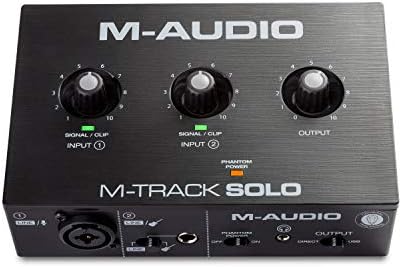
- 48kHz audio resolution
- One combo XLR / Line input
- One Line / Instrument input
- 1/8" headphone and stereo RCA outputs
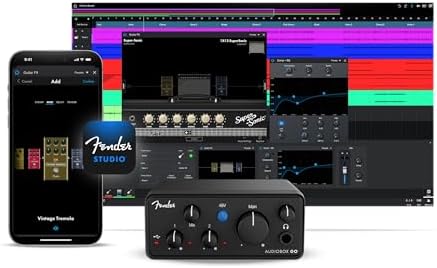
- 24-bit/96 kHz converters
- XLR mic/line combo input
- +48V phantom power
- Dedicated TS instrument input

- 48kHz audio resolution
- Two combo XLR / Line / Instrument inputs
- 1/4" headphone and stereo 1/4" outputs

- USB-C bus powered
- 24-bit/192kHz resolution
- Two combo input jacks
- 48V phantom power

- Switchable Air mode
- Two instrument inputs
- 24-bit/192kHz converters
- Two balanced outputs

- 24-bit/192 kHz recording
- Dual combo inputs with Hi-Z
- +48V phantom power
- ASIO driver support

- 16-bit/48kHz resolution
- XLR and 3.5mm inputs
- 48V phantom power
- USB bus powered
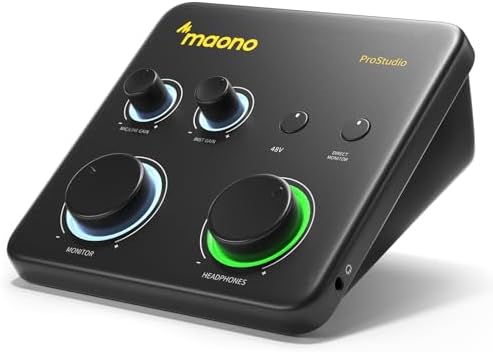
- 24-bit/192kHz resolution
- 106dB dynamic range
- 56 dB preamp with 48V phantom power
- Dedicated instrument input

- Dual USB ports for computer and mobile
- 24-bit/192kHz resolution
- 56dB dual XLR interface
- 130dB EIN
1. Focusrite Scarlett Solo 4th Gen USB-C Audio Interface
Best for: Songwriters wanting studio-grade sound and bundled software.
This interface targets the solo musician who wants everything ready to go right out of the box. The listing highlights a 120dB dynamic range using the same converters found in Focusrite’s flagship units. That figure means quiet parts stay clean while loud peaks don’t distort your recording. An improved Air mode lifts vocals and guitars forward in the mix by adding harmonic drive.
You won’t need to hunt down extra software to start producing tracks. The package includes Pro Tools Intro+, Ableton Live Lite, Cubase LE, and the Hitmaker Expansion. That suite covers essential effects, powerful instruments, and mastering tools for anyone learning the ropes. It’s a complete starting point for someone building a home studio from scratch.
Comparing the specs and features, this unit offers a 120dB dynamic range against 106dB on the MAONO PS22 Lite, which means more headroom before distortion creeps into your signal.
Pros
- 120dB dynamic range
- Improved Air mode for presence
- Includes Pro Tools Intro+ and Ableton Live Lite
- Includes Cubase LE and Hitmaker Expansion
Cons
- the box lists software and plugins and not a microphone or guitar, so that is a second purchase
2. M-AUDIO M-Track Solo USB Audio Interface
Best for: Podcasters needing fuss-free monitoring and simple routing.
If you just want to plug in and talk, this unit keeps things straightforward. It delivers 48kHz audio resolution through a standard USB connection for Mac or PC. A physical USB/Direct switch lets you flip between computer playback and live input without any latency. You don’t have to open a settings menu to hear yourself clearly.
Inputs are flexible enough for most basic setups. One combo XLR jack handles microphones with phantom power, while a separate line input takes instruments. Monitoring options include a 1/8″ headphone output and stereo RCA outputs for speakers. The Crystal Preamp aims to keep condenser mics sounding transparent without extra noise.
It ships with MPC Beats Software from Akai Professional, giving you beat-making tools right away. Its 48kHz resolution sits below the 24-bit/192kHz capability listed on the Piyone 2X2 Interface, meaning it captures less high-frequency detail.
Pros
- USB/Direct switch for zero latency
- Combo XLR input with phantom power
- Stereo RCA outputs for monitoring
- Includes MPC Beats Software
Cons
- Delivers 48kHz audio resolution, so projects requiring higher sample rates will outgrow it quickly.
3. Fender AudioBox GO USB Audio Interface
Best for: Guitarists recording on the move with amp modeling.
Built for players who travel, this ultra-compact 2×2 interface runs entirely on bus power. You don’t need an outlet or a bulky adapter to start recording wherever you are. The converters handle music, podcasts, and mobile sessions cleanly. It connects via USB-C for modern laptops and tablets.
Guitarists get specific attention here. A dedicated TS instrument input is optimized for bass and guitar signals. Registering the hardware unlocks the Fender Studio app, which provides authentic Fender amp models and effects. You also receive a Fender Studio Pro 6 Month Trial to expand your tone-shaping options further.
Zero-latency headphone monitoring with mix control lets you blend your live playing with backing tracks in real time. Two balanced ¼-inch TRS main outputs connect directly to studio monitors. It records at a lower maximum sample rate than the Depusheng USB Interface, capturing a narrower frequency ceiling.
Pros
- Ultra-compact bus-powered design
- Dedicated TS instrument input
- Unlocks Fender amp models and effects
- Zero-latency headphone monitoring with mix control
Cons
- Converters top out at 96 kHz, so those wanting 192kHz sampling must look elsewhere.
4. M-AUDIO M-Track Duo USB Audio Interface
Best for: Duos or interviewers needing two simultaneous XLR inputs.
When one microphone isn’t enough, this model doubles the input count. It features two combo XLR jacks that accept line and instrument signals alongside microphones. Both channels carry phantom power for condenser mics. You can record a singer and a guitarist at the same time without swapping cables.
Monitoring matches the upgraded input section. You get a 1/4″ headphone output and stereo 1/4″ main outs. The USB/Direct switch remains for zero latency tracking, letting you hear exactly what you’re playing without delay. Like its smaller sibling, it uses transparent Crystal Preamps to keep recordings clean.
The included MPC Beats Software gives you production tools immediately after setup. Anyone comparing inputs sees double the connectivity here compared to the single input on the M-Audio M-Track Solo, making this the clear choice for collaborative sessions.
Pros
- Two combo XLR inputs with phantom power
- 1/4″ headphone and stereo 1/4″ outputs
- USB/Direct switch for zero latency
- Includes MPC Beats Software
Cons
- Delivers 48kHz audio resolution, which limits high-fidelity recording compared to 96kHz or 192kHz units.
5. Piyone 2X2 Interface
Best for: Detail-oriented producers wanting maximum resolution and style.
This unit pushes specifications to the top of the list with 24-bit/192kHz fidelity. High-performance converters aim to capture every nuance with low noise across a wide dynamic range. It connects via a class-compliant USB C port that handles both data transfer and bus power. No external power supply or driver installation is needed for Mac or PC.
Both inputs accept microphones and instruments alike, supported by integrated 48V phantom power. Visually, fixed LED light rings surround each gain knob to show levels in dimly lit rooms. A built-in 3.5mm headphone jack supports standard headsets without adapters, while the Direct Monitor feature ensures silent, zero-latency tracking.
It serves as a versatile 2-channel hub for vocals and guitars alike. The 192kHz sample rate matches the MAONO P2 Hybrid, and the Piyone uses a 3.5mm headphone output.
Pros
- High-resolution audio conversion
- Illuminated LED light rings on gain knobs
- Class-compliant USB C plug-and-play
- Built-in 3.5mm headphone jack
Cons
- listed for PC, Mac and iOS, and outside it this is the wrong buy
6. Focusrite Scarlett Solo 3rd Gen USB-C Audio Interface
Best for: Beginners wanting proven reliability and a long warranty.
This older generation remains a staple for new studios. High-performing mic preamps deliver bright recordings, while a switchable Air mode adds clarity to acoustic instruments. Gain Halos visually warn you if your signal gets too hot, helping you capture vocals without unwanted clipping or distortion. It records at high resolution with an extended frequency response.
The software bundle mirrors the newer version closely. You get Pro Tools Intro+, Ableton Live Lite, Cubase LE, and the Hitmaker Expansion. That collection provides plenty of sounds and effects to start creating immediately. Two low-noise balanced outputs ensure clean playback whether you’re mixing tracks or listening to streaming music.
A three-year warranty backs the hardware against manufacturing faults worldwide. Comparing the two Focusrite models, this 3rd Gen lists high-resolution conversion but lacks the 120dB dynamic range specification printed on the 4th Gen listing.
Pros
- High-performance converters for detailed recordings
- Gain Halos prevent unwanted clipping
- Switchable Air mode for acoustic clarity
- Three-year warranty coverage
Cons
- record and mix at up to 24-bit/192kHz, so higher resolution means choosing another interface
7. Depusheng USB Audio Interface with ASIO Drivers
Best for: Home studio users prioritizing low latency via ASIO.
Latency ruins takes when you hear your voice a fraction of a second late. This unit tackles that problem by including ASIO drivers on a provided USB flash drive. Those drivers ensure minimal delay during recording and monitoring for real-time processing. It supports 24-bit/192 kHz resolution across dual CH1/CH2 combo inputs.
Controls are laid out for quick adjustments. You get Hi-Z switches for guitars, +48V phantom power for condensers, and a mono/stereo switch. Direct and DAW monitoring options let you choose how you hear your signal. A dedicated headphone output and dual TS main outs cover your listening needs.
The box contains everything required to run it: the interface, a power adapter, a data cable, and the driver flash drive. Unlike the bus-powered Fender AudioBox GO, this Depusheng model lists a power adapter in its package, meaning it needs wall power to operate.
Pros
- 24-bit/192 kHz recording resolution
- ASIO drivers included on USB flash drive
- Hi-Z switches and +48V phantom power
- Mono/stereo switch and direct/DAW monitoring
Cons
- listed as PC/MAC compatible, and outside it this is the wrong buy
8. XTUGA USB Audio Interface
Best for: Students needing basic plug-and-play karaoke recording.
Simplicity drives this model’s design. It operates at 16-Bit/48kHz resolution through a direct USB connection to your PC. No external adapter is needed since it draws power straight from the computer. Just plug it in to start mobile karaoke or basic music creation without navigating complex setup menus.
Inputs cover the essentials for daily use. An XLR jack handles microphones, while a 3.5mm input accepts smaller devices. Switchable 48V phantom power allows the use of condenser mics for vocal tracking. The manufacturer notes an upgraded chip aimed at preventing popping noises during operation.
Its solid build targets students and beginners setting up a 2-channel home space. The XTUGA Q-12 operates at 16-Bit/48kHz resolution, while the Piyone 2X2 Interface specifies 24-bit/192kHz.
9. MAONO PS22 Lite USB Audio Interface
Best for: Streamers and vocalists needing routing software and gain.
Voice actors and podcasters need clean gain, and this unit delivers up to 56 dB of preamp alongside 48V phantom power. It handles both condenser and dynamic microphones for warm, clear spoken word. A dedicated instrument input lets guitarists adjust impedance for realistic tone. Recording happens at 24-bit/192kHz with a 106dB dynamic range.
Software sets this apart for broadcasters. The included ProStudio Routing Software opens virtual channels and loopbacks compatible with ASIO drivers. You can route audio for live streams without digging through system settings. Intuitive modes for recording, broadcasting, and instruments make switching between tasks fast.
Physical design focuses on ergonomics. A dynamic light ring shows input status, and a side-mounted headphone jack reduces cable clutter on your desk. It works with Mac and iPads via plug-and-play. Its 106dB dynamic range trails the 120dB figure stated on the Focusrite Scarlett Solo 4th Gen.
Pros
- 24-bit/192kHz resolution with 106dB dynamic range
- Up to 56 dB of preamp gain
- ProStudio Routing Software with loopback
- Dynamic light ring indicates input status
Cons
- the package list includes the audio interface, cable and manual and not recording software, so that is a second purchase
10. MAONO P2 Hybrid USB Audio Interface Dual XLR
Best for: Creators recording on computers and phones simultaneously.
Most interfaces force you to choose between a laptop and a smartphone. This one features dual USB ports with MFi-certified connectivity to link both at once. Record a guitar part in Logic Pro, then stream the result directly from your phone without unplugging anything. It captures audio at 24-bit/192kHz with a -130dB EIN for dead-silent recordings.
Independent controls give you precision over your session. Separate mute buttons prevent noise during instrument swaps, while individual headphone and monitor knobs let you dial in exact levels. Stream Mode sends your voice equally to both channels for balanced broadcasts. Real-time signal indicators help you avoid clipping.
The ProStudio 2 software routes desktop apps like Spotify or TikTok to dedicated channels. An ergonomic 15° tilt angle keeps knobs accessible, housed inside durable aluminum-alloy casing. It matches the 24-bit/192kHz resolution of the Depusheng USB Interface, but adds simultaneous mobile connectivity that the Depusheng lacks.
Pros
- Dual USB ports for simultaneous computer and phone connection
- MFi-certified connectivity for Apple devices
- -130dB EIN for silent recording
- Aluminum-alloy housing with 15° tilt angle
Cons
- Equipped with dual XLR inputs, which may be more than a solo podcaster using a single microphone actually needs.
Also Worth Considering
The BOMGE M12 USB Audio Interface is a 2-channel mixer featuring XLR and 3.5mm inputs plus 48V power. The M-Audio M-Track Duo beats it for pure interface simplicity with its dedicated USB/Direct switch, but the BOMGE suits buyers who specifically want mixer-style controls for live karaoke.
The Kmise USB Audio Interface is a Type-C unit offering 48V phantom power for guitarists and podcasters. The Fender AudioBox GO surpasses it by including actual amp models and effects via its app, though the Kmise might appeal to those who just need basic Type-C connectivity without extra software ecosystems.
The Synido USB C Audio Interface is a silver unit marketed for streaming and podcasting. The MAONO PS22 Lite outclasses it by providing detailed specs like 24-bit/192kHz resolution and routing software, yet the Synido could work for someone seeking the absolute simplest visual footprint on a desk.
How to Choose the Right Beginner Audio Interface
Inputs and What You Need to Plug In
Decide how many things you’ll record at once. If you sing and play guitar together, you need two inputs. The M-Audio M-Track Duo lists two combo XLR jacks for this exact reason. Solo artists can use the Focusrite Scarlett Solo 4th Gen, which lists a single mic input designed for one source at a time.
Audio Resolution and Sound Quality
Higher numbers mean more detail captured in your recordings. Look for 24-bit depth and at least 96kHz sample rates for music. The Piyone 2X2 Interface lists 24-bit/192kHz fidelity, capturing maximum detail. Basic podcasting works fine at lower specs, like the 16-Bit/48kHz resolution stated on the XTUGA Q-12 Interface.
Included Software and Bundled Extras
Recording hardware needs software to function. Check what comes in the box so you don’t face unexpected extra purchases later. The Focusrite Scarlett Solo 4th Gen includes Pro Tools Intro+, Ableton Live Lite, and Cubase LE. Others, like the M-Audio M-Track Solo, ship only with MPC Beats Software for beat production.
Power Source and Portability
Determine where you plan to record. Bus-powered units draw electricity straight from your computer, making them ideal for travel. The Fender AudioBox GO lists a bus-powered design for effortless portability. Desktop setups might prefer units like the Depusheng USB Interface, which lists a power adapter in its package contents.
Frequently Asked Questions
Do I need an interface with ASIO drivers?
ASIO drivers reduce the delay between playing a note and hearing it in your headphones. The Depusheng USB Interface includes ASIO drivers on a USB flash drive specifically for this purpose. The MAONO PS22 Lite also mentions ASIO compatibility within its ProStudio software. Without ASIO, standard system drivers might introduce distracting lag during recording.
Can I connect my smartphone to these interfaces?
Not all units support mobile devices. The MAONO P2 Hybrid lists dual USB ports with MFi-certified connectivity specifically for connecting phones and iPads simultaneously. The Piyone 2X2 Interface mentions iOS recording in its title, but the MAONO P2 Hybrid explicitly details routing apps like TikTok directly from a mobile device.
What does phantom power actually do?
Phantom power sends 48 volts of electricity through the XLR cable to run condenser microphones. Without it, those mics produce no sound. The Fender AudioBox GO lists switchable +48V phantom power for clear vocal capture. Dynamic microphones don’t require this feature, but almost every interface here includes it for maximum microphone compatibility.
Is 48kHz resolution enough for my podcast?
Yes, spoken word doesn’t demand the extreme frequencies of orchestral music. The M-Audio M-Track Solo lists 48kHz audio resolution specifically for podcasting and live streaming. However, if you plan to record acoustic guitars or cymbals later, a unit listing 96kHz or 192kHz, like the Piyone 2X2 Interface, preserves more sonic detail.
How does loopback help with streaming?

Loopback routes audio playing on your computer back into your streaming software so your audience hears it. The MAONO PS22 Lite lists ProStudio Routing Software with additional virtual channels and loopbacks. The MAONO P2 Hybrid also mentions built-in loopback for capturing backing tracks and desktop audio in one seamless workflow during live broadcasts.
Will my studio headphones fit these units?
Check the headphone output size before buying. Most professional headphones use a 1/4-inch plug. The M-Audio M-Track Duo lists a 1/4″ headphone output, fitting them directly. The Piyone 2X2 Interface lists a 3.5mm headphone jack, meaning you’ll need an adapter if your headphones terminate in a larger 1/4-inch connector.
Conclusion
The Focusrite Scarlett Solo 4th Gen remains the strongest choice for most beginners thanks to its 120dB dynamic range and massive software bundle. If you just need simple plug-and-play recording without advanced features, the XTUGA Q-12 Interface handles basic tasks easily. Pick the one that fits your input needs and start recording today.
As an Amazon Associate, Cleanestor earns from qualifying purchases at no additional cost to you.