
The best sounding USB audio interface for most people is the Focusrite Scarlett Solo 4th Gen, because its listing states a huge 120dB dynamic range and converters shared with flagship studio gear. This guide helps musicians, podcasters, and streamers who need clean recordings without extra fuss. The one thing that separates these picks is how they handle your signal — some offer automatic gain control, others add multiple channels or mobile connections. You’ll find the right match by looking at what you actually plug in each day.
- Best Overall: Focusrite Scarlett Solo 4th Gen — 120dB dynamic range with flagship converters and included software suite.
- Most Inputs on Two Channels: Focusrite Scarlett 2i2 4th Gen — Auto Gain and Clip Safe protect every take automatically.
- Best Multi-Channel: Behringer U-PHORIA UMC404HD — Four Midas preamps and MIDI I/O in a metal chassis.
- Best Compact: Fender AudioBox GO — Ultra-compact bus-powered design with amp models included.
- Best Analog Inserts: Behringer UMC204HD — Two analog inserts let you patch in outboard effects directly.
- Best Classic Design: PreSonus AudioBox 96 — Class-A preamps and mixer control in a proven layout.
- Simplest to Use: M-AUDIO M-Track Duo — Crystal Preamps and a USB/Direct switch make setup instant.
- Best for Streaming: Zoom AMS-22 — Hardware loopback and streaming mode work without extra software.
- Best Hybrid Connectivity: MAONO P2 — Dual USB ports connect a computer and phone at the same time.

- Scarlett Solo 4th Gen interface for mic and guitar
- 120dB dynamic range with flagship converters
- Improved Air mode adds presence to recordings
- Includes recording software and plugins
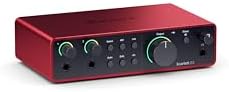
- Scarlett 4th Gen interface with mic pres
- 120dB dynamic range with flagship converters
- Auto Gain sets level, Clip Safe prevents clipping
- Air mode adds presence to recordings

- 4×4 USB 2.0 Audio/MIDI Interface
- 24-Bit/192 kHz resolution
- Compatible with popular recording software
- Streams 4 inputs / 4 outputs plus 1x MIDI I/O
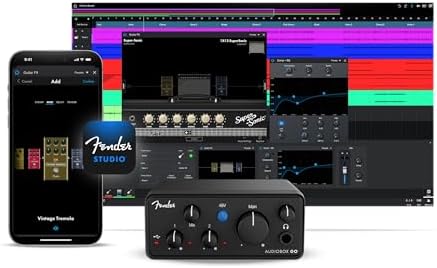
- 2×2 USB-C audio interface with 24-bit/96 kHz converters
- Includes Fender Amp & FX Pack via app
- XLR mic/line combo input with +48V phantom power
- Dedicated TS instrument input for guitar and bass

- UMC204HD has 2 combination XLR/TRS inputs and MIDI
- Midas-designed mic preamp included
- Up to 192 kHz resolution
- USB 2.0 port, ¼" TRS and RCA playback, 2 analog Inserts
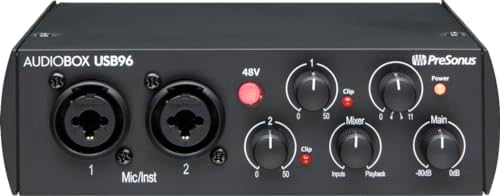
- 2-channel USB 2.0 interface
- 2 Class-A mic preamps
- 2 instrument inputs plus MIDI I/O
- 24-bit/96 kHz recording and playback

- USB sound card for Mac or PC, 48kHz resolution
- Two combo XLR / Line / Instrument Inputs with phantom power
- 1/4" headphone output, stereo 1/4" outputs, USB/Direct switch
- Crystal Preamps for microphones including condenser mics
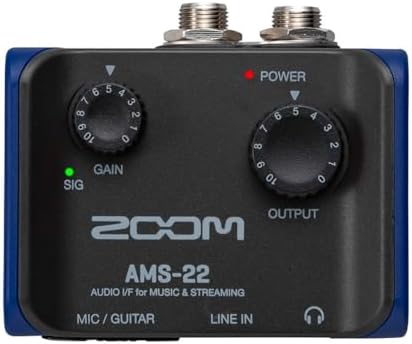
- One XLR/TRS combo input with Hi-Z, one stereo 3.5mm input
- Direct Monitor and Loopback switches without extra software
- Music mode for DAW, Streaming mode combines all inputs
- Works across major platforms and recording software

- Dual USB ports connect computer and phone or iPad simultaneously
- 56dB Dual XLR Audio Interface, 24-bit/192kHz quality, -130dB EIN
- Independent mute controls and Stream Mode included
- ProStudio 2 software routes audio and adds VST effects
1. Focusrite Scarlett Solo 4th Gen USB-C Audio Interface
Best for: songwriters recording vocals and guitar at home
This interface is built around a single idea: getting big studio sound into a small box. The listing highlights a huge 120dB dynamic range, which means it captures very quiet details and very loud peaks without distortion. It uses the same converters found in Focusrite’s flagship interfaces, so you’re getting professional-grade conversion in a songwriter’s tool. An improved Air mode lifts vocals and guitars forward in the mix, adding harmonic drive when you need more presence.
Everything you need to start recording comes in the box. The package includes Pro Tools Intro+, Ableton Live Lite, Cubase LE, and the Hitmaker Expansion with plugins and mastering tools. That means you won’t be stuck searching for software after you plug in. You can record, mix, and master your music right away. The USB-C connection keeps the setup modern and fast.
Comparing specs across this list, the stated 120dB dynamic range here matches the figure on the Focusrite Scarlett 2i2 4th Gen, while other picks like the Behringer UMC204HD don’t state a dynamic range number at all.
Anyone tracking drums or full bands will run out of inputs quickly, since this model lists only a single mic and guitar connection.
Pros
- 120dB dynamic range using flagship converters
- Improved Air mode adds musical presence
- Includes Pro Tools Intro+, Ableton Live Lite, and Cubase LE
- Hitmaker Expansion provides essential effects and instruments
- USB-C connection
Cons
- Designed as a songwriter’s interface for plugging in one mic and one guitar, so recording more than two sources at once requires a different unit.
2. Focusrite Scarlett 2i2 4th Gen USB-C Audio Interface
Best for: artists needing automatic gain control
If you worry about ruining a great take with bad levels, this interface handles it for you. The listing emphasizes Auto Gain, which sets the perfect level for your mic or guitar automatically. Clip Safe steps in to prevent clipping, letting you focus entirely on the performance instead of watching meters. Like the Solo, it features a huge 120dB dynamic range and the same flagship converters, ensuring professional-quality sound.
Air mode returns here to lift vocals and guitars, adding rich harmonic drive. The software bundle is identical to the Solo, giving you Pro Tools Intro+, Ableton Live Lite, Cubase LE, and the Hitmaker Expansion. You get everything needed to record, mix, and master. The main difference is how it manages your input signal, taking the guesswork out of setting levels before you hit record.
The 2i2 name refers to its channel count, offering more routing flexibility than the single-input Focusrite Scarlett Solo 4th Gen listed above.
Performers who prefer manual control over their preamp gain might find the automated features unnecessary for their workflow.
Pros
- Auto Gain sets the perfect input level automatically
- Clip Safe prevents clipping during performances
- 120dB dynamic range with flagship converters
- Air mode adds presence and harmonic drive
- Full software suite included
Cons
- Auto Gain sets the level for your mic or guitar, meaning users who prefer dialing in exact manual gain curves have less direct control over the automation process.
3. Behringer U-PHORIA UMC404HD Audiophile 4×4
Best for: multi-channel recording with MIDI hardware
When you need to record several sources at once, this interface delivers. It streams 4 inputs and 4 outputs simultaneously, plus it includes 1x MIDI I/O for connecting keyboards and controllers. The resolution reaches audiophile 24-Bit/192 kHz, which suits demanding applications in music production and video post-production. It’s built for those who need more than just a couple of tracks.
The preamps are a major selling point here. It features 4 state-of-the-art, MIDAS designed Mic Preamplifiers with +48V phantom power. Midas has a long history in live sound, and these preamps aim to bring that quality to your desk. The whole unit sits inside an impact-resistant metal chassis described as “built-like-a-tank,” engineered in Germany. Compatibility covers popular software like Pro Tools, Ableton Live, and Cubase on Mac OS X and Windows XP or higher.
It offers four inputs against the pair of inputs listed on the Behringer UMC204HD below, making it the clear choice for larger sessions.
Pros
- Streams 4 inputs and 4 outputs simultaneously
- 24-Bit/192 kHz resolution
- 4 MIDAS designed Mic Preamplifiers with +48V phantom power
- Built-in MIDI I/O
- Impact-resistant metal chassis
Cons
- Lists compatibility with Mac OS X and Windows XP or higher, so anyone running newer operating systems needs to verify driver support before buying.
4. Fender AudioBox GO USB Audio Interface
Best for: guitarists needing ultra-compact portability
Fender built this interface specifically for guitarists, vocalists, and producers who travel. It’s an ultra-compact 2×2 USB-C device with pristine 24-bit/96 kHz converters. Because it’s bus-powered, you don’t need an external power supply; just plug it into your computer for simple operation.
Guitar players get special treatment here, with one input dedicated to instruments like guitar and bass and another handling microphones or line-level sources with switchable +48V phantom power. Registering the hardware unlocks the Fender Studio app, giving you a complete collection of authentic Fender amp models and effects. You also get a Fender Studio Pro 6 Month Trial. Monitoring is handled through zero-latency headphone output with mix control, and two balanced ¼-inch TRS main outputs let you connect studio monitors.
It records at 24-bit/96 kHz, while the Behringer U-PHORIA UMC404HD states 24-Bit/192 kHz resolution.
Pros
- Ultra-compact bus-powered design
- Dedicated TS instrument input optimized for guitar and bass
- Unlocks Fender Amp & FX Pack via Fender Studio app
- Zero-latency headphone monitoring with mix control
- Two balanced ¼-inch TRS main outputs
Cons
- Converters top out at 24-bit/96 kHz, so projects demanding 192 kHz resolution can’t be recorded natively through this unit.
5. Behringer UMC204HD Audiophile 2×4
Best for: integrating outboard analog effects
This interface stands out because it brings analog hardware into a digital workflow. It features 2 analog Inserts for use with external effects such as compressors, gates, and EQs. If you own outboard gear, you can patch it directly into your recording chain without extra converters. It operates as a powerful USB recording interface with enough inputs and outputs to give you plenty of routing options.
Sound quality relies on genuine Midas-designed mic preamps and exceptional 24-Bit/192 kHz high-resolution converters. The listing notes Midas consoles are employed worldwide by famous touring acts, and this unit incorporates that legacy for ultimate high-quality audio reproduction. Connection is straightforward via a USB 2.0 port. Analog playback options include both ¼” TRS and RCA outputs, while built-in MIDI I/O lets you connect keyboards and control surfaces.
It matches the high-resolution conversion of the Behringer U-PHORIA UMC404HD but limits you to a pair of inputs instead of 4.
Streamers who only need a single microphone input will carry unused inserts and outputs they never plan to patch into.
Pros
- 2 analog Inserts for external effects like compressors and EQs
- Genuine Midas-designed mic preamps
- 24-Bit/192 kHz high-resolution converters
- Analog playback via ¼” TRS and RCA
- Built-in MIDI I/O
Cons
- The box lists combination XLR/TRS inputs that cover a couple of sources but not enough channels for a full drum kit, so expanding further requires a second interface.
6. PreSonus AudioBox 96 25th Anniversary USB Audio Interface
Best for: traditional two-channel studio recording
PreSonus celebrates a long history with this 25th Anniversary edition. It remains a value-packed 2-channel USB 2.0 interface for personal and portable recording. At its core are 2 high-quality Class-A mic preamps designed to deliver great sound easily. You also get 2 high-headroom instrument inputs for guitar, bass, and line-level devices, plus MIDI I/O to connect your favorite hardware.
Converters allow for up to 24-bit/96 kHz recording and playback, which the listing calls studio-grade. A standout feature is the mixer control, letting you create a custom blend between inputs and playback so you can monitor with zero latency. It’s completely USB bus-powered via USB 2.0, making it mobile-friendly without needing an additional power supply. Outputs include a high-powered headphone jack and balanced ¼” TRS connections. The software bundle is massive, including Studio One Artist, Ableton Live Lite, and the Studio Magic Plug-In suite.
It records at 24-bit/96 kHz, matching the Fender AudioBox GO but falling behind the 192 kHz capability of the Behringer UMC204HD.
Users relying exclusively on modern USB-C ports will need an adapter, since this model specifies USB 2.0 bus power.
Pros
- 2 high-quality Class-A mic preamps
- Mixer control for zero-latency monitoring blends
- USB bus-powered with no extra supply needed
- High-powered headphone output and balanced ¼” TRS outputs
- Includes Studio One Artist and Ableton Live Lite
Cons
- Powered via USB 2.0, meaning computers with only USB-C ports require a separate cable or adapter to connect.
7. M-AUDIO M-Track Duo USB Audio Interface
Best for: beginners wanting immediate plug-and-play recording
Simplicity defines this interface. It acts as a USB sound card for Mac or PC, delivering 48kHz audio resolution for pristine recording. Whether you need to podcast, record, or live stream, this portable unit covers it all. You get two combo XLR / Line / Instrument Inputs with phantom power, so you can record guitar, vocals, or line signals without swapping cables.
M-Audio equips it with transparent Crystal Preamps to guarantee optimal sound from all microphones, including condensers. Monitoring is totally flexible thanks to a 1/4″ headphone output and stereo 1/4″ outputs. A physical USB/Direct switch lets you toggle zero latency monitoring instantly, removing any delay while tracking. The included software is MPC Beats, complete with essential production tools from Akai Professional, giving beatmakers a familiar environment right out of the box.
It delivers 48kHz audio resolution, whereas the Behringer U-PHORIA UMC404HD lists 192 kHz.
Pros
- Two combo XLR / Line / Instrument Inputs with phantom power
- Transparent Crystal Preamps for optimal microphone sound
- USB/Direct switch enables zero latency monitoring
- 1/4″ headphone and stereo 1/4″ outputs
- Includes MPC Beats Software with Akai Professional tools
Cons
- Delivers 48kHz audio resolution, so capturing frequencies that benefit from 96kHz or 192kHz sample rates isn’t possible here.
8. Zoom AMS-22 USB Audio Interface
Best for: content creators streaming without software routing
Zoom designed this specifically for solo musicians, podcasters, and content creators who stream. It features one XLR/TRS combo input with Hi-Z and one stereo 3.5mm input, delivering clean audio. What makes it unique is the hardware switching. A physical toggle moves between Music mode for DAW recording with individual gain control and Streaming mode that combines all inputs into one signal.
You won’t need extra software to go live. The Loopback switch combines input audio with computer playback for streaming directly from the hardware. A Direct Monitor switch lets you hear your input signal in real time. It works across all major platforms, integrating with Pro Tools, Cubase, GarageBand, YouTube, Twitch, and Instagram. Power comes directly from your computer via USB-C with no external power supply needed, keeping it lightweight and portable.
It provides one XLR/TRS combo input against the two combo inputs listed on the M-AUDIO M-Track Duo.
Recording two separate microphones onto isolated tracks simultaneously won’t work, since the listing specifies only one XLR/TRS combo input.
Pros
- Hardware switch toggles between Music mode and Streaming mode
- Loopback switch combines inputs and computer playback without software
- One XLR/TRS combo input with Hi-Z plus one stereo 3.5mm input
- Bus powered via USB-C with no external supply needed
- Integrates with Pro Tools, Cubase, YouTube, and Twitch
Cons
- Features one XLR/TRS combo input, so hosting a two-person podcast with separate dynamic mics requires splitting them through the single channel.
9. MAONO P2 Hybrid USB Audio Interface Dual XLR
Best for: creators recording on phones and computers together
This interface solves a specific problem: connecting mobile devices and computers at the same time. It features dual USB ports with MFi-certified connectivity, allowing you to connect your computer and phone or iPad simultaneously. You can record in GarageBand or Logic Pro, then stream directly from your mobile device without interrupting your workflow. It instantly records to Mac, PC, iPhone, Android, or cameras.
Audio specs are serious here. It captures 24-bit/192kHz quality with a class-leading -130dB EIN for dead-silent recording. The 56dB Dual XLR inputs work with most condenser and dynamic microphones. ASIO support delivers clean recordings and lower-latency monitoring. For streamers, Stream Mode sends your voice equally to both channels, while independent mute controls prevent unwanted noise during instrument changes. The aluminum-alloy housing sits at an ergonomic 15° tilt angle.
The package includes the interface, a USB-C to USB-A/C connection cable, and a user manual, but not studio software, unlike the Focusrite Scarlett Solo 4th Gen which bundles DAWs.
Buyers who only record on a desktop computer will carry the weight of dual mobile ports they never intend to plug into.
Pros
- Dual USB ports with MFi-certified connectivity for simultaneous computer and phone use
- 24-bit/192kHz quality with -130dB EIN
- 56dB Dual XLR inputs compatible with most microphones
- Independent mute and Stream Mode for balanced broadcasting
- Ergonomic 15° tilt angle in durable aluminum-alloy housing
Cons
- The box lists the audio interface, a connection cable, and a user manual, but no recording software, so you’ll need to source a DAW separately.
Also Worth Considering
The Focusrite Gen USB-C Audio Interface is listed as the 3rd Gen version of the Solo. The Focusrite Scarlett Solo 4th Gen beats it by stating a 120dB dynamic range and updated converters, but someone already owning 3rd Gen software licenses might prefer staying in that ecosystem.
The Behringer UMC22 Audiophile 2×2 is a 48 kHz USB interface with a single Midas preamp. The Behringer UMC204HD surpasses it with 192 kHz resolution and two Midas preamps, though the UMC22 might suit buyers who only need one microphone input and basic resolution.
The Kmise USB Audio Interface is a 4 Channel Computer Recording Interface supporting 24Bit/192kHz and ASIO drivers. The Behringer U-PHORIA UMC404HD also offers 4 channels at 192 kHz but adds 4 Midas preamps and MIDI I/O, making the Kmise a potential fit only for those who specifically need a USB Type-C connection without MIDI routing.
How to Choose the Right USB Audio Interface
Sample Rate and Bit Depth
Decide how detailed your recordings need to be first. Higher numbers capture more audio information. The Behringer UMC204HD and MAONO P2 list 24-Bit/192 kHz resolution, while the M-AUDIO M-Track Duo states 48kHz. Match the interface’s stated ceiling to your project’s demands.
Input Count and Types
Count exactly what you plan to plug in today. Recording a drum kit requires multiple channels, which the Behringer U-PHORIA UMC404HD provides with its 4 inputs. Solo singers only need the single combo input listed on the Zoom AMS-22. Don’t buy channels you won’t use.
Included Software
Check what comes in the box before downloading extra programs. The Focusrite Scarlett Solo 4th Gen includes Pro Tools Intro+ and Ableton Live Lite. The MAONO P2 lists only a cable and manual. Knowing what’s bundled saves you from hunting down missing tools later.
Mobile and Streaming Needs
Identify if you broadcast live or record on phones. The Zoom AMS-22 features a hardware Streaming mode and Loopback switch. The MAONO P2 offers dual USB ports for simultaneous phone and computer connection. Desktop-only producers don’t need these specific features.
Frequently Asked Questions
Do I need ASIO drivers for recording?
ASIO support lowers latency during monitoring and recording. The MAONO P2 explicitly lists ASIO support for clean recordings. The Kmise USB Audio Interface also mentions ASIO Driver Support in its title. If your chosen interface doesn’t state ASIO compatibility, check the manufacturer’s website for driver downloads.
Can I connect outboard compressors directly?
Only specific interfaces offer this routing. The Behringer UMC204HD lists 2 analog Inserts for use with external effects such as compressors, gates, and EQs. Other models on this list route audio digitally without analog insert points, so you’d have to apply compression inside your software instead.
Is phantom power included for condenser mics?
Yes, but verify the switch type. The Fender AudioBox GO features switchable +48V phantom power on its XLR combo input. The Behringer U-PHORIA UMC404HD supplies +48V across its 4 Midas preamps. Always confirm the listing states phantom power before buying a condenser microphone.
Will these interfaces work with my tablet?
Mobile compatibility depends on the specific connections listed. The MAONO P2 features MFi-certified connectivity to connect your phone or iPad simultaneously alongside a computer. The Zoom AMS-22 powers via USB-C, which many tablets support, but the MAONO P2 is the only one here explicitly stating tablet integration.
What does a 120dB dynamic range mean?

Dynamic range measures the distance between the quietest noise floor and the loudest signal before distortion. Both the Focusrite Scarlett Solo 4th Gen and the Focusrite Scarlett 2i2 4th Gen state a huge 120dB dynamic range. The MAONO P2 lists a -130dB EIN, which measures preamp noise differently.
How does loopback work for streaming?
Loopback routes your computer’s audio back into your streaming software alongside your microphone. The Zoom AMS-22 includes a physical Loopback switch to combine input audio with computer playback without extra software. The MAONO P2 achieves similar results through its ProStudio 2 software routing.
Conclusion
For most people, the Focusrite Scarlett Solo 4th Gen is the right starting point, thanks to its 120dB dynamic range and complete software bundle. If you need simpler routing for streaming, the Zoom AMS-22 handles it with physical switches. Pick the one that matches your daily setup and plug it in.
As an Amazon Associate, Cleanestor earns from qualifying purchases at no additional cost to you.