
The XTUGA Q-12 USB is a low cost audio interface that pairs 16-Bit/48kHz resolution with switchable 48V phantom power and a simple plug-and-play setup. That covers what most beginners actually need to start recording vocals or instruments without hunting for extra gear.
This guide helps singers, guitarists, podcasters, and students who want clean sound from a computer or phone. The one thing that separates these picks is how they handle your signal — some offer higher sample rates, others add loopback routing or dedicated instrument inputs, and a few stick to the basics so you don’t have to learn a manual before your first take.
- Best Overall: XTUGA Q-12 USB — dual inputs, 48V phantom power, and an upgraded chip for clear daily tracking.
- Most Reliable Brand: M-AUDIO M-Track Solo — Crystal Preamp, MPC Beats software, and combo input flexibility.
- Highest Resolution: PIYONE 2X2 Audio Interface — 24-bit/192kHz converters and built-in loopback for streaming.
- Simplest to Use: Jolgoo 2×2 USB — driver-free operation across Windows, macOS, iOS, and Android devices.
- Best Monitoring Options: Synido USB C Interface — three distinct monitoring modes and color-coded LED level indicators.
- Best Compact: BOMGE Mini 2 Channel — small footprint with independent RCA outputs for powered monitors.
- Best for Guitar: IK Multimedia iRig 2 — direct amplifier output and AmpliTube effects included for mobile rigs.
- Best Two-Input: M-AUDIO M-Track Duo — two full combo inputs with phantom power for simultaneous sources.
- Best for Mobile Recording: Fender AudioBox GO — bus-powered 24-bit/96kHz design with amp models via app.
- Best Plug and Play: JOLGOO USB Interface — driver-free setup bundled with both USB-C and USB-A cables.

- Q-12 interface with 16-Bit/48kHz resolution
- XLR and 3.5mm inputs with upgraded chip
- Switchable 48V phantom power, zero latency
- USB powered, no external adapter needed
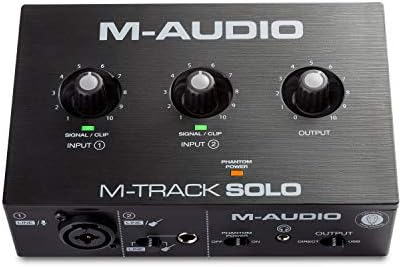
- M-AUDIO interface delivers 48kHz audio resolution
- One combo XLR / Line input with phantom power
- 1/8" headphone output and stereo RCA outputs
- M-Track Solo features Crystal Preamp

- PIYONE USB C class-compliant interface for Mac and PC
- 2 channel Q28 with 24-bit/192kHz converters
- Fixed LED light rings on each gain knob
- Two combo jacks with integrated 48V phantom power

- 24-Bit/192kHz sample rate conversion
- Direct Monitor switch for real-time monitoring
- Dual inputs with independent gain and LED indicators
- Driver-free use with Windows, macOS, iOS/Android

- Synido 2×2 interface supports 24-bit and 48kHz
- Three monitoring modes including Stereo and Mix
- XLR interface supports 6.35mm and XLR microphones
- 48V phantom power switch for dynamic microphones

- USB sound card for Mac or PC, 48 kHz resolution
- 2 combo XLR/MIC/LINE inputs with phantom power
- 2 independent RCA stereo jacks for speakers
- 1/4” headphone output and stereo 1/4” outputs

- Adjustable gain dial with built-in 1/8" TRRS output
- 1/4” output jack connects to an amplifier
- Built-in 1/8" headphone output or 1/4" amplifier output
- Paired with AmpliTube CS (free) for iOS

- M-AUDIO USB sound card delivers 48kHz resolution
- Two combo XLR / Line / Instrument Inputs
- 1/4" headphone output and stereo 1/4" outputs
- M-Track Duo features transparent Crystal Preamps
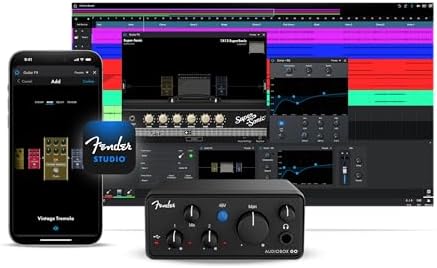
- 2×2 USB-C interface with 24-bit/96 kHz converters
- Fender Studio app provides amp models and effects
- XLR mic/line combo input with +48V phantom power
- Dedicated TS instrument input for guitar and bass

- 24-Bit/192kHz recording resolution
- Direct signal monitoring via USB power
- Two combo ports with 48V power and LED indicators
- Plug-and-record with Windows, macOS, major software
1. XTUGA USB Audio Interface
Best for: Beginners building their first home recording setup.
The XTUGA Q-12 USB handles the core job of a starter studio without asking you to learn complex routing. It delivers 16-Bit/48kHz resolution through an upgraded chip meant to keep XLR and 3.5mm signals clean during daily use. You get switchable 48V phantom power, which means condenser microphones work right out of the box without an external preamp.
Pros
- Switchable 48V phantom power drives condenser mics directly.
- Upgraded chip targets clean 16-Bit/48kHz audio resolution.
- Bus-powered via USB with no external adapter required.
- Solid build designed for students and daily home use.
Cons
- Stated at 16-Bit/48kHz resolution, whereas other listed interfaces reach professional-grade sample rates and bit depths.
- Dual inputs cap your recording to a stereo pair of simultaneous tracks.
2. M-AUDIO M-Track Solo USB Audio Interface
Best for: Podcasters needing trusted preamps and included software.
M-AUDIO brings its established Crystal Preamp design to the M-Track Solo, aiming to pull transparent sound from any microphone you connect. The single combo XLR/Line input handles vocals and line-level signals, while a separate Line/Instrument input lets you plug in a guitar without swapping cables mid-session. Phantom power is included for condenser mics, keeping your options open as your gear collection grows.
Monitoring is straightforward thanks to a USB/Direct switch that eliminates latency when you’re tracking live. You can route audio to headphones through the 1/8″ output or send a stereo signal to speakers via the RCA jacks.
Pros
- Crystal Preamp designed for transparent microphone reproduction.
- Combo XLR/Line input plus a dedicated Line/Instrument channel.
- USB/Direct switch enables zero-latency monitoring.
- Includes MPC Beats Software with Akai Professional production tools.
- Stereo RCA outputs alongside a 1/8″ headphone jack.
Cons
- Only one combo XLR input is listed, restricting multi-mic podcast setups.
- Delivers 48kHz audio resolution, capping sample rate for high-fidelity mastering.
3. PIYONE 2X2 Audio Interface
Best for: Streamers wanting loopback and high-resolution audio.
The PIYONE 2X2 Audio Interface pushes conversion up to 24-bit/192kHz, capturing a wider dynamic range than units limited to standard CD quality. Two combo jacks accept XLR or TRS connections, letting you pair a condenser mic with a keyboard or guitar simultaneously. Integrated 48V phantom power ensures demanding microphones receive clean gain without external boxes.
A standout feature here is the loopback function, which routes your computer’s audio back into your recording software. This is exactly what streamers need to blend game sound or music with their voice on a single track. The monitor mix control works alongside a direct monitoring path to keep latency out of your headphones during takes.
Fixed LED light rings surround each gain knob, making it easy to see your levels in dim rooms. It connects via a modern USB C port for bus power and data transfer without extra drivers.
Pros
- High-resolution converters deliver studio-grade audio fidelity.
- Loopback function supports live streaming and internal audio routing.
- Illuminated LED rings on gain knobs aid visibility in dark spaces.
- A pair of combo XLR/TRS inputs with integrated 48V phantom power.
- Class-compliant USB C connection requires no driver installation.
Cons
- Relies on a USB C port for power and data, ruling out older machines lacking that connection.
4. Jolgoo 2×2 USB Audio Interface
Best for: Multi-device creators avoiding driver installations.
Audio conversion runs at 24-Bit/192kHz, ensuring professional clarity for vocals and acoustic instruments. Dual XLR/Line combo inputs feature independent gain controls paired with LED Peak indicators, so you can visually catch clipping before it ruins a take. Built-in +48V phantom power supports studio condenser microphones without needing an inline power supply.
The housing is metal, designed to shield internal components from electromagnetic interference near routers or phones.
Pros
- Driver-free compatibility spans Windows, macOS, iOS, and Android platforms.
- High-resolution conversion captures pristine audio detail.
- Independent gain controls with LED Peak indicators prevent clipping.
- Rugged metal housing shields against electromagnetic interference.
- Includes both USB-C and USB-A cables for immediate connection.
Cons
- LED peak indicators show clipping but lack precise numerical metering.
- Bundled USB-C and USB-A cables mean managing both cord types instead of just one.
5. Synido USB C Interface
Best for: Broadcasters switching between monitoring modes frequently.
Three distinct monitoring modes set the Synido USB C Interface apart for live broadcast and post-production work. Stereo mode isolates left and right channels for accurate tracking, while Mix mode blends your input with computer audio in real time. A dedicated USB mode restricts monitoring strictly to computer playback, which is ideal when you’re editing a podcast and don’t want mic bleed.
Audio conversion operates at professional depth and a 48kHz sampling rate through an independent audio chip designed to reduce latency. The XLR interface accepts both 6.35mm and XLR microphones, and a switch toggles easily between Line In and instrument signals. Green, orange, and red LED lights display volume levels instantly, helping you avoid distortion without staring at a screen.
Weighing only 300g and measuring 14 x 11.5 x 4.5 cm, it is compact and portable. The box includes a 3.5mm to 6.35mm adapter and a USB-C to USB-A data cable.
Pros
- Three monitoring modes (Stereo, Mix, USB) cover tracking, streaming, and editing.
- Color-coded LED lights provide instant visual feedback on volume levels.
- Supports professional-grade depth and 48kHz sampling via an independent audio chip.
- Weighs only 300g for highly portable recording setups.
- Includes a 3.5mm to 6.35mm adapter and USB-C cable.
Cons
- Sampling rate caps at 48kHz, limiting high-frequency capture for detailed mastering.
- Listing recommends a third-party ASIO driver download for optimal DAW performance.
6. BOMGE mini 2 Channel USB Audio Interface
Best for: Small desks needing versatile speaker connections.
Space constraints disappear with the BOMGE Mini 2 Channel, designed to deliver 48 kHz audio resolution in an ultra-portable footprint. Two combo XLR/MIC/LINE inputs include phantom power, handling guitars and vocals through the same front panel. An ultra-low noise design aims to keep the signal clean even when recording quiet acoustic passages in untreated rooms.
Output flexibility is a major draw here. Alongside standard monitoring options, it provides two independent RCA stereo jacks that connect directly to PA speakers, powered monitors, or amplifiers. You can choose between balanced TRS and unbalanced TS connections depending on what your existing gear accepts. A 1/4” headphone output and stereo 1/4” main outs give you total routing control.
The USB/Direct switch enables zero-latency monitoring, essential for performers who need to hear themselves without delay. It supports Mac OS and Windows XP or later with no driver downloads required.
Pros
- Ultra-portable size fits cramped desks and mobile recording bags.
- Independent RCA stereo jacks connect PA speakers and powered monitors.
- Supports both balanced TRS and unbalanced TS output connections.
- 1/4” headphone and stereo 1/4” outputs offer monitoring flexibility.
- Driver-free compatibility with Mac OS and Windows XP or later.
Cons
- Audio resolution is listed at 48 kHz, capping fidelity for high-end production.
- Compatibility starts at Windows XP, excluding older legacy operating systems.
- RCA outputs require specific cables not always standard in pro studios.
7. IK Multimedia iRig 2 portable guitar audio interface
Best for: Guitarists playing live or practicing with mobile apps.
The IK Multimedia iRig 2 isn’t a traditional box interface; it’s a lightweight adapter built specifically for guitar and bass players on the move. An adjustable gain dial lets you match your instrument’s output, whether you’re plugging in passive single-coils or hot humbuckers. The built-in 1/8″ TRRS connector delivers true plug-and-play functionality with iPhones, iPads, and Macs.
What makes this unique is the 1/4″ amplifier output. You can run your processed signal straight into a stage amp without buying extra adapters. AmpliTube CS comes free for iOS, providing modeled stompboxes and amps directly on your screen.
Pros
- 1/4″ amplifier output connects directly to stage rigs without adapters.
- Clean “thru” switch preserves a 100% analog signal path.
- Adjustable gain dial accommodates different instrument output levels.
- Free AmpliTube CS software provides virtual effects and amplifiers.
- Lightweight design plugs directly into mobile devices via TRRS.
Cons
- Single instrument input prevents simultaneous vocal and guitar recording.
- Requires an Apple-brand USB-C to 3.5mm adapter for newer iOS devices.
- TRRS connection limits native use strictly to supported mobile devices and Macs.
8. M-AUDIO M-Track Duo USB Audio Interface
Best for: Duos recording two microphones at the same time.
When you need to record a singer and a guitarist simultaneously, the M-AUDIO M-Track Duo provides two full combo XLR/Line/Instrument inputs. Both channels feature phantom power, so you can run two condenser microphones without external preamps. This dual-input architecture removes the bottleneck of single-channel interfaces when collaboration happens in the same room.
M-AUDIO’s Crystal Preamps are installed on both channels, targeting transparent sound reproduction for podcasts and music alike. Monitoring is handled through a 1/4″ headphone output and stereo 1/4″ main outputs, accommodating standard studio headphones without adapters. The familiar USB/Direct switch returns here to ensure zero-latency tracking when you’re laying down vocals over a backing track.
Pros
- Two combo XLR/Line/Instrument inputs allow simultaneous dual-source recording.
- Crystal Preamps on both channels deliver transparent audio capture.
- 1/4″ headphone and stereo 1/4″ outputs fit standard studio gear.
- USB/Direct switch provides zero-latency monitoring for tracking.
- Includes MPC Beats Software with Akai Professional production tools.
Cons
- 48kHz resolution limits the sample rate for audiophile-grade archiving.
- Two combo inputs require more desk space than single-channel alternatives.
9. Fender AudioBox GO USB Audio Interface
Best for: Guitarists wanting authentic amp tones on the road.
Fender brings its amplifier heritage to the AudioBox GO, an ultra-compact 2×2 USB-C interface built for mobile musicians. Converters operate at 24-bit/96 kHz, striking a balance between high fidelity and manageable file sizes for laptop recording. It features a dedicated TS instrument input optimized specifically for guitar and bass, alongside an XLR mic/line combo input with switchable +48V phantom power.
The real draw is the software integration. Registering the hardware unlocks the Fender Studio app, granting access to authentic Fender amp models and effects packs. Zero-latency headphone monitoring with mix control ensures you hear your processed tone perfectly while tracking.
Two balanced ¼-inch TRS main outputs let you connect studio monitors when you return home.
Pros
- 24-bit/96 kHz converters deliver pristine audio for mobile recording.
- Dedicated TS instrument input optimized for guitar and bass signals.
- Unlocks Fender Studio app with authentic amp models and effects.
- Bus-powered USB-C design ensures effortless portability.
- Two balanced ¼-inch TRS main outputs connect studio monitors.
Cons
- 96 kHz maximum sample rate falls below the 192kHz offered by competitors.
- Amp modeling benefits rely heavily on registering the hardware online.
10. JOLGOO USB Interface
Best for: Creators wanting immediate recording with included cables.
Two combo ports accept XLR and line-level sources, backed by 48V phantom power for condenser microphones. LED indicators sit next to the gain knobs to help you monitor peaks and avoid digital clipping during loud performances. Real-time USB monitoring keeps your signal in sync while you record, utilizing hassle-free bus power so no wall outlet is necessary.
Driver-free operation spans Windows, macOS, and major audio software.
Pros
- Includes both USB-C and USB-A cables for universal connectivity.
- 24-Bit/192kHz resolution captures high-fidelity studio-grade audio.
- Two combo ports with 48V phantom power support diverse microphones.
- LED indicators help monitor signal peaks to prevent clipping.
- Driver-free operation works across Windows, macOS, and major software.
Cons
- Two combo ports limit recording to a maximum of two simultaneous sources.
Also Worth Considering
The EBXYA 2×2 Audio Interface is a 24-bit/192kHz USB recording sound card. It matches the PIYONE 2X2 Audio Interface on sample rate but lacks the stated loopback function and illuminated gain knobs that make the PIYONE easier to use for streaming.
The KYXAIN Guitar Audio Interface is a pocket-sized internal recording sound card featuring Type-C and Lightning connectors for live streaming on phones and tablets. It competes directly with the IK Multimedia iRig 2 for mobile guitarists but doesn’t list a dedicated 1/4″ amplifier output for stage use. Players who only record on mobile devices might prefer its native Lightning connection.
How We Chose
To earn a place, a listing had to explicitly state its bit depth, sample rate, and connection type. What separates the final ten picks is how they address specific workflows: loopback functions for streamers, dedicated instrument inputs for guitarists, and bundled cables for immediate setup.
How to Choose the Best Low Cost Audio Interface
Sample Rate and Bit Depth
Decide how much audio detail you need before looking at ports. Standard podcasts do fine at 16-Bit/48kHz, which the XTUGA Q-12 USB provides. Voice-over artists and musicians benefit from 24-bit/192kHz resolution found on the PIYONE 2X2 Audio Interface and Jolgoo 2×2 USB. Higher numbers capture more dynamic range but create larger files on your hard drive.
Inputs and Phantom Power
Count the microphones and instruments you plan to record at the same time. Solo vocalists need only one XLR port, while interviewers require two, like those on the M-AUDIO M-Track Duo. If you own a condenser microphone, verify the interface lists 48V phantom power. The BOMGE Mini 2 Channel and Synido USB C Interface both include this switch.
Included Cables and Software
Check what arrives in the box so you aren’t stuck waiting for parts. The JOLGOO USB Interface ships with both USB-C and USB-A cables, eliminating connection guesswork. Software bundles matter too; M-AUDIO models include MPC Beats, while the Fender AudioBox GO unlocks amp modeling apps. These additions save you from buying production tools separately.
Monitoring and Latency
You must hear yourself without delay while recording. Look for a “Direct Monitor” switch or button, featured on the M-AUDIO M-Track Solo and Jolgoo 2×2 USB. If you stream, loopback routing—listed on the PIYONE 2X2 Audio Interface—blends computer audio with your mic. Verify the headphone output size matches your gear to avoid needing adapters.
Frequently Asked Questions
Do I need to install drivers for these interfaces?
Most modern interfaces listed here are class-compliant, meaning they work without extra software. The Jolgoo 2×2 USB and BOMGE Mini 2 Channel explicitly state driver-free operation for Windows and macOS. However, the Synido USB C Interface recommends downloading a third-party ASIO driver for optimal performance with your DAW. Always check the manufacturer’s page for your specific operating system version.
Can I use these interfaces with my smartphone?
Yes, but connection types vary by device. The IK Multimedia iRig 2 uses a TRRS jack designed specifically for mobile phones and tablets. The Jolgoo 2×2 USB lists compatibility with iOS and Android devices directly. For newer phones lacking headphone jacks, the Fender AudioBox GO utilizes USB-C, though you should confirm your phone supports USB audio output before purchasing.
What does 48V phantom power actually do?
Phantom power sends electrical current through the XLR cable to operate condenser microphones. Without it, those mics produce no sound. The XTUGA Q-12 USB, PIYONE 2X2 Audio Interface, and M-AUDIO M-Track Duo all feature switchable 48V phantom power. Dynamic microphones, like standard stage vocal mics, don’t require this power.
Is loopback necessary for my setup?

Loopback is only essential if you stream or record computer audio alongside your microphone. The PIYONE 2X2 Audio Interface specifically lists a loopback function for mixing input and PC audio in real time. If you only record vocals over a pre-made beat imported into your software, standard direct monitoring on the M-AUDIO M-Track Solo is sufficient for your needs.
Will a higher sample rate improve my podcast?
Higher sample rates like 192kHz on the JOLGOO USB Interface capture more frequency detail, but human speech rarely benefits from it. Podcasts distributed online are typically compressed to lower rates anyway. The 48kHz resolution on the BOMGE Mini 2 Channel is standard for video and voice work. Reserve 96kHz or 192kHz for music production where cymbals and acoustic resonance demand extra fidelity.
Conclusion
The XTUGA Q-12 USB remains a solid starting point for most people because its 48V phantom power and dual inputs cover the essentials without complication. If you only need to plug in a guitar on the go, the IK Multimedia iRig 2 is the simpler alternative. Pick the one that matches your current microphone, connect it, and record your first track today.
As an Amazon Associate, Instrument Insight earns from qualifying purchases at no additional cost to you.