
The Yamaha HS5 is the best choice in studio monitor speakers for most creators because it focuses on pure, uncolored sound reproduction. Choosing the right monitor depends on your workspace size, your need for wireless features, and whether you require a highly analytical sound or a more versatile, consumer-friendly output. While every model here aims for accuracy, the differences in driver size, connectivity, and acoustic tuning determine which one fits your specific studio setup.
- Best Overall: Yamaha HS5 — Delivers industry-standard, uncolored sound for precise professional mixing.
- Best Compact: PreSonus Eris 3.5 — Ideal for tight desks without sacrificing clear, detailed audio.
- Most Powerful: PreSonus Eris E7 XT — Features larger drivers for deep, impactful low-frequency response.
- Best Wireless Connectivity: Edifier MR3 — Offers multi-point Bluetooth and app-based EQ for modern studios.
- Best for Mixing: KRK Kreate 3 — Uses glass aramid drivers for a clear, balanced midrange.
- Best Desktop Size: Mackie CR4.5 — Includes handy front-panel controls and specialized desk-tuning switches.
- Simplest Setup: M-Audio BX3 — Provides a straightforward, latency-free wired experience for immediate use.
- Best Near-Field Accuracy: Edifier MR4 — Tuned for a flat response suitable for critical listening.
- Best Three-Way Design: Ultimea BS-3 — Separates audio signals across three dedicated drivers for clarity.
- Best Built-In DAC: Ortizan C7 — Includes a 24-bit DAC for high-fidelity digital audio processing.

- Includes 2 Yamaha HS5 studio monitors
- 2-way bass reflex bi-amped near field monitor
- 5 inch cone woofer and 1 inch dome tweeter
- 54 hertz to 30 kilohertz frequency response, 70 watts total
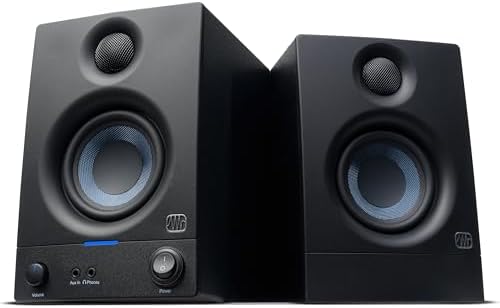
- Sold as a complete stereo pair
- 50 watts of built-in amplification
- 3.5” woven-composite woofers and 1” silk-dome tweeters
- 80 Hz–20 kHz range with acoustic tuning controls

- 6.55-inch woven composite low-frequency transducer
- 1.25-inch (32 mm) silk-dome high-frequency transducer
- Includes Studio One Prime and Studio Magic plug-in suite
- 100˚(H) x 60˚(V) EBM waveguide
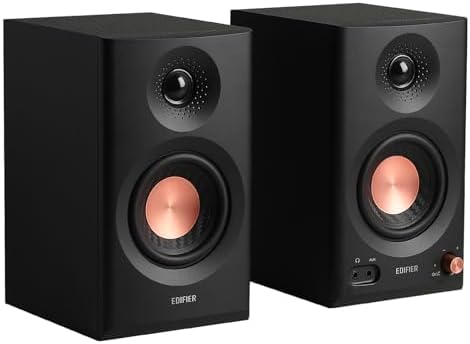
- Hi-Res Audio certified, 52Hz to 40kHz flat response
- Balanced TRS, RCA, AUX inputs and Bluetooth multi-point
- 18W*2 RMS output with peak SPL of 92.5dB
- 3.5" mid-low drivers and 1" tweeters

- Textile dome tweeter for highs
- Lightweight woven glass fiber composite woofer
- 3.5” Glass Aramid Woofer with 1" Textile Dome Tweeter
- Bluetooth input for wireless audio streaming

- Sold as a pair for desks with more room
- Fuller low end than 3.5-inch monitors
- Front-panel Tone Knob voicing control
- Location Switch for wall or free-standing bass correction

- Zero-latency wired connection for audio monitoring
- Bi-amplified power for desktop use
- 3.5-inch Kevlar Woofers for low-frequency response
- Natural silk dome tweeters for stereo imaging

- Professionally tuned to a responsive almost flat curve
- 1" silk dome tweeter and 4" composite woofer
- MDF wood texture helps reduce resonance
- 1/4" balanced TRS, RCA, AUX inputs and headphone output

- ULTIMEA BS-3 features 5.25" woofer and dedicated midrange
- Edge horn technology directs treble toward listening area
- Reaches deep 50Hz lows with BassMX technology
- 70W RMS output with 0.1% low distortion
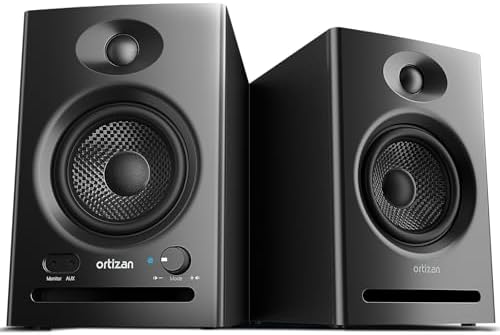
- RCA inputs and BT 5.3 wireless pairing
- Built-in 24-bit DAC captures digital audio via USB
- 3.5-inch carbon fiber speaker and 0.75inch silk dome tweeter
- Tuned to achieve a flat response curve
1. YAMAHA HS5 Powered Studio Monitor
Best for: Professionals who need absolute sonic transparency.
These monitors are designed to reveal the truth in your recordings without adding any artificial warmth or coloring. With a 5-inch cone woofer and a 1-inch dome tweeter, they provide a balanced frequency response that helps you make informed mixing decisions. The bi-amped system delivers a total of 70 watts, ensuring the speakers have enough headroom to handle complex audio signals cleanly.
Input flexibility is straightforward, as the rear panel features both XLR and TRS connections. This allows you to integrate them into almost any professional interface or mixing console seamlessly. Because they’re near-field monitors, they perform best when placed close to your listening position, which helps minimize room reflections in smaller studio environments.
Anyone who needs deep sub-bass might find the 54 hertz floor limiting, as this is higher than the 50 hertz reached by the Ultimea BS-3.
- Pros:
- Transparent, uncolored sound profileBalanced XLR and TRS inputsBi-amplified for efficient power distributionCompact footprint for near-field placement
- Cons:
- Frequency response starts at 54 hertz, so a separate subwoofer is often needed for full low-end monitoring.
2. PreSonus Eris 3.5 Powered Studio Monitors
Best for: Creators working in very small spaces.
These monitors pack a surprising amount of detail into a frame that fits easily on a crowded desk. The 3.5-inch woven-composite woofers provide a tight, controlled bass response that’s rare for speakers of this size. You can also tailor the high and low frequencies using the onboard acoustic tuning controls, which helps you adjust the sound to match your specific room’s acoustics.
Connectivity is a major strength here, as you get TRS, RCA, and a front-panel aux input. This variety makes it simple to switch between a computer, a phone, or a game console without needing to reach behind the speakers. The front-facing headphone jack is a thoughtful touch for late-night editing sessions when you need to switch to private monitoring instantly.
This model isn’t built for large rooms, as its 3.5-inch woofers are smaller than the 6.55-inch drivers found on the PreSonus Eris E7 XT.
- Pros:
- Compact design saves desk spaceIncludes high and low acoustic tuningFront-panel headphone outputMultiple input types for diverse devices
- Cons:
- Limited low-end reach due to the 3.5-inch woofer size.
3. PreSonus Eris E7 XT 2-Way Active Studio Monitor with EBM
Best for: Producers who need deep, powerful low frequencies.
If your work involves bass-heavy genres or film scoring, these monitors offer the scale you need. The 6.55-inch woven composite woofer is significantly larger than the 3.5-inch drivers on the PreSonus Eris 3.5, allowing for much deeper lows. The EBM waveguide design helps create a wide sweet spot, which ensures consistent imaging even if you shift slightly while sitting at your desk.
The acoustic tuning options are extensive, including controls for level, high-pass filtering, and trim settings. This level of customization allows you to calibrate the speakers to the specific layout of your studio. They also come with a software suite to assist with production, which adds value for those just starting their music journey.
Producers with limited desk space should consider that these units are physically larger than the Mackie CR4.5, which is designed specifically for smaller setups.
- Pros:
- Large 6.55-inch woofer for deep bassEBM waveguide creates a wide sweet spotComprehensive acoustic tuning controlsIncludes music production software bundle
- Cons:
- Large physical size requires significant desk or stand space.
4. Edifier MR3 Powered Studio Monitor
Best for: Modern studios requiring wireless and wired versatility.
The standout feature of this model is its Hi-Res Audio certification, ensuring a flat response across a wide frequency range. It bridges the gap between traditional production monitors and modern convenience by including multi-point Bluetooth connectivity. This allows you to keep both your computer and another device, like a tablet, connected simultaneously.
The EDIFIER ConneX app adds another layer of control, letting you adjust EQ settings directly from your phone. You can switch between music, monitor, and custom modes to suit your current task, whether you’re mixing a track or just relaxing. With a peak SPL of 92.5dB, these speakers provide plenty of volume for most home studio setups.
Users who prefer purely analog signal paths might find the app-based EQ unnecessary compared to the hardware knobs found on the Edifier MR4.
- Pros:
- Hi-Res Audio certified for accuracyMulti-point Bluetooth for wireless switchingDedicated app for EQ adjustmentsMultiple input options including TRS and RCA
- Cons:
- Bluetooth connectivity adds a layer of complexity not present in fully analog monitors.
5. KRK Kreate 3 Powered Studio Monitors Pair
Best for: Balanced midrange performance during mixing.
These monitors utilize a woven glass fiber composite woofer that’s designed to keep the midrange clear and the bass tight. The textile dome tweeter provides a smooth, pristine high-end, which is essential for placing vocals and percussion correctly in a mix. Because they include Bluetooth, they’re also a solid choice for those who need to quickly audition reference tracks from a phone.
The multiple audio inputs ensure that you can connect your gear without constant cable swapping. This makes them a versatile workhorse for anyone who juggles instruments, interfaces, and mobile devices in a single creative space. They’re designed to fit comfortably in a studio environment where desk real estate is at a premium.
Compared to the 4-inch drivers on the Edifier MR4, these smaller woofers may feel less punchy for those who rely on low-frequency feedback while mixing.
- Pros:
- Glass fiber woofer for clear midsTextile dome tweeter for detailed highsBluetooth input for wireless streamingUniversal connectivity for various gear
- Cons:
- The woofer size is smaller than the 4-inch drivers on the Edifier MR4.
6. Mackie CR4.5 Studio Monitors (Pair)
Best for: Desktop users who need integrated controls.
These speakers are built for the mid-sized desk, offering a balance between footprint and power. The front-panel tone knob allows for quick voicing adjustments, which is helpful if you find yourself needing to tweak the sound on the fly. A unique location switch helps correct the bass response depending on whether the speakers are placed against a wall or in a free-standing position.
The package is complete, as it includes isolation pads and all necessary cables, meaning you’re ready to go immediately. The 4.5-inch woofers provide a fuller low end than compact desktop speakers, making them a good middle ground for those who can’t fit larger monitors. They prioritize ease of use and physical integration into a home office or creative space.
Anyone who requires balanced TRS inputs will find this model lacking, as it doesn’t include the balanced connections found on the Yamaha HS5.
- Pros:
- Front-panel tone and volume controlsIncludes isolation pads and cablesLocation switch for bass correction4.5-inch woofer offers fuller sound than smaller units
- Cons:
- Lacks balanced TRS inputs for professional audio interfaces.
7. M-AUDIO BX3 3.5″ Wired Studio Monitors Pair
Best for: Simple, reliable plug-and-play monitoring.
These speakers are designed to be a straightforward upgrade from standard computer speakers. By using Kevlar woofers, they deliver a punchy bass response that works well for beat-making and general recording tasks. The silk dome tweeters ensure that the highs remain clear and detailed, which is vital for maintaining accurate stereo imaging.
The rear panel hosts a variety of connections, including 1/4-inch and RCA inputs, covering most common studio equipment. The front-panel aux input is a convenient addition for plugging in headphones or a mobile device without needing to reach behind the speakers. The MDF cabinet construction helps prevent unwanted vibrations, keeping the sound clean even at higher volumes.
Those who need advanced room-correction EQ will find this model simpler than the PreSonus Eris E7 XT, which offers more granular tuning controls.
- Pros:
- Kevlar woofers for punchy bassSilk dome tweeters for clear highsFront-panel aux input for easy accessMDF cabinet reduces vibration
- Cons:
- Lacks the advanced acoustic tuning controls found on the PreSonus Eris E7 XT.
8. Edifier MR4 Power Studio Monitor Speakers
Best for: Near-field accuracy for music creators.
The MR4 is tuned to provide a nearly flat frequency response, making it a reliable tool for music production. The 4-inch composite woofer and 1-inch silk dome tweeter work together to reveal the true character of your audio. You can switch between monitor mode for production and music mode for casual listening, giving you two distinct sound profiles in one set of speakers.
Physical controls on the front panel allow for easy volume adjustment and mode switching, while rear-mounted knobs provide high and low-frequency trim. This gives you enough control to calibrate the speakers to your specific room without the complexity of app-based setups. The balanced TRS input ensures you can maintain a clean signal from your professional audio interface.
When comparing the woofer here to the 6.55-inch driver on the PreSonus Eris E7 XT, the Eris will reach deeper into the low-frequency spectrum.
- Pros:
- Nearly flat response for accuracyDual modes for monitor and music useIndependent high and low-frequency trimBalanced TRS and unbalanced RCA inputs
- Cons:
- Frequency reach is limited by the smaller driver compared to the 6.55-inch size of the Eris E7 XT.
9. ULTIMEA 3-Way Powered Bookshelf Speakers
Best for: Listeners who want a dedicated midrange driver.
By using a 3-way design with a dedicated midrange driver, these speakers ensure that vocals and instruments are separated clearly from the low and high frequencies. The 5.25-inch woofer, paired with BassMX technology, allows for impressive low-end performance that remains stable even at higher output levels. The edge horn technology helps direct the treble precisely toward your listening position.
Connectivity is highly modern, featuring HDMI ARC for TV integration and Bluetooth for wireless streaming. The ability to add a separate subwoofer through the dedicated SUB OUT port makes this a flexible choice for both studio work and home theater setups. The Ultimea app provides further EQ customization, allowing you to tailor the output to your specific needs.
- Pros:
- 3-way design separates mids clearlyHDMI ARC and Bluetooth connectivityDedicated SUB OUT for expansionApp-based EQ control
- Cons:
- Larger footprint than the PreSonus Eris 3.5, requiring more desk space.
10. Ortizan C7 Powered Studio Monitors Pair with Bluetooth 5.3
Best for: Users who need high-fidelity digital-to-analog conversion.
The C7 distinguishes itself with a built-in 24-bit DAC, which allows you to plug a USB source directly into the speakers to minimize signal loss. This is an excellent feature for those who want to bypass the internal sound card of their computer for a cleaner audio path. The combination of a 3.5-inch carbon fiber woofer and a 0.75-inch silk dome tweeter provides a balanced, layered sound.
The inclusion of a 6.35mm TRS balanced input makes these speakers compatible with professional mixers and instruments like electric pianos. You also get front-panel access to inputs and headphone monitoring, keeping your workflow efficient. The speakers have been tuned for a flat response, making them a solid candidate for accurate audio monitoring in a compact space.
Compared to the 5-inch woofer on the Yamaha HS5, the driver on this model won’t move as much air, resulting in less low-frequency presence.
- Pros:
- Built-in 24-bit DAC for digital audioCarbon fiber woofer for durabilityBalanced TRS input for pro gearFlat response curve for accuracy
- Cons:
- The woofer has less bass presence than the 5-inch driver on the Yamaha HS5.
Also Worth Considering
The PreSonus Eris E4.5 is a 2-way near-field monitor that sits between the smallest entry-level speakers and the larger E7 XT, offering a balance of size and output for those who find the E7 XT too large.
The Yamaha HS4 is a smaller alternative to the HS5, providing the same commitment to sonic purity in a more compact footprint for those with very limited desk space.
The PreSonus Powered Desktop Studio Monitors are a Bluetooth-enabled version of the 4.5-inch series, which is a great choice if you want the form factor of the E4.5 but need the convenience of wireless streaming for your desk.
How We Chose
Twenty-nine Amazon listings were compared on driver size, input variety, and frequency response, and near-duplicates were left out. Each selected model had to specify its driver composition and connectivity options to ensure a clear comparison for the reader. Models that didn’t provide sufficient technical data were excluded to maintain accuracy. The final selection focuses on products that offer distinct advantages in either size, connectivity, or specialized acoustic design, ensuring that different user needs—from critical mixing to casual content creation—are addressed.
How to Choose the Right Studio Monitor
Desk Space and Physical Size
The physical dimensions of your workspace are the first thing to consider. Smaller desks work best with compact models like the PreSonus Eris 3.5 or the Edifier MR4. If you have more room, larger speakers like the Yamaha HS5 or PreSonus Eris E7 XT offer better bass extension.
Connectivity Requirements
Decide how you plan to connect your gear. If you use professional interfaces, prioritize models with balanced TRS or XLR inputs, such as the Yamaha HS5 or Ortizan C7. If you need to connect phones or tablets, models with Bluetooth like the Edifier MR3 or KRK Kreate 3 offer the most flexibility.
Accuracy Versus Versatility
For critical mixing and editing, look for speakers tuned for a flat response, such as the Yamaha HS5 or Edifier MR4. If you also use your monitors for gaming, movies, or casual listening, models with dual modes or app-based EQ like the Edifier MR3 or Ultimea BS-3 can provide a more enjoyable, versatile experience.
Frequently Asked Questions
Do I need a separate audio interface for these speakers?
While you can connect most of these monitors directly to a computer using RCA or aux cables, using a dedicated audio interface is recommended for professional work. An interface ensures a balanced signal, which reduces noise and interference, as explained by the Audio Engineering Society regarding professional studio signal standards.
Can I mix these speakers with a different brand of subwoofer?
Yes, you can add a subwoofer to most setups, especially if the monitors have a dedicated SUB OUT port like the Ultimea BS-3. If your monitors don’t have this port, you’ll need an interface or a crossover that manages the signal distribution between the monitors and the subwoofer.
What is the difference between balanced and unbalanced inputs?
Balanced inputs, such as TRS and XLR found on the Yamaha HS5, use three wires to cancel out electrical noise over long cable runs. Unbalanced inputs, like RCA or 3.5mm aux, use two wires and are more prone to picking up hum or interference if your cables are long or near power cords.
How far should I sit from my monitors?

Most of the speakers listed here are designed for near-field listening, meaning they perform best when placed 3 to 5 feet from your ears. Positioning them in an equilateral triangle with your head ensures the most accurate stereo imaging and frequency response, which is crucial for making professional mixing decisions.
Is Bluetooth quality good enough for music production?
Bluetooth is excellent for auditioning reference tracks or casual listening, but it isn’t ideal for critical mixing. Wireless connections can introduce latency and compression, which can alter the sound profile. For precise production work, always use a wired connection to ensure you’re hearing the audio exactly as it was recorded.
Conclusion
The Yamaha HS5 remains the best choice for those who prioritize a pure, uncolored sound that’s essential for professional mixing. If you need a simpler, more compact setup for a smaller desk, the PreSonus Eris 3.5 provides excellent detail and connectivity without taking up too much room. Choose the model that fits your specific workflow and start creating.
As an Amazon Associate, Instrument Insight earns from qualifying purchases at no additional cost to you.